Why It Matters
The hybrid system provides critical frequency regulation and short‑term storage, enabling higher renewable penetration while safeguarding grid reliability. Its success signals a scalable model for other markets seeking flexible, low‑carbon grid solutions.
Key Takeaways
- •4,000 MVA condenser paired with 180 MWh battery
- •Hybrid system can export 20 MW for nine hours
- •Ireland’s first hybrid grid‑stabilisation facility
- •Located adjacent to 220 kV Shannonbridge transmission station
- •Hanwha and Lumcloon partnership demonstrates cross‑border energy collaboration
Pulse Analysis
Ireland’s electricity network is at a crossroads, balancing rapid renewable growth with the need for reliable, stable supply. Traditional fossil‑fuel generators have long provided inertia and frequency control, but as wind and solar dominate, new technologies must fill the gap. The Shannonbridge B hybrid system exemplifies this shift, marrying a massive synchronous condenser with a sizable battery to deliver both instantaneous response and sustained power output, a combination that directly addresses the intermittency challenges faced by modern grids.
Technically, the 4,000 MVA synchronous condenser acts like a spinning mass, instantly absorbing or injecting reactive power to keep voltage levels steady, while the 180 MWh battery stores excess energy and can discharge up to 20 MW for nine hours. This dual capability means the facility can support short‑term frequency events and provide longer‑duration backup during low‑wind or low‑solar periods. Its proximity to the 220 kV Shannonbridge substation streamlines integration, reducing transmission losses and enabling rapid dispatch of services to the national grid, thereby enhancing overall system resilience.
Beyond the engineering feat, the project signals a broader market trend toward hybrid grid‑stabilisation solutions. The partnership between Irish developer Lumcloon Energy and South Korean giant Hanwha Energy showcases how cross‑border collaboration can accelerate technology transfer and investment in sustainable infrastructure. As regulators worldwide tighten emissions targets, similar hybrid installations are likely to become a cornerstone of grid modernization strategies, offering a replicable blueprint for countries aiming to decarbonise without compromising reliability.
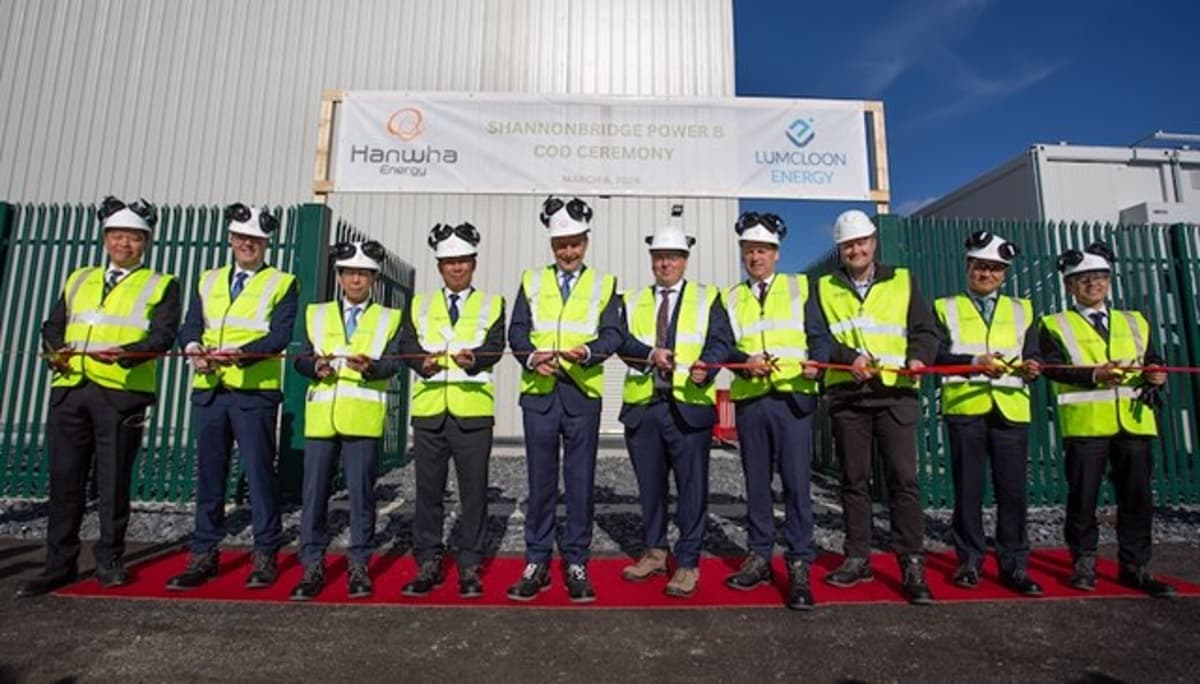
Lumcloon, Hanwha cut ribbon on Irish storage site
0
Comments
Want to join the conversation?
Loading comments...