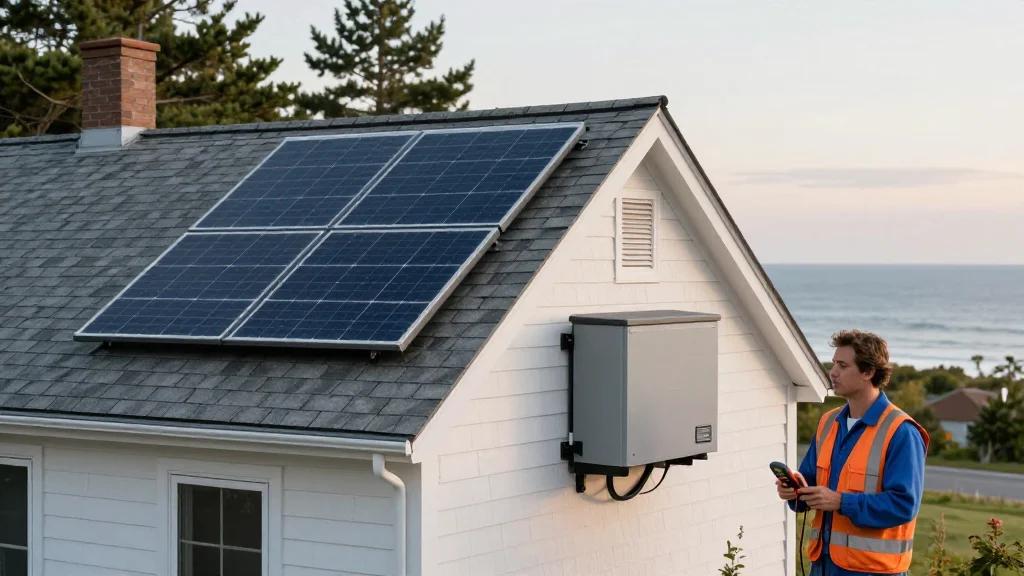
Maine Becomes Third State to Pass Plug-In Solar Legislation
Why It Matters
The legislation lowers barriers to residential solar adoption, helping consumers curb electricity costs amid rising utility rates. It also sets a regulatory template that could accelerate plug‑in solar markets nationwide.
Key Takeaways
- •Maine allows plug‑in solar up to 1,200 W
- •Devices >420 W need licensed electrician installation
- •No utility interconnection fees for small solar
- •Bill references UL 3700 safety standards
- •DIY solar allowed without utility notification under 420 W
Pulse Analysis
Plug‑in solar devices are emerging as a pragmatic solution for households seeking immediate, low‑cost energy savings, and Maine’s new law underscores that momentum. By capping eligible systems at 1,200 watts and differentiating installation requirements at the 420‑watt mark, the state balances safety with accessibility. The explicit incorporation of UL 3700 standards provides manufacturers with a clear compliance pathway, while the prohibition of utility‑imposed interconnection fees removes a historic financial hurdle that has slowed residential solar uptake in many jurisdictions.
The Maine measure builds on a nascent legislative trend that began with Utah’s pioneering bill in 2025 and was quickly followed by Virginia’s tenant‑focused framework. Unlike its predecessors, Maine’s approach distinguishes between DIY‑friendly low‑power units and higher‑output systems that must be installed by licensed electricians, a nuance that could influence future state policies. By allowing consumers to self‑install devices under 420 watts without notifying utilities, the law encourages rapid market penetration, especially among renters and low‑income households who have traditionally faced regulatory and financial obstacles.
Beyond immediate consumer benefits, the legislation signals a broader shift toward decentralized energy generation as utilities grapple with profitability pressures and grid modernization challenges. Analysts anticipate that the removal of interconnection fees and the clear safety guidelines will spur demand for plug‑in kits, prompting manufacturers to expand product lines and potentially drive down costs through economies of scale. As more states observe Maine’s outcomes, the plug‑in solar model may become a cornerstone of national strategies aimed at enhancing energy affordability and resilience.
Maine becomes third state to pass plug-in solar legislation
Comments
Want to join the conversation?
Loading comments...