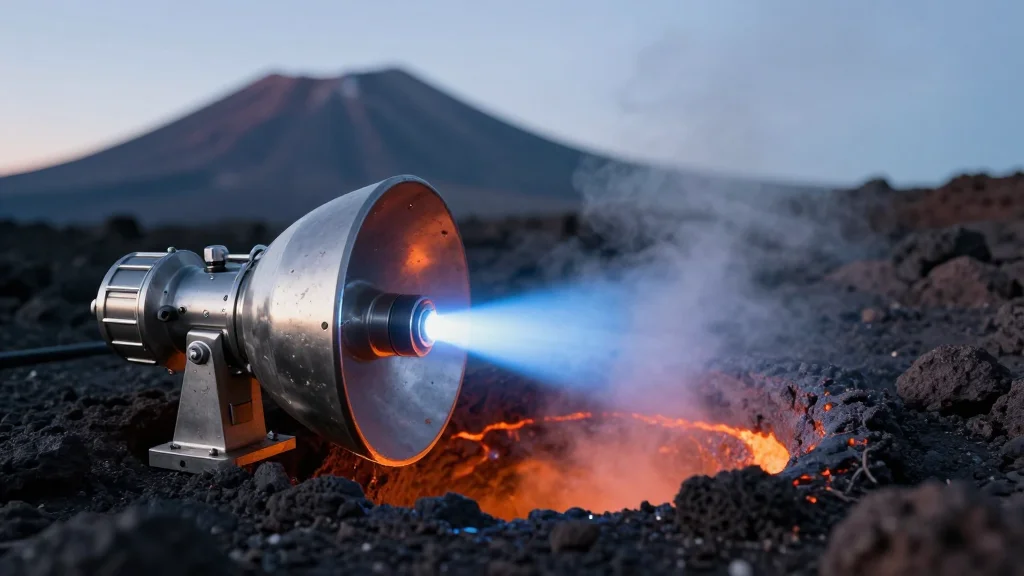
Masers Are the Future of Clean Energy – According to Quaise
Companies Mentioned
Why It Matters
Accessing super‑hot rock dramatically boosts geothermal efficiency and lowers cost per megawatt, turning geothermal into a competitive baseload renewable and expanding its geographic footprint.
Key Takeaways
- •Quaise uses 105 GHz maser beams to drill rock without contact.
- •100‑kW gyrotron demo reached 387 ft, deepest millimeter‑wave borehole.
- •Project Obsidian targets 50 MW plant by 2030 at Newberry Volcano.
- •Super‑hot geothermal (~400 °C) could deliver 5–10× more energy per well.
- •Quaise plans 1‑MW gyrotron to drill 1 km deep, 8.5‑in bore.
Pulse Analysis
Geothermal power has long been constrained by the shallow temperature gradient that limits most projects to 150‑200 °C reservoirs. Conventional drilling becomes prohibitively expensive and slow once wells must penetrate hard basement rock at depths beyond 4‑5 km. Quaise Energy’s maser‑driven approach sidesteps mechanical wear by focusing 105‑GHz millimeter‑wave beams that vaporize rock in situ, enabling rapid, precise boreholes that reach super‑hot zones of 400 °C or higher. This breakthrough could shift the economics of geothermal from niche, low‑temperature sites to mainstream, high‑temperature baseload generation.
The core of Quaise’s technology is the gyrotron, a high‑power microwave source originally developed for plasma research. In field demos, a 100‑kW unit melted rock into glass and later ablated it into dust, achieving a 387‑foot depth—the deepest pure millimeter‑wave borehole recorded. Scaling to a 1‑MW gyrotron, slated for deployment next year, promises to drill 1 km deep, 8.5‑inch bores, dramatically reducing drilling time and cost compared with traditional rotary rigs. Challenges remain, such as waveguide supply chains and high‑voltage power delivery, but the company’s hybrid model—using conventional rigs for the upper section and maser drilling for the deep, high‑temperature zone—offers a pragmatic path forward.
If the technology matures, the impact on the energy market could be profound. Super‑hot geothermal can deliver 5‑10× the power per well, making projects comparable to high‑producing oil and gas wells and supporting gigawatt‑scale plants like the planned 1‑GW development at Newberry Volcano. This would diversify the renewable portfolio, provide firm, dispatchable power, and reduce reliance on intermittent sources. Policymakers and investors are likely to view maser‑drilled geothermal as a strategic asset for energy security, especially as nations seek to meet net‑zero targets while expanding clean baseload capacity.
Masers are the future of clean energy – according to Quaise
Comments
Want to join the conversation?
Loading comments...