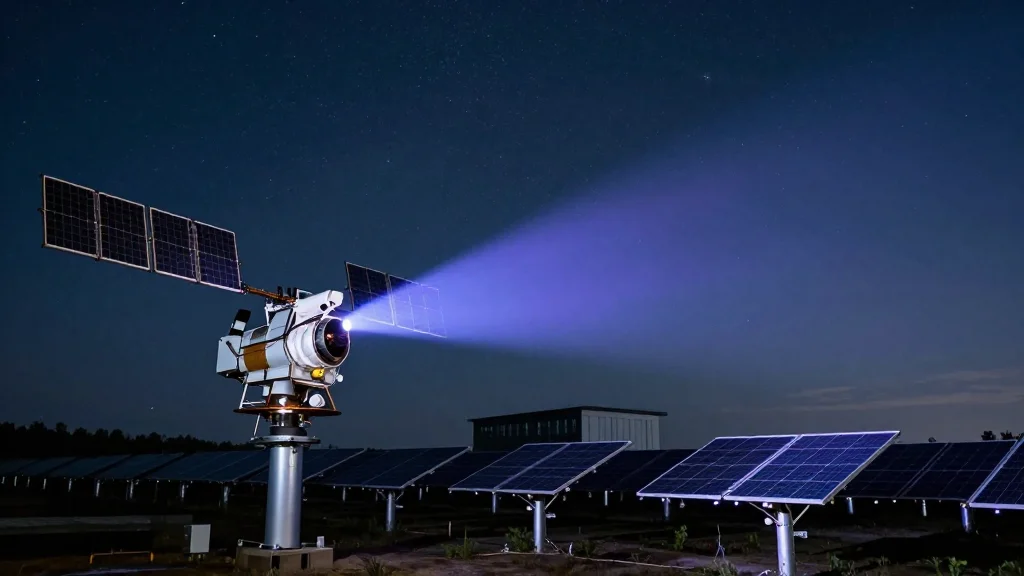
Meta Signs Deal to Power Data Centers at Night with Solar Energy From Space
Why It Matters
The agreement provides Meta with a reliable, carbon‑free power source that can meet growing AI compute demand while advancing the commercial viability of space‑solar technology for the broader tech sector.
Key Takeaways
- •Meta secures up to 1 GW of space‑solar capacity.
- •Overview Energy plans orbital demo in 2028, commercial by 2030.
- •Space solar extends daylight generation without new land use.
- •Partnership supports Meta’s 2030 net‑zero and 100% renewable goals.
- •Could reshape power sourcing for hyperscale data centers.
Pulse Analysis
Space‑based solar power, once a sci‑fi concept, is edging toward commercial reality thanks to startups like Overview Energy. By positioning photovoltaic arrays in geosynchronous orbit, the company captures uninterrupted sunlight and transmits low‑intensity near‑infrared beams to terrestrial solar farms. This approach sidesteps the intermittency that plagues ground‑based renewables, effectively turning night into day for existing installations and boosting overall capacity factors without acquiring additional acreage. For AI‑intensive workloads that demand constant, high‑density electricity, such a steady supply could be a game‑changer.
Meta’s sustainability roadmap targets net‑zero across its value chain by 2030 and a 100 % renewable match for all data‑center power. Securing up to 1 GW of space‑solar capacity not only helps meet those metrics but also diversifies the company’s energy portfolio beyond traditional wind and solar contracts. The 2028 orbital demo will serve as a proof point for scaling the technology, while the 2030 commercial rollout aligns with Meta’s broader push to decarbonize its AI infrastructure, a sector projected to consume a growing share of global electricity.
If the partnership proves successful, it could spark a wave of similar agreements among other hyperscalers seeking resilient, low‑carbon power. Regulators and utilities will need to address grid integration, spectrum allocation, and safety standards for beamed energy, but the potential upside—reduced land use, higher asset utilization, and a new frontier for renewable procurement—offers compelling incentives. As the industry watches Overview’s demonstration, the deal signals that space‑solar may soon move from experimental to an integral component of corporate clean‑energy strategies.
Meta Signs Deal to Power Data Centers at Night with Solar Energy from Space
Comments
Want to join the conversation?
Loading comments...