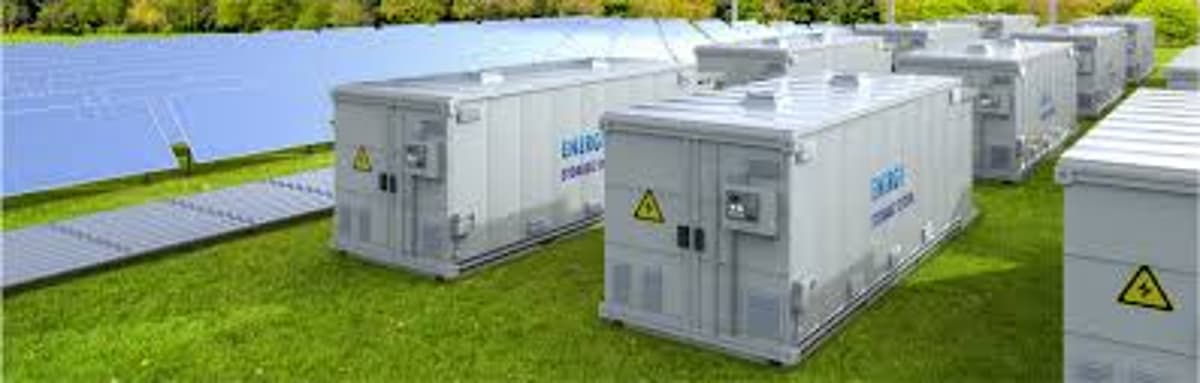
Michigan Secures $1.6B Battery Storage Expansion to Strengthen Grid and Manufacturing Base
Companies Mentioned
Why It Matters
The deployment strengthens Michigan’s power grid while accelerating domestic battery manufacturing, giving the state a strategic advantage in the fast‑growing U.S. energy‑storage market.
Key Takeaways
- •$1.6 B investment delivers 1.5 GW/6 GWh storage capacity.
- •Eight projects will be built within two years.
- •~1,800 manufacturing jobs and 350 construction roles created.
- •$2.3 B total economic impact projected for the state.
- •Supports data‑center load growth and renewable integration.
Pulse Analysis
Across the United States, utilities are turning to large‑scale battery storage to address the volatility introduced by renewable generation and electrified demand. The technology provides rapid response, shaving minutes off the time it takes to balance supply and demand, and it is increasingly seen as essential for meeting climate targets. Michigan’s $1.6 billion commitment arrives at a moment when the federal government is encouraging domestic production of clean‑energy components, positioning the state to capture a sizable share of the national storage pipeline.
The DTE Energy‑LG Energy Solution partnership will deliver 1.5 GW of power capacity and 6 GWh of energy storage across eight sites within two years. By storing excess electricity during off‑peak periods and discharging it at peak times, the installations will reduce reliance on fossil‑fuel peaker plants, lower operating costs, and smooth the integration of wind and solar resources. The projects also address the surge in electricity demand from data centers and advanced manufacturers, offering a flexible, grid‑friendly solution that aligns with Michigan’s renewable portfolio standards.
Beyond grid benefits, the initiative fuels Michigan’s industrial ecosystem. Approximately 1,800 manufacturing jobs and 350 construction and operations positions will be created, with the bulk of battery components sourced from LG’s Holland facility. The $2.3 billion projected economic impact extends to local suppliers, reinforcing the state’s advanced‑energy manufacturing base. As utilities nationwide accelerate storage rollouts, Michigan’s model—combining utility procurement, in‑state production, and clean‑energy policy—offers a replicable blueprint for regional economic development and energy resilience.
Michigan Secures $1.6B Battery Storage Expansion to Strengthen Grid and Manufacturing Base
Comments
Want to join the conversation?
Loading comments...