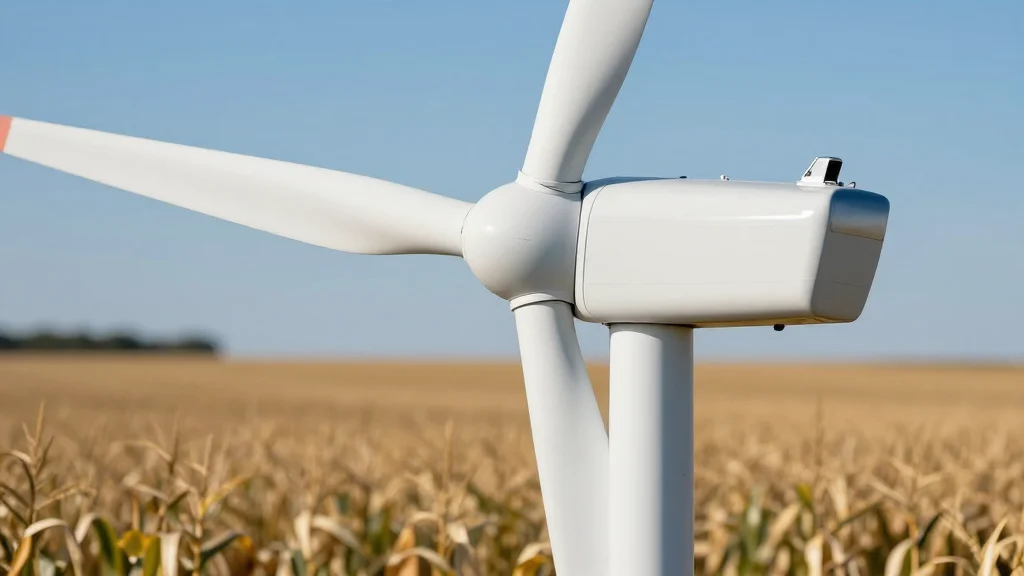
Minnesota Now Has a Wind-Powered Green Ammonia Plant
Why It Matters
Local green ammonia could reduce reliance on Gulf Coast natural‑gas‑based fertilizers and insulate Midwestern farmers from volatile global commodity markets, while providing a carbon‑free hydrogen carrier for emerging industries.
Key Takeaways
- •Morris plant produces ~100 kg ammonia daily using wind power.
- •Planned expansion aims for 1 ton daily, 300‑400 tons yearly.
- •Modular plants could cut ammonia costs up to 50 % locally.
- •Statewide demand exceeds 900,000 tons; green ammonia still tiny share.
Pulse Analysis
Ammonia is the world’s most widely used nitrogen fertilizer and a key hydrogen carrier, yet U.S. production is dominated by large Gulf Coast facilities that rely on cheap natural gas. When gas prices spike or geopolitical events disrupt shipping routes—such as the recent closure of the Strait of Hormuz—farmers face steep price swings and supply uncertainty. Green ammonia, produced with renewable electricity, promises a domestic, low‑carbon alternative that can stabilize input costs for the Corn Belt and reduce emissions from the fertilizer sector.
The Morris, Minnesota pilot illustrates how wind‑powered electrolyzers can split water into hydrogen and nitrogen, then synthesize anhydrous ammonia on a modest scale. Currently the plant yields a few hundred kilograms per day, enough to offset a small portion of local fertilizer demand. A third electrolyzer slated for installation would lift daily output to roughly one metric ton, translating to 300‑400 tons annually—still under 0.1% of the state’s 900,000‑ton requirement but enough to validate the technology and demonstrate cost advantages, since ammonia stores hydrogen 100‑times more efficiently than compressed gas.
Scaling the concept hinges on modular designs, policy support, and emerging clean‑hydrogen tax credits. Companies like Talusag are building 1‑20‑ton‑per‑day units that could be sited near farms or industrial hubs, potentially slashing ammonia costs by up to 50% and shielding users from global market volatility. However, achieving the 50,000‑ton‑per‑year threshold needed for true cost competitiveness will require substantial capital, reliable renewable power, and streamlined permitting. If these hurdles are cleared, green ammonia could become a cornerstone of a resilient, low‑carbon Midwest agricultural supply chain.
Minnesota now has a wind-powered green ammonia plant
Comments
Want to join the conversation?
Loading comments...