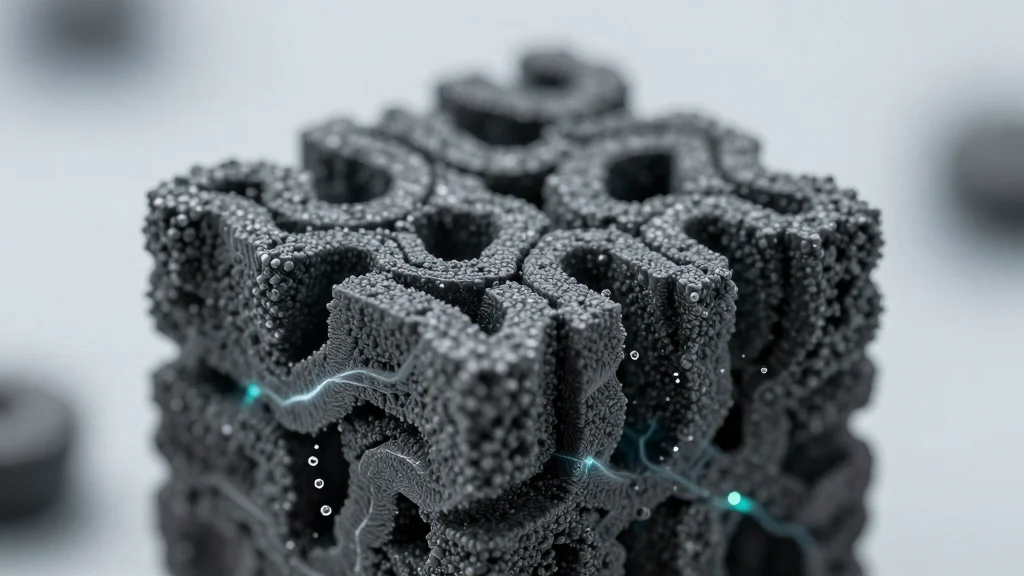
Molecular‐Level Engineered Approach Induces Built‐in Electric Field Modulation in G‐C3N4/CoMoS2 Heterojunction for Enhanced Hydrogen Generation via Urea Oxidation
Why It Matters
Replacing the sluggish oxygen evolution reaction with urea oxidation slashes energy consumption for electrolytic hydrogen, while turning waste urea into a value‑added feedstock. The technology offers a scalable, lower‑cost route to green hydrogen, a critical vector for decarbonizing industry and transport.
Key Takeaways
- •Built‑in electric field directs charge, enhancing urea activation
- •g‑C3N4/CoMoS2 reaches 1.27 V for UOR at 10 mA cm⁻²
- •HER achieved at –80 mV vs RHE in alkaline electrolyte
- •Symmetric cell operates at 1.34 V for 10 mA cm⁻²
- •DFT shows electron transfer lowers reaction barriers
Pulse Analysis
Urea‑assisted electrolysis is gaining traction as a pragmatic alternative to conventional water splitting, which is hampered by the high overpotential of the oxygen evolution reaction (OER). By oxidizing urea—a ubiquitous waste product from agriculture and industry—researchers can tap a thermodynamically favorable pathway that reduces the cell voltage needed for hydrogen generation. This approach not only cuts operational costs but also addresses environmental concerns associated with urea discharge, creating a dual‑benefit solution for sustainable energy and waste management.
The breakthrough reported by the team hinges on a molecular‑level engineered heterojunction between graphitic carbon nitride (g‑C3N4) and cobalt‑molybdenum sulfide (CoMoS2). The interface generates a built‑in electric field that polarizes the two components: g‑C3N4 becomes electrophilic, while CoMoS2 turns nucleophilic. This charge separation accelerates urea adsorption and C‑N bond scission, as confirmed by density functional theory calculations showing enhanced electron density on CoMoS2 and depletion on g‑C3N4. The resulting catalyst delivers impressive metrics—1.27 V for the urea oxidation reaction (UOR) and –80 mV for the hydrogen evolution reaction (HER) at 10 mA cm⁻²—surpassing many benchmark systems.
From a market perspective, the ability to run a symmetric electrolyzer at 1.34 V for 10 mA cm⁻² with long‑term stability positions this technology for industrial deployment. Lower voltage translates directly into reduced electricity costs, a primary driver of hydrogen economics. Moreover, integrating urea‑rich wastewater streams into the feedstock mix could create new revenue streams for fertilizer producers and municipalities. As policy frameworks increasingly favor low‑carbon fuels, such heterojunction‑based catalysts could become a cornerstone of next‑generation, cost‑effective green hydrogen infrastructure.
Molecular‐Level Engineered Approach Induces Built‐in Electric Field Modulation in G‐C3N4/CoMoS2 Heterojunction for Enhanced Hydrogen Generation via Urea Oxidation
Comments
Want to join the conversation?
Loading comments...