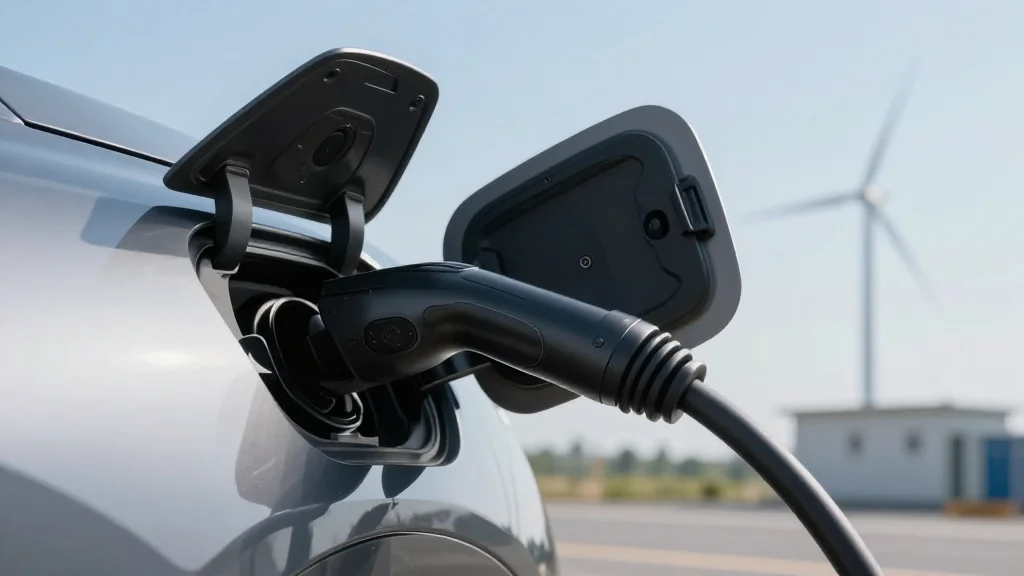
More Flexibility for the Power System: Eon Drives Bidirectional Charging Towards the Mass Market
Companies Mentioned
Why It Matters
By enabling EVs to provide grid services, the project could unlock a massive, distributed flexibility resource, easing renewable integration and reducing congestion costs for utilities. Successful standards and market mechanisms would accelerate V2G commercialization and support a more resilient, affordable power system.
Key Takeaways
- •E.ON pilots bidirectional EV charging in BDL Next project.
- •Goal: EVs act as grid‑serving storage, not just loads.
- •Project informs future Redispatch 3.0 decentralized grid management.
- •Open‑standard architecture enables cross‑manufacturer scalability.
- •Integrates EVs, PV, home storage to boost self‑consumption.
Pulse Analysis
The rapid expansion of wind and solar generation is straining traditional power‑grid operations, prompting utilities to hunt for flexible, fast‑acting resources. Vehicle‑to‑grid (V2G) technology, exemplified by E.ON’s bidirectional charging trials, offers a promising solution by converting parked EV batteries into dispatchable storage. By coordinating charging and discharging through smart energy‑management platforms, utilities can smooth intermittent supply, defer costly infrastructure upgrades, and improve overall system efficiency.
E.ON’s BDL Next initiative is more than a laboratory experiment; it is a stepping stone toward Redispatch 3.0, a next‑generation grid‑balancing concept that integrates thousands of small‑scale assets into the dispatch process. The project tackles practical hurdles such as accurate metering, real‑time balancing, and market participation rules, ensuring that energy fed back from EVs is properly accounted for and compensated. Demonstrating reliable, automated control of decentralized flexibility will give regulators confidence to embed these resources into market designs, potentially reshaping ancillary‑service revenue streams.
A critical success factor lies in the development of open, interoperable standards that allow any EV make or model to participate without proprietary lock‑ins. By uniting energy suppliers, automakers and research institutions, the consortium aims to create a vendor‑agnostic ecosystem that can scale nationally. If adopted broadly, this approach could unlock gigawatts of hidden storage capacity, lower electricity costs for households, and accelerate the transition to a low‑carbon, resilient grid. Utilities, policymakers, and investors should watch these pilots closely as they signal the commercial viability of V2G at scale.
More Flexibility for the Power System: Eon Drives Bidirectional Charging Towards the Mass Market
Comments
Want to join the conversation?
Loading comments...