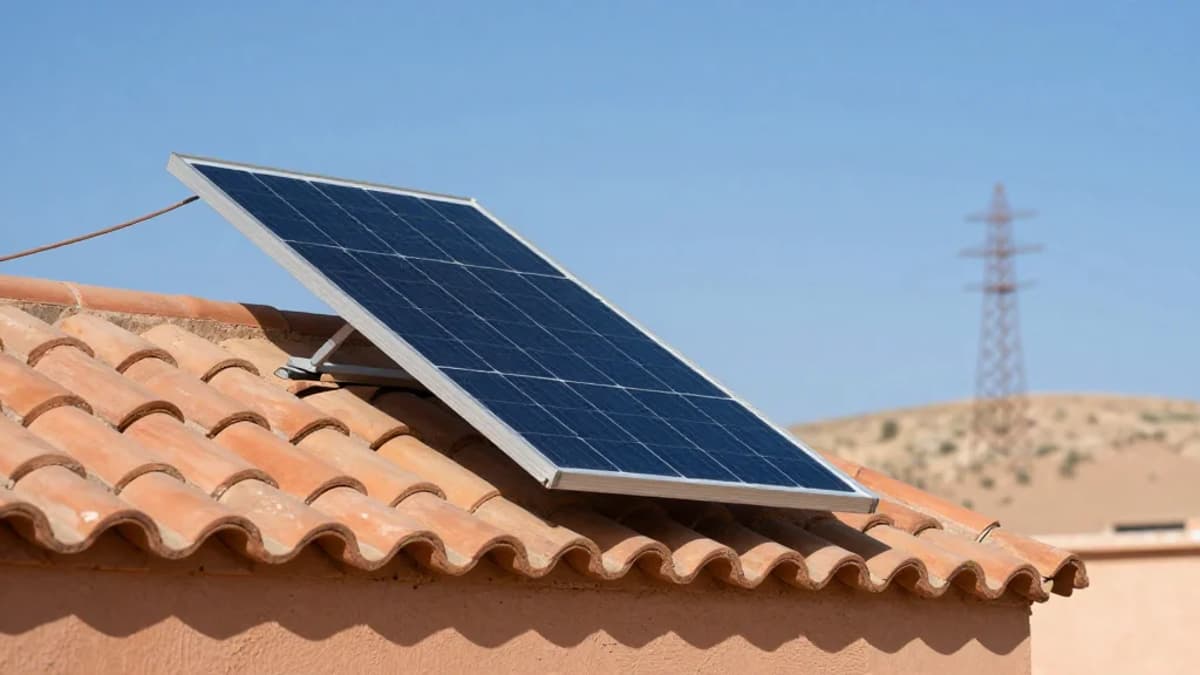
Morocco Sets Net‑metering Tariffs for High, Medium‑voltage Systems
•February 23, 2026
0
Why It Matters
The tariff framework formalises revenue streams for commercial solar, accelerating Morocco’s renewable capacity and underpinning its EV‑charging ambitions. It also signals regulatory maturity that can attract international investors.
Key Takeaways
- •Peak tariff: MAD 0.21/kWh.
- •Off‑peak tariff: MAD 0.18/kWh.
- •Applies to high, medium, extra‑high voltage networks.
- •Allows selling up to 20% of generation.
- •Distributed solar potential: 28.6 GW, $31 bn market.
Pulse Analysis
Morocco’s latest net‑metering tariffs mark a pivotal step in aligning the country’s renewable agenda with market‑driven incentives. By setting clear price signals for excess solar output on high‑voltage grids, ANRE reduces investment uncertainty for industrial and commercial developers. The differentiated peak and off‑peak rates reflect the grid’s marginal cost structure, encouraging generation when demand—and prices—are highest. This policy continuity, building on the 2015 framework, also positions Morocco as a stable jurisdiction for foreign capital seeking exposure to North African solar assets.
The announced tariffs unlock a sizable distributed‑generation opportunity. Analysts estimate up to 28.6 GW of rooftop and behind‑the‑meter solar could be installed, translating into a $31 billion market over the next decade. Such capacity would generate roughly 66.8 TWh annually, offsetting a substantial share of the nation’s fossil‑fuel generation. Moreover, the projected 2.5 million electric vehicles by 2035 will demand massive charging infrastructure; the anticipated 39,420 GWh battery capacity could satisfy up to 98% of that load, provided solar‑derived electricity is efficiently integrated.
Nonetheless, the regulatory roadmap remains incomplete for low‑voltage residential connections, delaying broader consumer participation. Finalising the residential tariff and associated technical standards will be critical to achieving the full distributed potential. Additionally, grid operators must manage increased bidirectional flows and ensure stability as solar penetration rises. Continued policy refinement, coupled with investment in storage and smart‑grid technologies, will determine whether Morocco can fully capitalize on its solar promise and meet its climate‑neutral targets.
Morocco sets net‑metering tariffs for high, medium‑voltage systems
0
Comments
Want to join the conversation?
Loading comments...