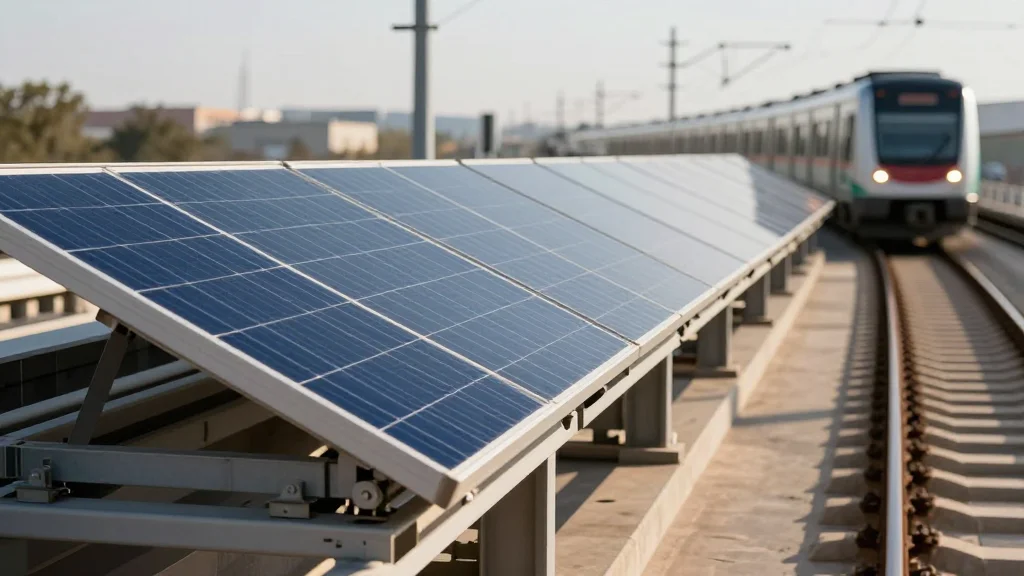
Nagpur Metro Installs India’s First Solar Panels Between Tracks at Hingna Depot
Why It Matters
The initiative demonstrates how transit agencies can unlock idle infrastructure for renewable energy, reducing operating costs and carbon footprints without acquiring new land. Its success could set a template for metro systems nationwide, accelerating India’s green‑transport agenda.
Key Takeaways
- •50 kW solar array installed between tracks at Nagpur Metro depot
- •Expected annual generation: 70,000 kWh, cutting ~65 tonnes CO₂
- •PPP model means zero upfront cost for MahaMetro
- •First Indian metro to use track‑side solar panels
- •Pilot could expand to other depots and stations
Pulse Analysis
India’s urban transit networks are expanding rapidly, yet they face mounting pressure to curb emissions and manage limited real estate. Integrating renewable energy directly into existing rail infrastructure offers a clever solution: it leverages otherwise idle spaces while delivering on sustainability targets. Globally, cities such as London and Singapore have experimented with rooftop solar on stations, but the Nagpur Metro pilot pushes the envelope further by placing panels between active tracks, a move that maximises land use without compromising operational safety.
The Hingna depot installation, a 50‑kilowatt peak (kWp) monocrystalline, half‑cut PV system, was delivered by Greenlife Solutions under a public‑private partnership that required no upfront capital from MahaMetro. Engineers addressed challenges unique to rail environments, including vibration damping, clearance for maintenance crews, and compatibility with overhead equipment. By generating an estimated 70,000 kilowatt‑hours annually, the system offsets roughly 65 tonnes of CO₂, translating into tangible cost savings for the metro’s captive power consumption and reducing reliance on grid electricity.
If the pilot meets performance benchmarks, it could catalyze a broader rollout across Nagpur’s Mihan depot and eventually across stations and other metro facilities. Such scaling would not only amplify renewable capacity but also set a precedent for other Indian metros grappling with space constraints and high energy demand. Policymakers may view the model as a low‑cost, high‑impact strategy to meet national renewable targets, while private solar firms could see new revenue streams in rail‑side installations. The success of this experiment could therefore reshape how Indian cities think about sustainable infrastructure integration.
Nagpur Metro installs India’s first solar panels between tracks at hingna depot
Comments
Want to join the conversation?
Loading comments...