Nearly 13GWh of Grid-Scale BESS Deployed Globally in April
Companies Mentioned
Why It Matters
The surge underscores accelerating renewable integration and grid‑stability needs, positioning China and emerging markets as leaders in large‑scale storage.
Key Takeaways
- •Global BESS deployments hit 4.5 GW in April 2026.
- •China contributed 2.5 GW, over 50% of new capacity.
- •India’s Khavda project added 647 MW across Asia.
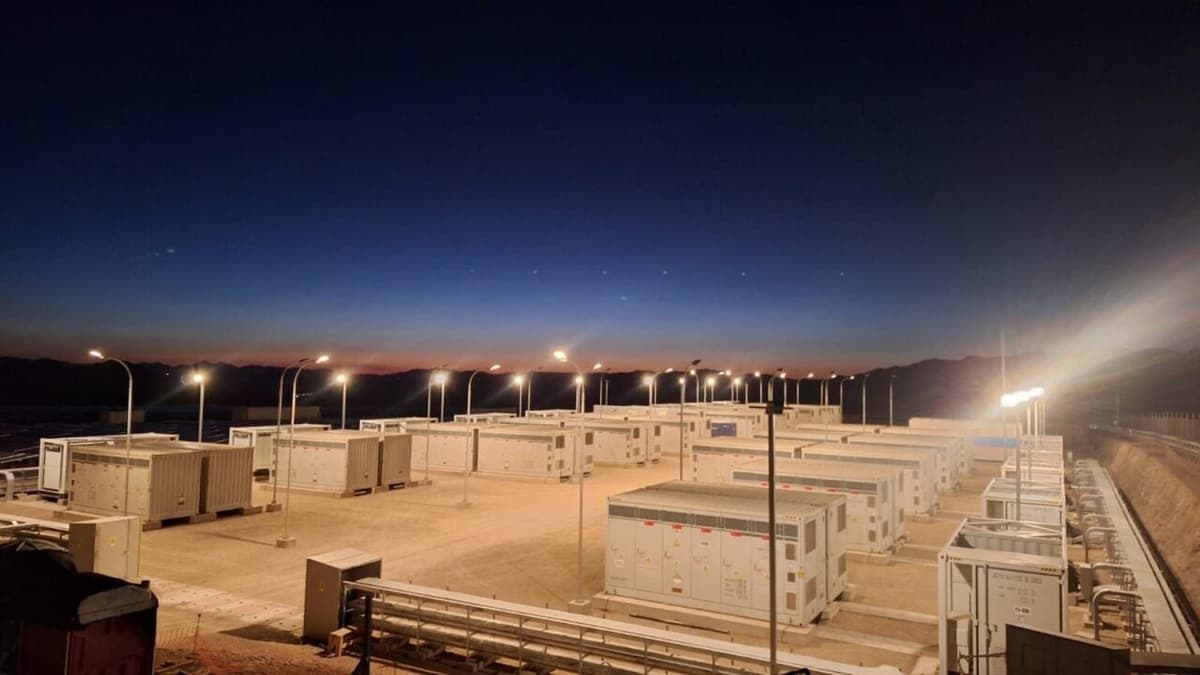
- •Chile’s Innergex launched 42 MW/210 MWh Atacama storage.
- •Benchmark data shows record growth in large‑scale storage.
Pulse Analysis
8 GWh) of new capacity commissioned worldwide, according to Benchmark Mineral Intelligence. 5 GW, accounting for just over half of the global tally and reinforcing its position as the pre‑eminent market for large‑scale storage. The rapid rollout reflects utilities’ urgent need to balance intermittent renewable generation, especially solar and wind, while meeting tighter reliability standards. Investors are responding with heightened capital flows, and manufacturers are scaling production to meet the expanding demand for lithium‑ion modules and next‑generation chemistries.
8 GWh), driven largely by the first phase of Adani Group’s Khavda solar‑plus‑storage project in India. The hybrid facility couples 400 MW of solar PV with a 247 MW/600 MWh battery, illustrating how developers are bundling generation and storage to monetize grid services and reduce curtailment. In South America, Chile’s renewable push accelerated, with Innergex announcing a 42 MW/210 MWh battery linked to its San Andrés solar complex, contributing to the country’s cumulative 5 GWh of storage deployed in 2025. These projects underscore a global shift toward integrated energy hubs.
The accelerating deployment curve signals a maturing storage market that can now support large‑scale grid balancing, peak shaving, and ancillary services at competitive costs. Policy frameworks in China, India, and Chile are increasingly rewarding co‑located solar and battery assets, prompting utilities to reconsider traditional baseload models. As battery prices continue to decline toward $80/kWh, the economics of longer‑duration storage become attractive, inviting new entrants and financing structures such as green bonds and ESG‑linked loans. Looking ahead, the momentum suggests that 2026 could see global BESS additions surpass 10 GW, cementing storage as a cornerstone of the clean‑energy transition.
Nearly 13GWh of grid-scale BESS deployed globally in April
Comments
Want to join the conversation?
Loading comments...