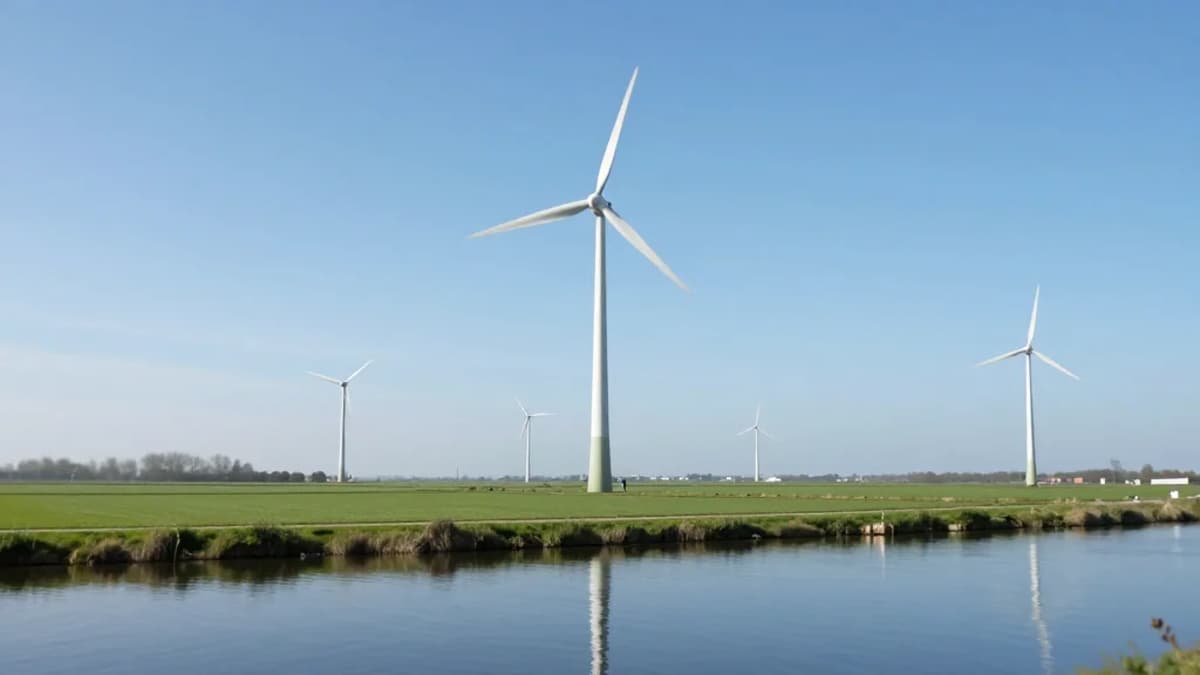
Netherlands Hits Record Electricity Production and Exports in 2025
•March 10, 2026
0
Why It Matters
The surge in Dutch generation and exports strengthens the country’s role as a regional energy hub, accelerating Europe’s transition to a more balanced, renewable‑heavy power mix. It also highlights the challenges of integrating variable renewables while still relying on fossil backup.
Key Takeaways
- •Production hits 132 billion kWh, 10% growth.
- •Renewables supply 49% of electricity output.
- •Exports rise 25% to 30 billion kWh.
- •Solar capacity adds 4.32 GW, 17% output increase.
- •Coal generation up 25% but still below 2015 levels.
Pulse Analysis
The Netherlands’ 2025 electricity milestone reflects a broader shift in European power markets toward greater self‑sufficiency and cross‑border trade. By boosting total generation to 132 billion kWh, the country not only met stable domestic demand but also positioned itself as a net exporter, feeding surplus power into Germany and Belgium. This integration reduces reliance on imports, improves grid stability, and aligns with the EU’s goal of a more interconnected, resilient energy system.
Renewable sources drove almost half of the record output, with solar leading the charge thanks to a sunny season and a cumulative 4.32 GW of new capacity. Offshore wind, newly commissioned in 2024, compensated for weaker onshore wind conditions, while biomass co‑firing in coal plants nudged the renewable tally upward. Despite these gains, fossil fuels still contributed 48% of electricity, underscoring the transitional nature of the mix; natural‑gas output rose 11% and coal, though up 25% year‑on‑year, remains well below its 2015 share, signaling a gradual phase‑out.
Export growth, up 25% to 30 billion kWh, illustrates the Netherlands’ emerging role as a balancing hub for neighboring grids facing their own renewable shortfalls—Germany’s reduced offshore wind and Switzerland’s lower hydro output, for example. The decline in imports, down 19%, further confirms that domestic production is increasingly meeting regional demand. Looking ahead, sustained solar expansion, continued offshore wind scaling, and policy clarity on coal and biomass will be pivotal for the Netherlands to deepen its renewable footprint while maintaining reliability for the broader European market.
Netherlands hits record electricity production and exports in 2025
0
Comments
Want to join the conversation?
Loading comments...