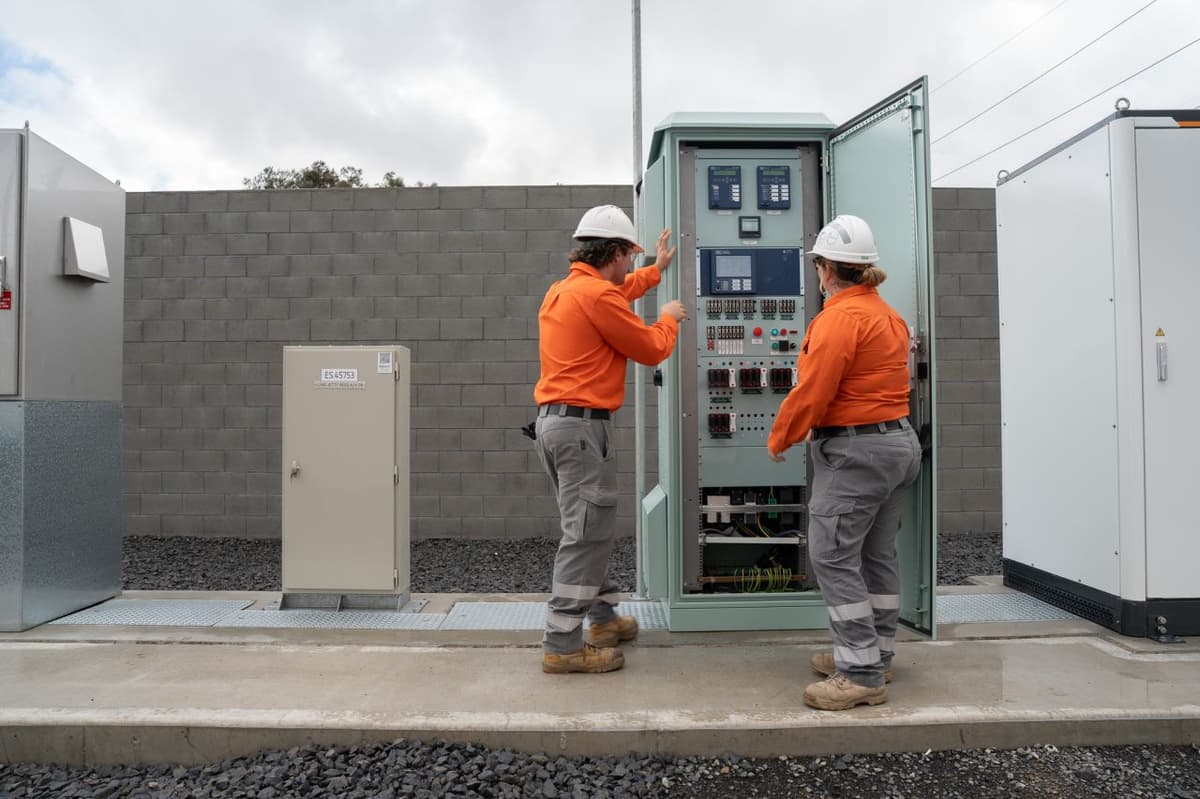
Network Says New Community Battery Will Deliver Cheaper Bills to Locals From Storage as a Service Scheme
Companies Mentioned
Why It Matters
The initiative proves that utility‑scale, community‑focused storage can deliver tangible cost savings while easing grid congestion, signaling a shift toward distributed energy resources that could reshape regulatory and market dynamics in Australia’s power sector.
Key Takeaways
- •5 MW Long Jetty battery serves up to 5,000 households
- •Residents could save ~AU$200 (~US$130) annually on electricity
- •ESaaS partners with EnergyAustralia and Origin to lower bills
- •15 existing community batteries already operating across NSW
Pulse Analysis
Australia’s electricity landscape is rapidly embracing distributed storage, and Ausgrid’s latest 5 MW community battery exemplifies that trend. By situating the battery near the end‑users in Long Jetty, the utility reduces transmission losses and captures excess solar output that would otherwise be curtailed. The Energy Storage as a Service (ESaaS) model bundles the hardware, operation, and billing into a single subscription, allowing renters, apartment dwellers, and households without rooftop panels to tap into the same cost‑saving benefits. This approach sidesteps the high upfront capital typically required for residential battery installations, democratizing access to clean energy economics.
From a financial perspective, the projected AU$200 (about US$130) annual saving per household translates into a measurable reduction in operating costs for thousands of customers. The localized discharge during evening peak periods helps flatten demand curves, which can defer expensive network upgrades and lower wholesale market prices. Moreover, the battery’s ability to store renewable generation supports the state’s decarbonisation targets by increasing the effective utilization of solar farms. As Ausgrid partners with major retailers like EnergyAustralia and Origin, the programme also creates new revenue streams for distributors, potentially reshaping traditional utility business models.
Looking ahead, the success of Long Jetty’s battery could accelerate policy reforms around ring‑fencing and distribution‑owned storage. Regulators may relax waiver requirements if utilities demonstrate clear network benefits and consumer savings, paving the way for broader deployment across Australia’s densely populated corridors. Investors are likely to watch this space closely, as scalable community‑battery projects offer a blend of stable, regulated returns and alignment with ESG objectives. If replicated, the model could become a cornerstone of the nation’s transition to a more resilient, low‑carbon grid.
Network says new community battery will deliver cheaper bills to locals from storage as a service scheme
Comments
Want to join the conversation?
Loading comments...