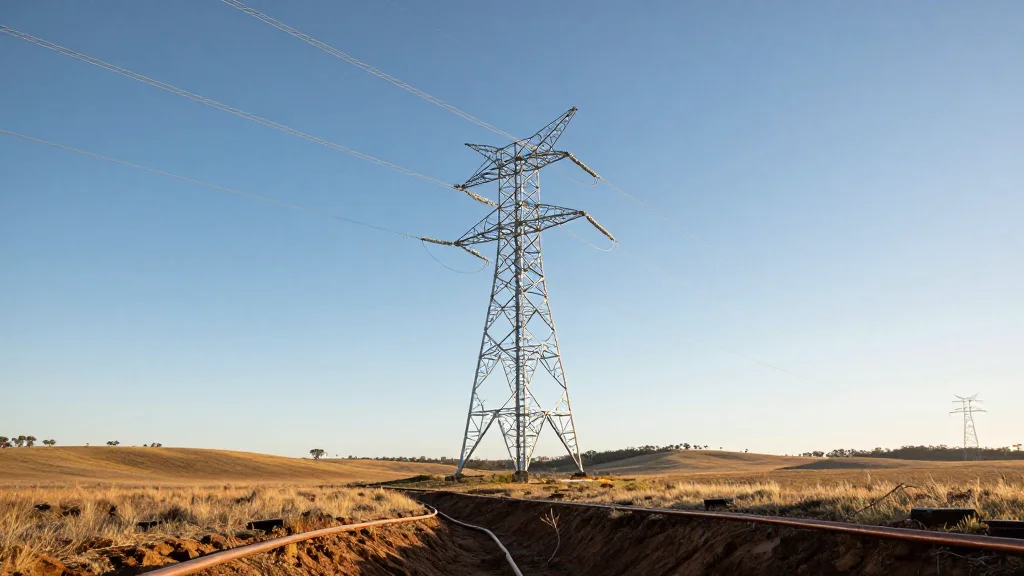
Network Sets Out $3.5 Billion Case for New Link to Remove Bottlenecks Between Renewables and Cities
Why It Matters
The upgrade is critical for unlocking cheaper renewable power, stabilising supply to Sydney’s megacities, and keeping electricity costs down as demand accelerates. Its success will shape Australia’s transition to a low‑carbon grid and influence future infrastructure investment models.
Key Takeaways
- •Transgrid proposes $2.3 B 500 kV line to relieve NSW transmission bottleneck
- •Option 6 could yield $2.1 B net benefits and $34 household savings
- •Partial undergrounding could add $1.8 B to project cost
- •Early delivery aligns with Snowy 2.0 and growing renewable demand
- •Stakeholder consultation starts now, route not yet selected
Pulse Analysis
Australia’s power system is at a crossroads as coal‑fired generators retire and renewable capacity surges. The southern transmission corridor feeding Sydney, Wollongong and Newcastle is already operating near its limits, creating a classic "bottleneck" that curtails the flow of low‑cost wind and solar energy from inland zones. By proposing a new 500 kV line, Transgrid aims to double corridor capacity, a move that mirrors similar high‑voltage upgrades in Europe and the United States designed to integrate distributed renewables and reduce reliance on peaking gas plants. The projected $2.1 billion net market benefit reflects not only lower wholesale electricity prices but also avoided investments in localized generation and storage that would otherwise be needed to meet demand.
Cost‑benefit analysis shows that the 500 kV option outperforms alternatives across multiple scenarios, especially those assuming strong demand growth driven by electrification of transport and industry. While the baseline overhead design keeps capital outlays near $2.3 billion, community pressure for undergrounding could inflate costs by up to $1.8 billion. This highlights a familiar tension in infrastructure projects: balancing visual and environmental concerns with fiscal prudence. Transgrid’s willingness to explore partial undergrounding demonstrates a pragmatic approach, offering a compromise that may ease local opposition without derailing the economic case.
The project’s timeline—2030 to 2034 for staged construction—coincides with the rollout of Snowy 2.0, a massive pumped‑hydro storage scheme that will further smooth intermittent renewable output. Early stakeholder engagement is therefore essential, as route selection, land acquisition, and regulatory approvals will shape the final cost and community impact. For investors and policymakers, the Transgrid proposal serves as a bellwether for how Australia will fund and prioritize grid reinforcement in the era of clean energy, setting precedents for future high‑voltage corridors across the continent.
Network sets out $3.5 billion case for new link to remove bottlenecks between renewables and cities
Comments
Want to join the conversation?
Loading comments...