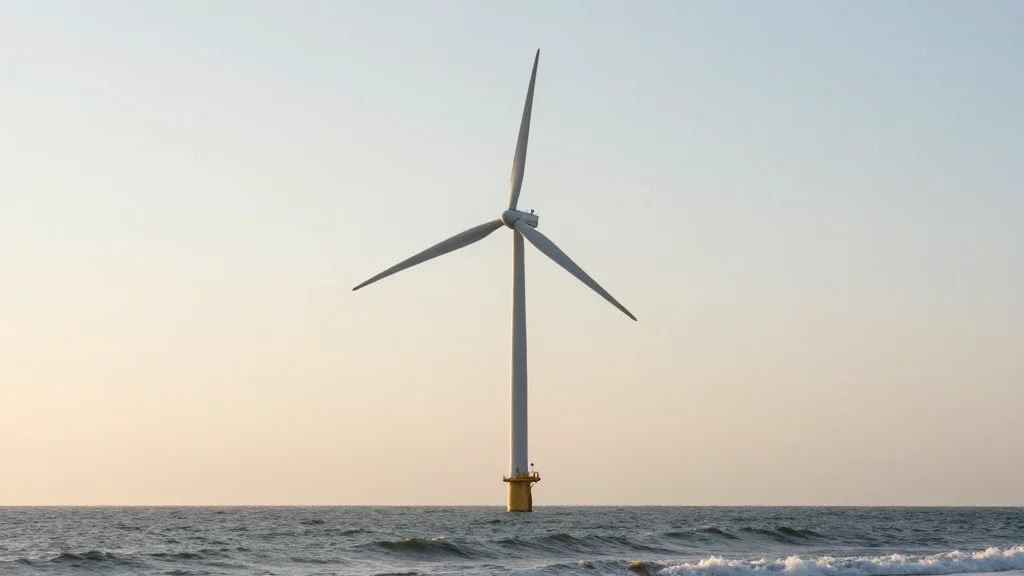
New Episode: How Big Can, and Should, Mega Turbines Get?
Companies Mentioned
Why It Matters
Bigger turbines can slash the levelized cost of electricity but also introduce new technical and logistical hurdles, directly affecting offshore wind rollout and market dynamics.
Key Takeaways
- •Turbines now exceed 15 MW, some targeting 25 MW
- •Larger rotors cut installation costs per megawatt
- •O&M complexity rises with turbine size
- •Chinese OEMs lead in ultra‑large turbine development
- •Supply chain bottlenecks risk delaying mega‑turbine projects
Pulse Analysis
The offshore wind sector is entering a new era of scale, with turbine capacities climbing from the 10‑MW range a decade ago to more than 15 MW today and prototypes eyeing 25 MW. These super‑size machines feature rotor diameters that dwarf traditional wind farms, enabling each unit to capture far more wind energy. Europe’s North Sea projects, the U.S. Atlantic coast, and emerging Asian markets are all testing these giants, signaling a global shift toward fewer, larger installations that can simplify grid integration and reduce the number of foundations needed.
From an economic perspective, the larger the turbine, the lower the levelized cost of electricity (LCOE) tends to be, because the capital cost per megawatt drops and fewer foundations and cables are required. However, the operational and maintenance (O&M) landscape becomes more complex: access for blade inspections, component replacement, and fault diagnostics demands specialized vessels and higher‑capacity cranes. These factors can erode some of the cost advantages if not managed carefully. Analysts therefore focus on balancing the capital savings against the potential rise in O&M expenditures, especially as turbines push the limits of current maritime logistics.
Supply‑chain considerations are now a decisive factor. Chinese original equipment manufacturers (OEMs) are leading the push for ultra‑large designs, leveraging economies of scale to drive down component prices. Yet the production of massive blades, towers, and gearboxes strains steel mills, composite factories, and transport infrastructure, creating bottlenecks that could delay project timelines. Policymakers and developers must coordinate with manufacturers to ensure a resilient supply chain, while also addressing regulatory standards for safety and noise. As the industry settles on the optimal turbine size, the interplay between engineering ambition, cost economics, and supply‑chain capacity will dictate the pace of offshore wind expansion worldwide.
New episode: how big can, and should, mega turbines get?
Comments
Want to join the conversation?
Loading comments...