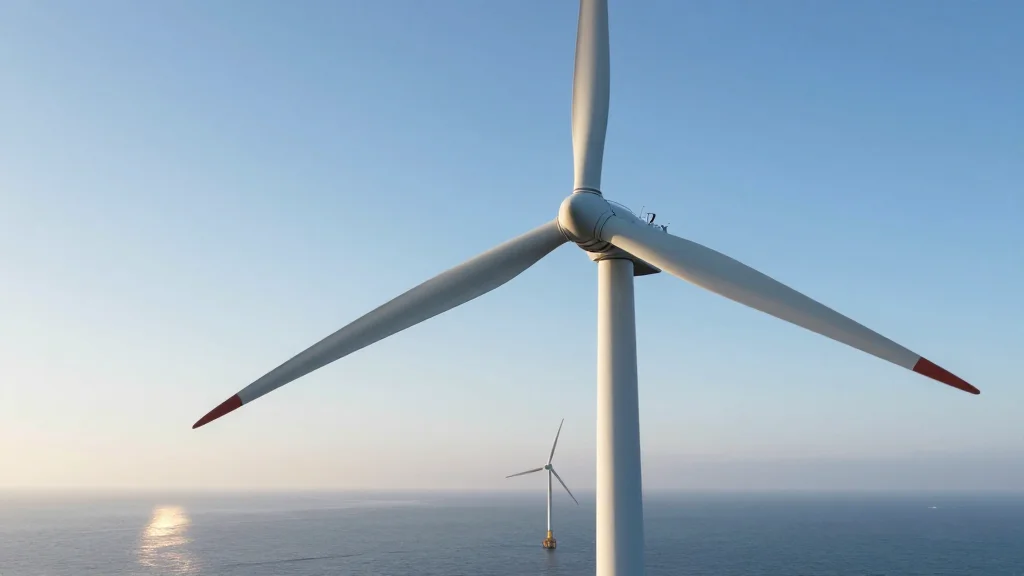
New Episode: How Big Can, and Should, Mega Turbines Get?
Companies Mentioned
Why It Matters
Mega‑turbines could dramatically lower the levelized cost of electricity, reshaping offshore wind economics and intensifying global competition, especially from Chinese OEMs.
Key Takeaways
- •Turbines now exceed 15 MW, some designs target 25 MW
- •Larger rotors increase capacity but raise installation complexity
- •Chinese OEMs driving down costs while scaling turbine size
- •Economics hinge on lower levelized cost of electricity
- •Operations and maintenance demand new supply‑chain strategies
Pulse Analysis
The offshore wind sector has entered a new era of scale, with manufacturers rolling out turbines that dwarf the 10‑MW machines common a decade ago. Advances in blade materials, drivetrain design, and floating platform technology now enable rotor diameters that stretch beyond 200 meters, capturing more wind energy per unit and reducing the number of foundations required. This engineering leap not only showcases the industry's capacity for innovation but also sets a higher bar for future projects, demanding sophisticated logistics and deeper water installation expertise.
From a financial perspective, the shift to mega‑turbines promises to cut the levelized cost of electricity (LCOE) by spreading fixed costs over greater generation capacity. Fewer turbines mean lower cabling, installation, and maintenance expenses, while larger rotors improve capacity factors in low‑wind sites. However, the upside is tempered by new challenges: transporting massive components, ensuring reliable O&M in harsher marine environments, and reconfiguring supply chains to handle bespoke parts. Operators must balance these trade‑offs to realize the projected cost reductions.
Competitive dynamics are also evolving. Chinese OEMs have announced designs exceeding 25 MW, leveraging state‑backed R&D to undercut Western rivals on price and delivery timelines. This pressure forces traditional players to accelerate their own scaling programs and invest in modular, cost‑effective manufacturing processes. Meanwhile, policymakers in Europe and the United States are revising permitting frameworks to accommodate larger footprints, recognizing that super‑size turbines could be pivotal in meeting aggressive renewable targets. The convergence of technology, economics, and geopolitics suggests that the next wave of offshore wind will be defined by turbines that are not just bigger, but smarter and more cost‑competitive.
New episode: how big can, and should, mega turbines get?
Comments
Want to join the conversation?
Loading comments...