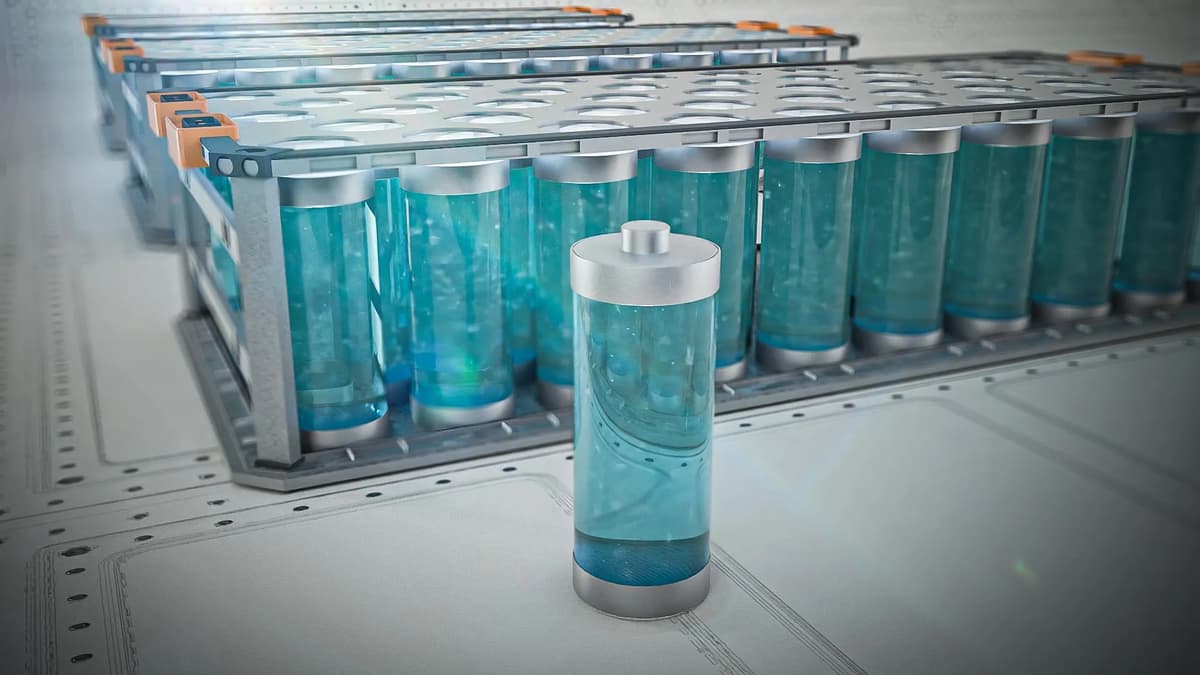
New Sodium Ion Battery Stores Twice the Energy and Desalinates Seawater
•February 19, 2026
0
Why It Matters
Doubling energy density and adding desalination capability could accelerate sodium‑ion adoption, lowering costs and expanding renewable storage options. It also opens pathways for integrated energy‑water solutions in coastal regions.
Key Takeaways
- •Hydrated sodium vanadate doubles energy capacity
- •Over 400 stable charge cycles achieved
- •Operates in seawater while desalinating
- •Enables low‑cost, safer alternative to lithium
- •Potential for grid storage and electric vehicles
Pulse Analysis
Sodium‑ion batteries have long been touted as a sustainable counterpart to lithium‑ion systems, but their lower energy density has limited commercial appeal. The Surrey team’s insight—preserving the intrinsic water molecules in sodium vanadate—reverses that trend. By avoiding the conventional heat‑treatment that strips moisture, the hydrated cathode forms a more conductive lattice, enabling nearly twice the charge storage and faster ion transport. This simple material tweak sidesteps expensive raw‑material constraints and aligns with the industry’s push for greener, abundant chemistries.
Beyond energy storage, the research uncovers a dual‑function capability: the hydrated cathode operates efficiently in saline environments while extracting sodium ions, and a paired graphite electrode captures chloride, achieving electrochemical desalination. Such a system could leverage seawater as a free electrolyte, turning a ubiquitous resource into both a power source and a fresh‑water generator. The integration of desalination with battery operation addresses two critical challenges—energy security and water scarcity—particularly for coastal and island communities where infrastructure is limited.
The commercial implications are significant. Higher energy density narrows the performance gap with lithium‑ion cells, making sodium‑ion batteries more attractive for utility‑scale grid buffering and electric‑vehicle platforms that demand cost‑effective, safe solutions. Moreover, the reduced reliance on scarce metals lowers supply‑chain risks and carbon footprints. As policymakers and investors prioritize decarbonization, technologies that combine storage efficiency with ancillary benefits like water purification are likely to attract funding and accelerate deployment, ushering in a new era of multifunctional, sustainable energy systems.
New sodium ion battery stores twice the energy and desalinates seawater
0
Comments
Want to join the conversation?
Loading comments...