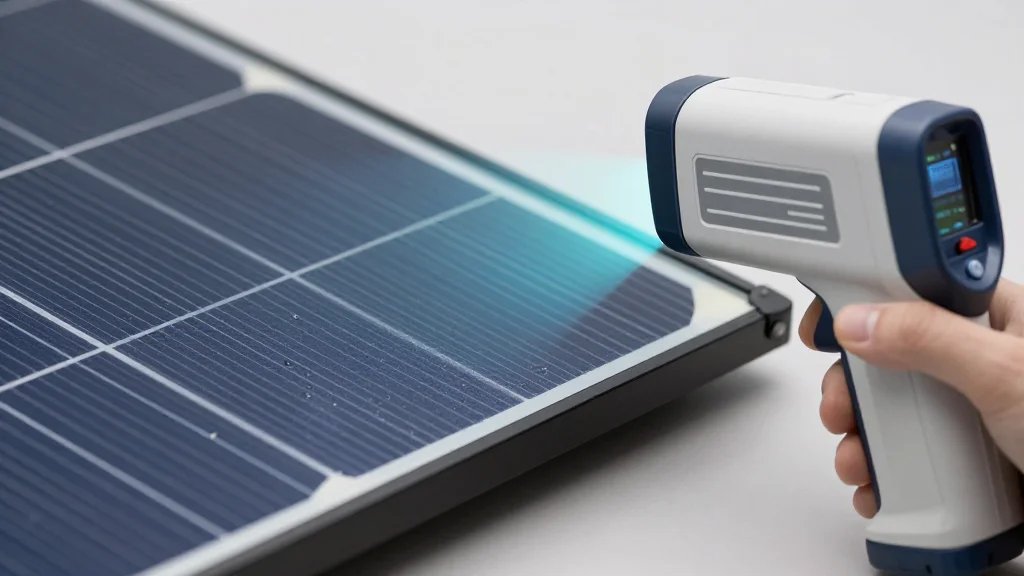
New Technique Measures Water Ingress in PV Modules without Disconnecting Them
Why It Matters
Accurate, nondestructive moisture measurement lets manufacturers and operators pinpoint degradation pathways, reducing downtime and financial risk while supporting tighter performance guarantees in a rapidly expanding PV market.
Key Takeaways
- •Handheld NIRA device measures moisture in sealed PV modules onsite
- •Calibration with Karl‑Fischer titration yields absolute water content values
- •PET backsheets absorb more water than PP, accelerating degradation
- •Cracked backsheets show up to ten‑fold faster moisture uptake
Pulse Analysis
Water ingress remains a silent killer for solar modules, driving moisture‑induced degradation (MID) and potential‑induced degradation (PID) that erode output and shorten warranties. Traditional diagnostics rely on invasive sampling, assumptions about diffusion laws, or indirect electrical signatures, leaving operators with uncertain risk assessments. As solar capacity scales globally, especially in humid or tropical regions and emerging floating‑PV projects, the industry needs a reliable, rapid way to gauge internal moisture without dismantling assets.
The new technique bridges that gap by pairing near‑infrared absorption (NIRA) spectroscopy with Karl‑Fischer titration (KFT) calibration. Researchers first expose representative polymer coupons—encapsulants and backsheets—to controlled humidity, record their NIRA signatures, and then determine exact water mass via KFT. The resulting calibration curves translate NIRA intensity directly into absolute water content, allowing a handheld spectrometer to scan installed modules in minutes. Field trials confirmed the method’s sensitivity: PET‑backed modules retained more moisture than PP, and modules with backsheet or cell cracks exhibited up to 50% higher water levels, with cracked AAA backsheets absorbing water ten times faster than intact references.
For manufacturers, this insight enables targeted material selection and barrier design improvements, while operators gain a proactive inspection tool that flags at‑risk modules before performance drops. The data also strengthens warranty claims and reclamation processes, enhancing asset bankability for investors. As the solar industry pushes toward higher efficiencies and longer service lives, adopting nondestructive moisture diagnostics could become a standard quality‑assurance practice, driving both reliability and confidence across the value chain.
New technique measures water ingress in PV modules without disconnecting them
Comments
Want to join the conversation?
Loading comments...