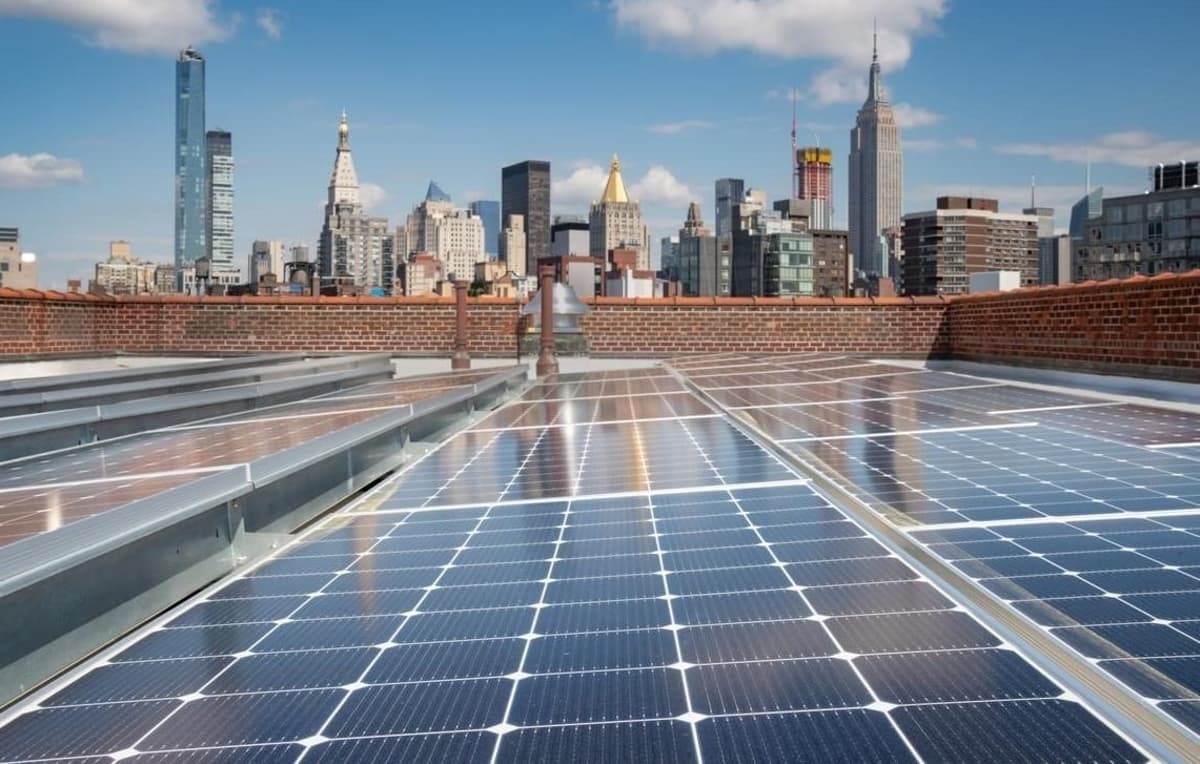
New York State Senate Passes ASAP Act to Deploy 20GW Distributed Solar by 2035
Companies Mentioned
Why It Matters
The ASAP Act accelerates New York’s clean‑energy transition, delivering projected annual savings of more than $1 billion while expanding affordable solar access for disadvantaged communities.
Key Takeaways
- •NY Senate approves ASAP Act targeting 20 GW distributed solar by 2035.
- •State hit 6 GW target early, now aims 10 GW by 2030.
- •Community solar must allocate at least 35% capacity to low‑income households.
- •Flexible interconnection reforms aim to cut integration costs and timelines.
- •Synapse analysis forecasts over $1 billion annual avoided energy costs.
Pulse Analysis
New York’s aggressive solar agenda reflects a broader shift among states to meet climate commitments through distributed generation. By surpassing its 6 GW target a year ahead of schedule, the Empire State has demonstrated that policy certainty and streamlined permitting can unlock rapid capacity growth. The ASAP Act builds on that momentum, leveraging the NY‑Sun programme to channel both private and public capital into rooftop and community projects, while embedding equity requirements that ensure low‑ and moderate‑income households capture a meaningful share of the benefits.
The legislation’s centerpiece is a suite of incentives designed to lower upfront costs for homeowners and businesses, coupled with a mandate that at least 35% of community‑solar capacity be reserved for disadvantaged neighborhoods. This approach mirrors successful models in California and Massachusetts, where targeted subsidies have spurred adoption among renters and multifamily dwellings. Additionally, the act directs the Public Service Commission to adopt flexible interconnection standards, a move expected to trim utility‑grid integration expenses and compress project timelines—critical factors for developers seeking predictable returns.
Industry analysts anticipate that the ASAP Act will catalyze a wave of investment, creating thousands of jobs in installation, manufacturing, and grid services. The projected $1 billion in annual avoided energy costs underscores the economic upside of scaling solar, while also reducing reliance on fossil‑fuel imports. As other states watch New York’s rollout, the act could become a template for nationwide policy, though challenges remain in coordinating utility upgrades and ensuring that the low‑income allocation is effectively administered. Overall, the bill positions New York as a national leader in equitable, high‑impact clean‑energy policy.
New York State Senate passes ASAP Act to deploy 20GW distributed solar by 2035
Comments
Want to join the conversation?
Loading comments...