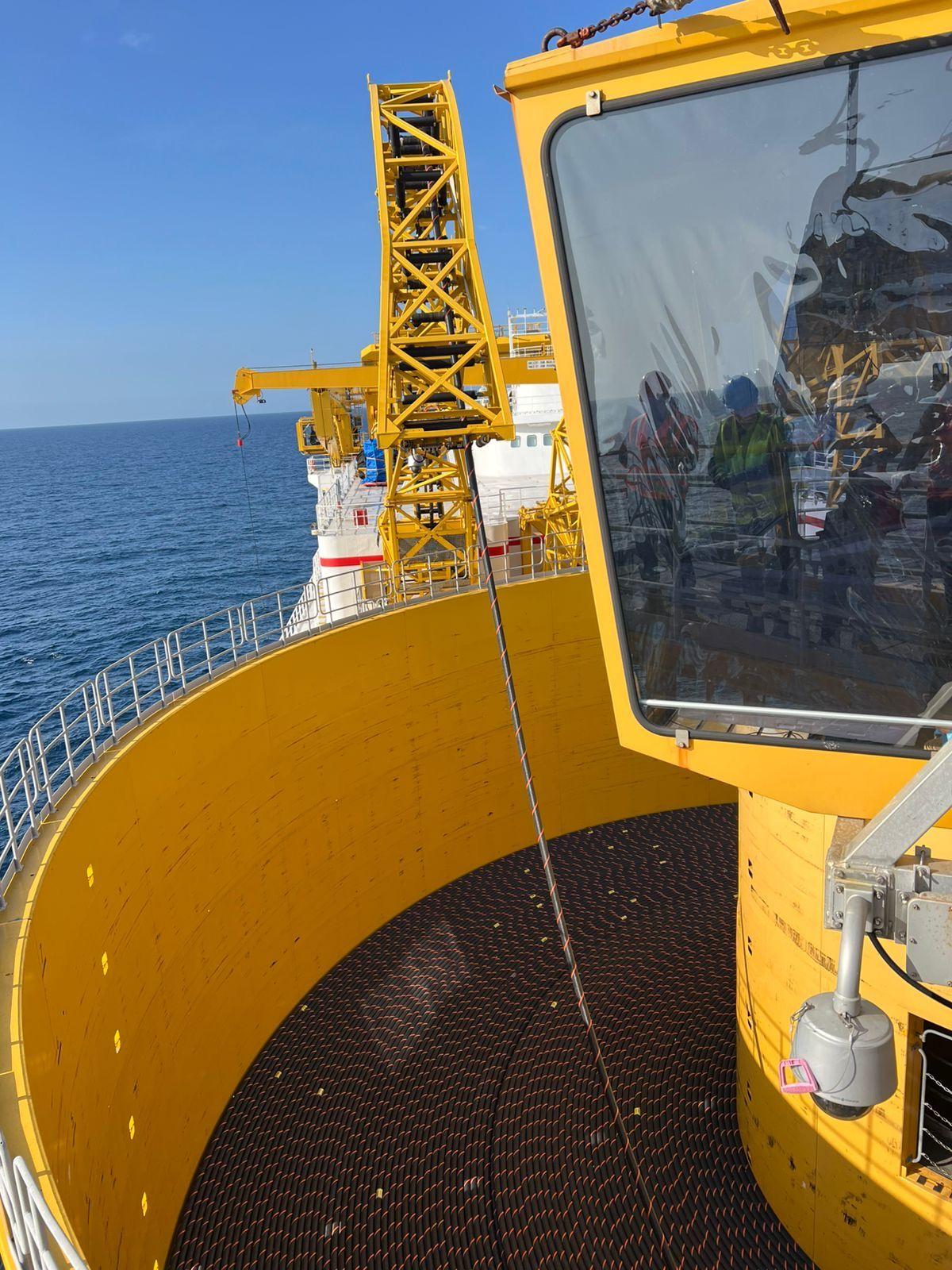
Nexans Breaks World Record Again by Installing Subsea Cable 3,000 Meters Under Water
•March 10, 2026
0
Why It Matters
The record proves ultra‑deep HVDC links are technically viable, unlocking new pathways for renewable energy integration and cross‑border power trade. It also cements Nexans as a leading supplier in the high‑voltage subsea market.
Key Takeaways
- •525 kV MI HVDC cable installed at 3,000 m depth.
- •Record exceeds previous 2,150 m depth benchmark.
- •Tested 30 % above industry reliability standards.
- •Enhances Europe’s offshore renewable transmission capacity.
- •Strengthens Nexans’s market position in deep‑sea cables.
Pulse Analysis
Deep‑water high‑voltage direct current (HVDC) cables have long been constrained by pressure, temperature, and installation logistics. By successfully laying a 525 kV mass‑impregnated cable at 3,000 meters, Nexans demonstrates that modern insulation materials and advanced laying vessels can overcome these barriers. The test regime—30 % above standard reliability thresholds—provides a safety margin that reassures grid operators about long‑term performance in hostile marine environments.
The European power sector is rapidly expanding offshore wind capacity, and the ability to transmit electricity from remote sites at ultra‑high voltage is critical to minimizing losses. Nexans’s record‑setting installation directly supports the continent’s goal of a fully integrated renewable grid, enabling larger wind farms to connect without excessive infrastructure costs. Moreover, the deeper the cable can be placed, the less it interferes with shipping lanes and fishing zones, reducing regulatory friction and public opposition.
For Nexans, the achievement is a strategic differentiator in a competitive market dominated by a few global players. The company can now leverage this proof‑of‑concept to win contracts for next‑generation interconnectors, such as the proposed Mediterranean Energy Corridor. Investors and policymakers will likely view the record as evidence of robust engineering capabilities, potentially accelerating financing for future deep‑sea projects. As other manufacturers chase similar milestones, the industry may see a wave of innovation focused on higher voltages, longer spans, and smarter monitoring systems.
Nexans breaks world record again by installing subsea cable 3,000 meters under water
0
Comments
Want to join the conversation?
Loading comments...