No Customers: Plans for Townsville Hydrogen Project Scrapped After Failing to Find Buyers for the Product
Companies Mentioned
Why It Matters
The failure to find hydrogen buyers threatens the return on public subsidies and signals a market pivot away from costly, large‑scale hydrogen schemes toward more immediate solar and storage solutions. This shift could reshape Australia’s renewable‑energy roadmap and influence future policy funding.
Key Takeaways
- •Edify scrapped Townsville hydrogen project after missing buyer commitments.
- •$50 M (≈$33 M USD) federal grant left unused, raising repayment questions.
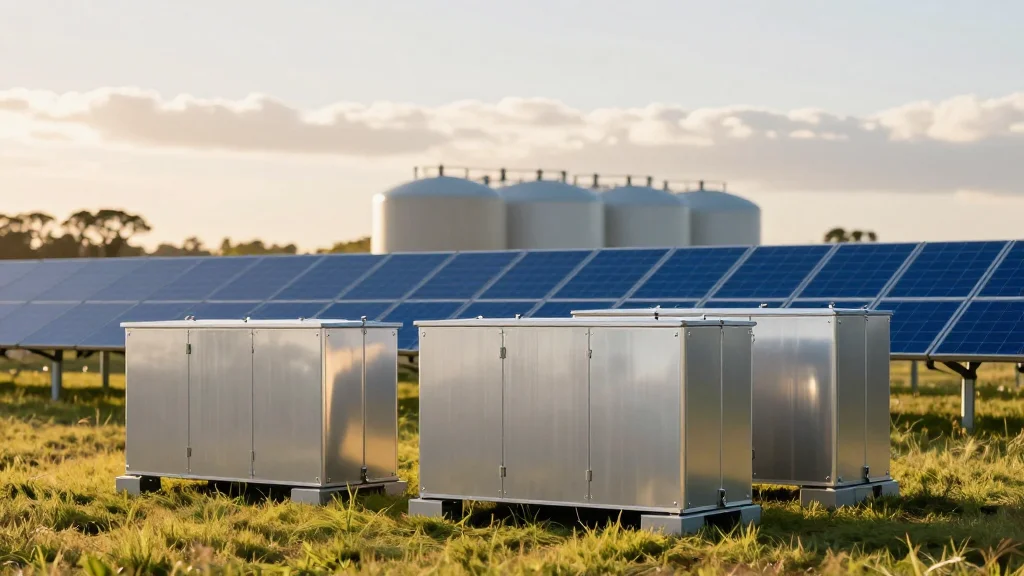
- •Company redirects capital to 150 MW solar farms and 150 MW battery.
- •Fortescue similarly forced to repay $20 M (≈$13 M USD) of subsidies.
- •Australian green‑hydrogen pipeline stalls, shifting to smaller demonstration projects.
Pulse Analysis
The Townsville cancellation highlights a growing disconnect between ambitious green‑hydrogen roadmaps and actual market demand. Edify’s 17.6 MW electrolyser, backed by roughly $33 million USD in federal funds and a $0.8 million USD ARENA grant, never secured a commercial off‑take, prompting the firm to halt the project and place it on hold. By shifting focus to 150 MW solar developments and a four‑hour, 150 MW battery, Edify is betting on technologies with clearer revenue streams and shorter deployment timelines, a trend echoed across the Australian renewables sector.
Australia’s broader hydrogen strategy has hit a similar snag. Fortescue’s Gladstone PEM50 plant, launched in early 2024, was forced to shut down by mid‑2025, with the company agreeing to repay $13 million USD of a $22 million USD federal subsidy. These high‑profile failures have prompted state and federal agencies to scrutinize grant allocations, especially the $20.7 million AUD (≈$13.6 million USD) ARENA pool that was contingent on project delivery. The recurring theme is a market that has not materialised as quickly as policy forecasts, leaving governments to grapple with potential claw‑backs and a reassessment of funding criteria.
Looking ahead, the industry appears to be recalibrating toward smaller demonstration projects and integrated solar‑storage solutions that can generate near‑term cash flow. Initiatives like Western Australia’s Kwinana Energy Transformation Hub illustrate a pragmatic approach, combining production testing with immediate grid services. Meanwhile, mega‑scale visions such as the 70 GW Nullarbor hub remain speculative, dependent on a future surge in hydrogen demand. Policymakers may need to align incentives with realistic market signals, encouraging phased deployments that de‑risk capital while still advancing Australia’s clean‑energy ambitions.
No customers: Plans for Townsville hydrogen project scrapped after failing to find buyers for the product
Comments
Want to join the conversation?
Loading comments...