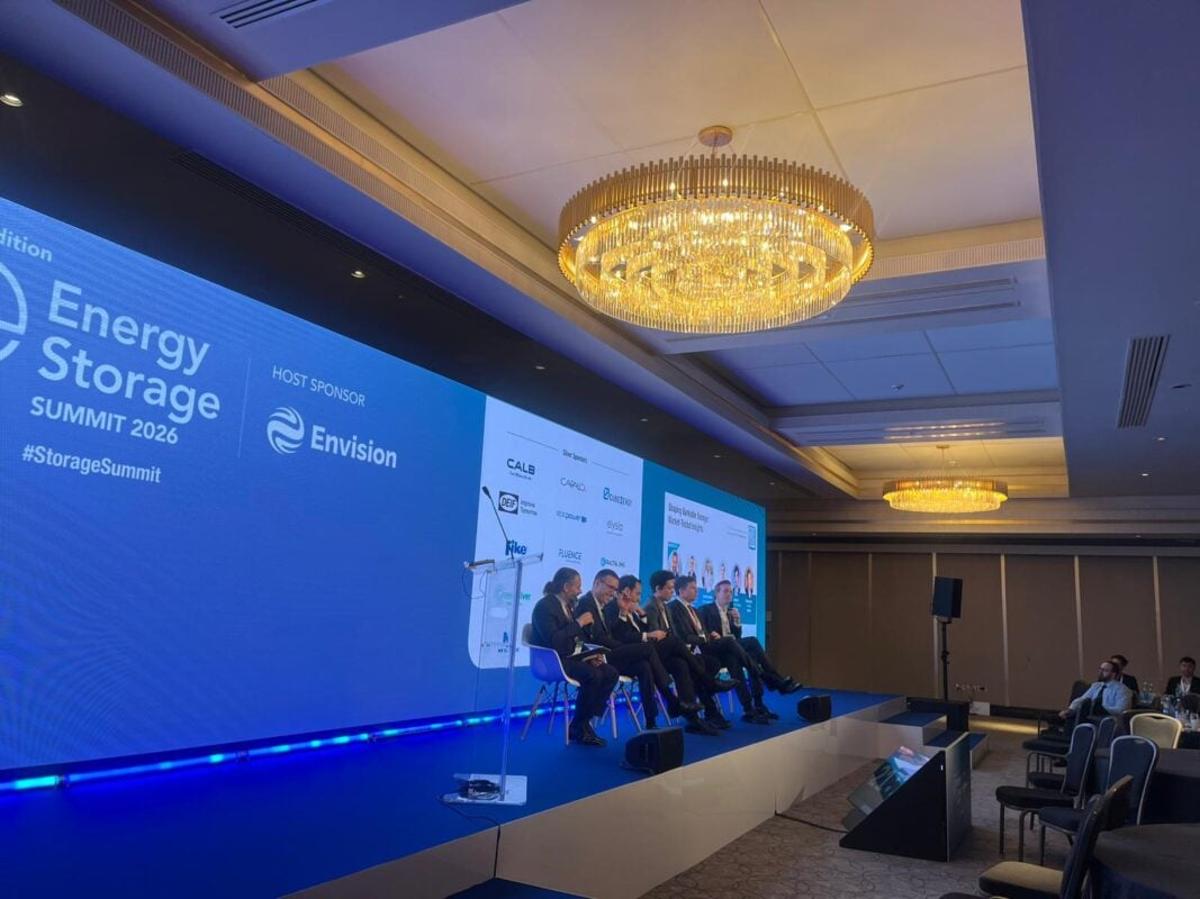
‘No Project Above 100MW Is Fully Merchant’: Bankability in Focus as Energy Storage Summit 2026 Kicks Off
•February 24, 2026
0
Why It Matters
Bankable revenue structures are essential for attracting private‑equity capital to megawatt‑scale storage, directly influencing the pace of grid‑level decarbonisation.
Key Takeaways
- •UK BESS projects rely on tolls, not pure merchant
- •15‑year toll signed for 4‑hour BESS, unprecedented length
- •Bank count financing BESS grew from 10 to ~60
- •Italy’s MACSE and Capacity Market create revenue uncertainty
- •Simplified warranties needed to improve project economics
Pulse Analysis
Volatility in electricity markets has pushed investors to demand predictable cash flows, making toll contracts the cornerstone of large‑scale battery projects. In the United Kingdom, about 80 % of storage capacity now carries a floor price or toll, and the recent 15‑year agreement for a 4‑hour BESS marks a record in contract length. These arrangements mitigate price swings, but they also signal that megawatt‑scale assets cannot yet survive as fully merchant entities, limiting pure market‑based revenue models.
Financing dynamics are evolving rapidly. The pool of banks willing to underwrite BESS projects expanded from roughly ten to sixty, reflecting growing confidence in the technology and its revenue streams. However, bespoke toll structures often come at steep discounts, eroding sponsor margins and leaving money on the table. In Italy, schemes such as MACSE and the Capacity Market promise revenue certainty on paper, yet frequent rule changes and auction parameter shifts undermine long‑term forecasting, complicating bank risk assessments across Europe.
Looking ahead, standardisation of toll terms and warranty frameworks will be critical for scaling storage. Simpler, longer‑duration warranties aligned with toll periods can reduce sponsor risk and improve project economics. Policymakers must also stabilise scheme rules to prevent last‑minute alterations that destabilise revenue models. As banks continue to enter the market and contracts become more transparent, the sector is poised to deliver the grid‑level flexibility needed for deeper renewable integration.
‘No project above 100MW is fully merchant’: Bankability in focus as Energy Storage Summit 2026 kicks off
0
Comments
Want to join the conversation?
Loading comments...