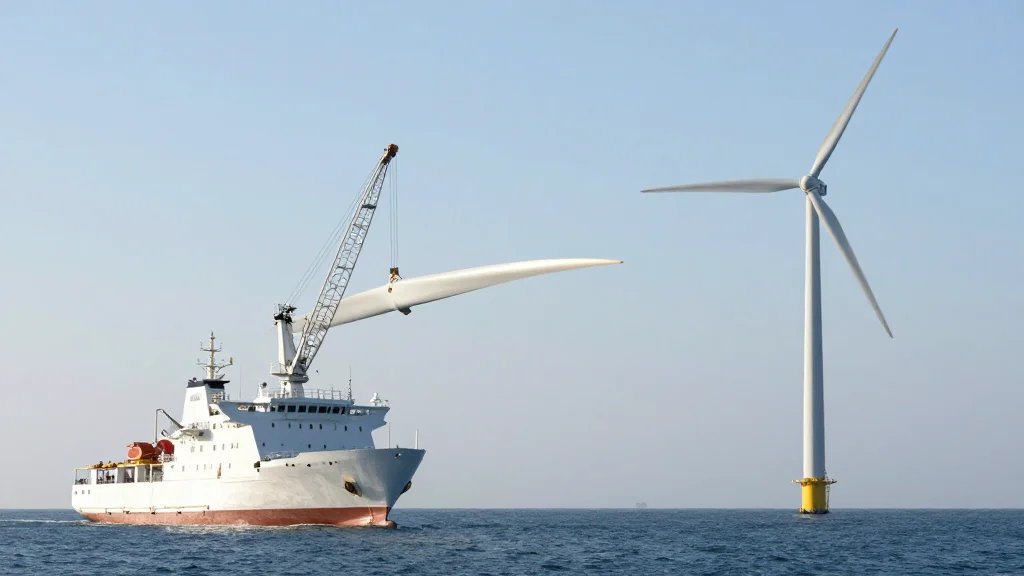
Non-US Offshore Wind Revival Drives Vessel Ordering Splurge
Companies Mentioned
Why It Matters
The surge in vessel procurement signals a tightening supply‑demand gap that could constrain offshore wind project timelines and drive up charter rates, reshaping the economics of new wind farms worldwide.
Key Takeaways
- •Cadeler plans to order two T‑class WTIVs, $128 M down‑payment each.
- •First T‑class vessel due mid‑2030, second mid‑2031.
- •Jumbo Maritime orders two $156 M heavy‑lift ships for 2028‑29.
- •Boskalis to launch fourth cable‑lay vessel in 2029 with 12,000‑ton carousels.
- •WTIV, foundation and support vessel shortage expected from 2029.
Pulse Analysis
The offshore wind sector is experiencing a renaissance outside the United States, driven by robust project pipelines in Europe and Asia. Developers are securing long‑term contracts for megawatt‑scale turbines, which require specialized vessels capable of handling XXL foundations. Cadeler’s upcoming T‑class WTIVs, each backed by a $128 million down‑payment, illustrate how operators are pre‑positioning capacity to capture this wave of demand, while a recent $204 million private placement underscores investor confidence in the market’s growth trajectory.
Beyond Cadeler, a broader fleet expansion is underway. Jumbo Maritime’s $156 million order for two heavy‑lift ships, equipped with 1,200‑ton cranes, will bolster component transport capabilities for 2028‑29. Royal Boskalis is commissioning a fourth high‑capacity cable‑lay vessel slated for 2029, featuring dual 12,000‑ton cable carousels to streamline long‑distance interconnector installations. Belgian firms Jan de Nul and DEME are also adding submarine cable and turbine installation vessels, reflecting a sector‑wide push to match the accelerating rollout of offshore wind farms.
Analysts warn that vessel supply may lag behind project demand as early as 2029, creating a potential bottleneck for both new builds and operations‑and‑maintenance activities. This anticipated shortfall could elevate charter rates and incentivize further shipbuilding investments, especially in Asian yards capable of delivering large‑scale WTIVs. Stakeholders—from turbine manufacturers to financing institutions—must monitor vessel availability closely, as it will increasingly influence project economics, timelines, and the overall competitiveness of offshore wind in the global renewable energy mix.
Non-US offshore wind revival drives vessel ordering splurge
Comments
Want to join the conversation?
Loading comments...