Why It Matters
The accelerated progress boosts Europe’s renewable capacity, enhancing energy security and supporting the continent’s decarbonisation targets. It also signals robust financial confidence for large‑scale offshore wind investments.
Key Takeaways
- •EEW and CS Wind delivered monopiles ahead of schedule
- •68 monopiles and transition pieces prepared for installation
- •Nordlicht I contributes 980 MW, Germany's largest offshore wind
- •Cluster delivers 1.6 GW, roughly 6 TWh yearly output
- •Early component delivery speeds up offshore construction timeline
Pulse Analysis
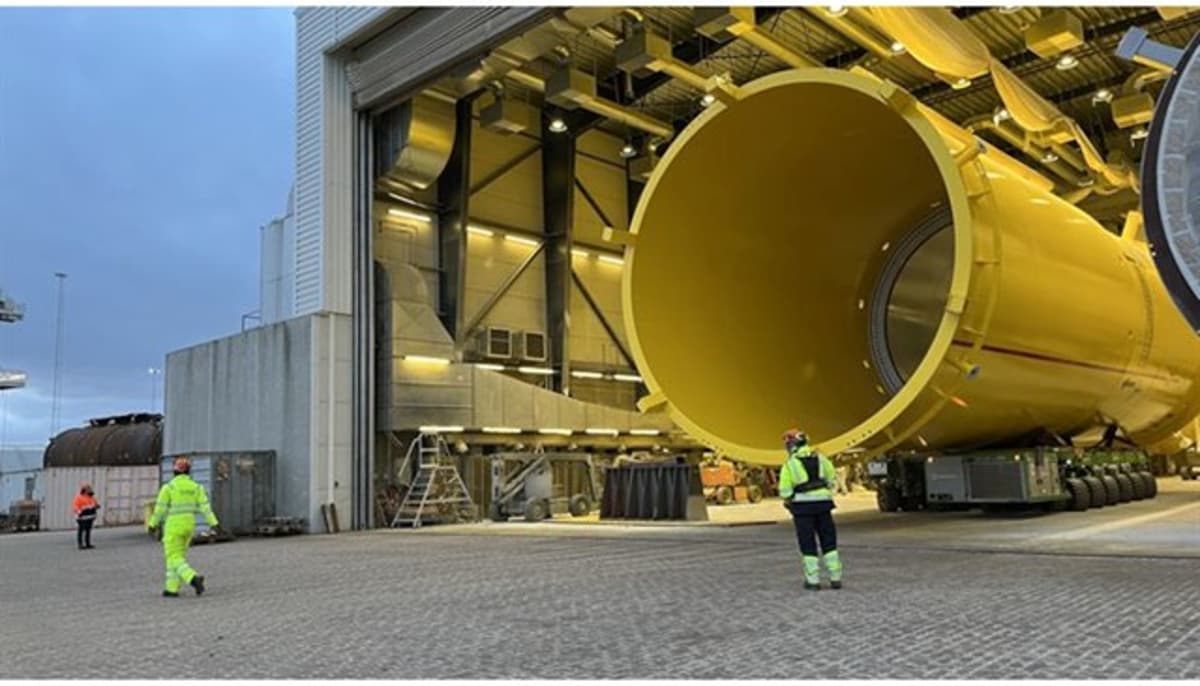
The swift fabrication of Nordlicht I’s monopiles and transition pieces underscores a maturing offshore‑wind supply chain in Europe. EEW and CS Wind completed 68 steel structures—80.5 metre monopiles weighing up to 1,290 tonnes and 23.7 metre transition pieces at roughly 362 tonnes—well before the slated installation window. By front‑loading these heavy‑lift components, the project mitigates logistical bottlenecks that often delay offshore construction, allowing the turbine‑erection phase to commence on schedule later this year. Early delivery also signals robust coordination between the developer and tier‑one manufacturers, a model other developers are keen to emulate.
At 980 MW, Nordlicht I will become Germany’s largest offshore wind farm, while the combined Nordlicht I and II cluster pushes total capacity beyond 1.6 GW and an estimated 6 TWh of annual generation. This output aligns with Germany’s 2030 offshore wind target of 20 GW and the EU’s broader ambition to achieve climate neutrality by 2050. By delivering fossil‑free electricity at scale, the project strengthens European energy security, reduces reliance on imported gas, and provides a clean power source for industrial decarbonisation initiatives.
The early milestone also validates Vattenfall’s recent final investment decision and the binding permit for Nordlicht II, signaling confidence in the financial viability of large‑scale offshore assets. Investors are watching the project’s progress as a barometer for future capital allocation toward the North Sea corridor, where turbine sizes and hub heights are rapidly increasing. Moreover, the demand for high‑specification monopiles and transition pieces is spurring innovation among European fabricators, potentially lowering costs through economies of scale. As more clusters reach commercial operation, the offshore wind sector is poised to become a cornerstone of Europe’s power mix.
Nordlicht I components completed early


Comments
Want to join the conversation?
Loading comments...