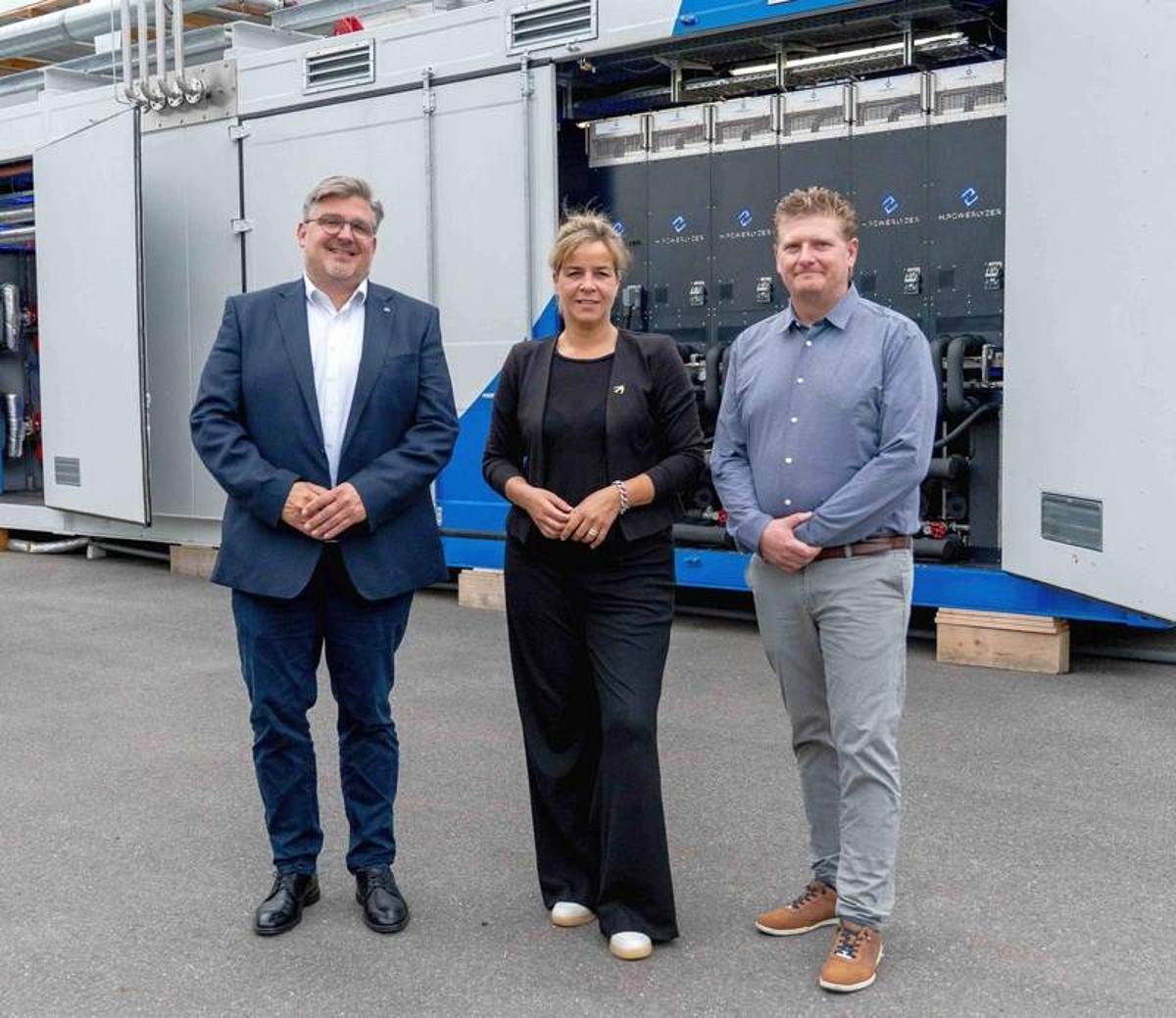
North Rhine-Westphalia's Minister of Economic Affairs Visits German-Dutch Hydrogen BOOST Project
Why It Matters
The ministerial visit underscores strong regional policy support, boosting investor confidence in Europe’s hydrogen supply chain. Successful BOOST outcomes could accelerate the rollout of resilient, low‑carbon energy infrastructure across the EU.
Key Takeaways
- •BEN‑Tec and H2 POWERCELL partner with university on hydrogen tech
- •BOOST project receives EU INTERREG co‑funding for German‑Dutch collaboration
- •Three‑year program runs March 2024‑Feb 2027 to scale decentralized hydrogen
- •NRW Minister Neubaur’s visit signals strong regional policy backing
Pulse Analysis
The German‑Dutch BOOST project represents a concrete step toward the EU’s ambition of a hydrogen‑powered economy. By linking BEN‑Tec’s industrial expertise with H2 POWERCELL’s innovative cell technology and academic research from Münster University, the consortium is testing modular, off‑grid hydrogen generators that can be deployed in remote or industrial sites. EU INTERREG funding not only de‑risks the early‑stage research but also creates a template for cross‑border collaboration that other regions can replicate, reinforcing Europe’s strategic autonomy in clean energy.
Mona Neubaur’s on‑site visit during the NRW Innovation Tour 2026 sends a clear signal that state actors are actively championing hydrogen as a pillar of regional economic recovery. The presence of the Deputy Prime Minister highlights the project’s relevance to job creation, export potential, and the broader climate agenda. By showcasing tangible progress, the ministry hopes to attract private capital, stimulate supply‑chain development, and position North Rhine‑Westphalia as a hydrogen hub within the European market.
Globally, the International Energy Agency’s 2026 review projects a rapid rise in green‑hydrogen demand, driven by heavy‑industry decarbonisation and transport electrification. BOOST’s focus on decentralized production addresses grid constraints and enhances energy resilience, a key concern amid geopolitical uncertainties. As the EU tightens its hydrogen certification standards, projects like BOOST will be instrumental in establishing credible, scalable pathways that bridge policy, technology, and market adoption, ultimately accelerating the continent’s net‑zero transition.
North Rhine-Westphalia's Minister of Economic Affairs Visits German-Dutch Hydrogen BOOST Project
Comments
Want to join the conversation?
Loading comments...