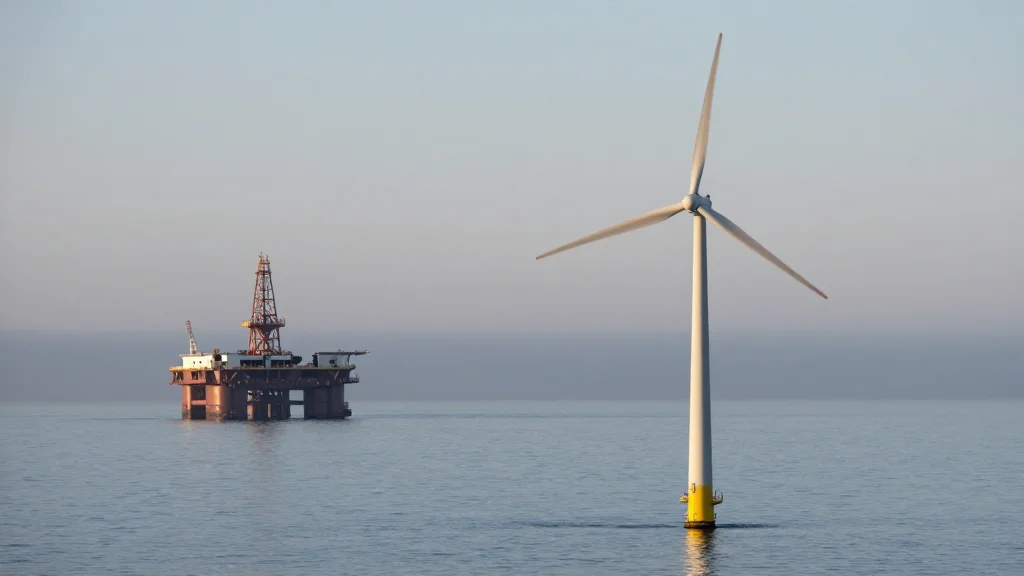
Norway’s Tax System Sets Course for Gradual Oil and Gas Phase‑Out

Why It Matters
The shift underscores how fiscal policy can be wielded as a strategic tool to align a nation’s economic trajectory with climate goals, offering a template for other resource‑dependent economies. By embedding decarbonisation incentives in its tax code, Norway aims to reduce reliance on volatile fossil‑fuel markets while preserving fiscal health, a balance that could reshape Europe’s energy security calculus. If successful, the approach may accelerate the deployment of offshore wind, hydrogen, and carbon capture projects, reinforcing the continent’s transition to a low‑carbon grid. Conversely, a slower-than‑expected decline in oil output could maintain supply levels that temper European price spikes, highlighting the delicate interplay between climate ambition and energy stability.
Key Takeaways
- •Finance Minister Jens Stoltenberg says Norway’s tax system will gradually curb oil and gas production.
- •Higher carbon taxes and reduced drilling allowances are designed to nudge investors toward renewables.
- •Norway supplies roughly 25% of Europe’s oil and gas imports, making the policy economically significant.
- •A tax code review is planned for late 2026 to fine‑tune incentives for low‑carbon projects.
- •The move aligns with the EU’s Green Deal and could influence European energy market dynamics.
Pulse Analysis
Norway’s tax‑driven decarbonisation strategy reflects a pragmatic evolution from outright production caps to market‑based incentives. Historically, the country relied on generous tax breaks for oil firms to sustain high output levels, a model that funded generous welfare programs but entrenched fossil‑fuel dependence. By recalibrating the tax landscape, Norway is attempting to internalize the externalities of carbon emissions while preserving revenue streams through a broader tax base that includes emerging green sectors.
The approach also mitigates political risk. Abrupt production cuts could provoke domestic backlash from regions dependent on oil jobs and trigger fiscal shortfalls. A gradual, tax‑induced shift spreads the transition cost over time, allowing the labor market to adapt and giving the state time to reallocate subsidies toward renewable infrastructure. For investors, the clarity of a tax roadmap reduces uncertainty, encouraging capital to flow into offshore wind farms and hydrogen projects that now enjoy a more favourable fiscal environment.
Regionally, Norway’s policy could act as a catalyst for the EU’s energy transition. As the bloc tightens its own carbon pricing mechanisms, a major supplier signaling a phased reduction in fossil‑fuel exports may accelerate the EU’s diversification efforts, prompting faster adoption of alternative supplies and storage solutions. However, the success of this strategy hinges on the government’s ability to balance tax rates to keep oil revenues sufficient for public spending while making renewables financially compelling. If the tax burden becomes too heavy, it could deter investment across the board, slowing the very diversification Norway seeks to achieve.
Norway’s Tax System Sets Course for Gradual Oil and Gas Phase‑Out
Comments
Want to join the conversation?
Loading comments...