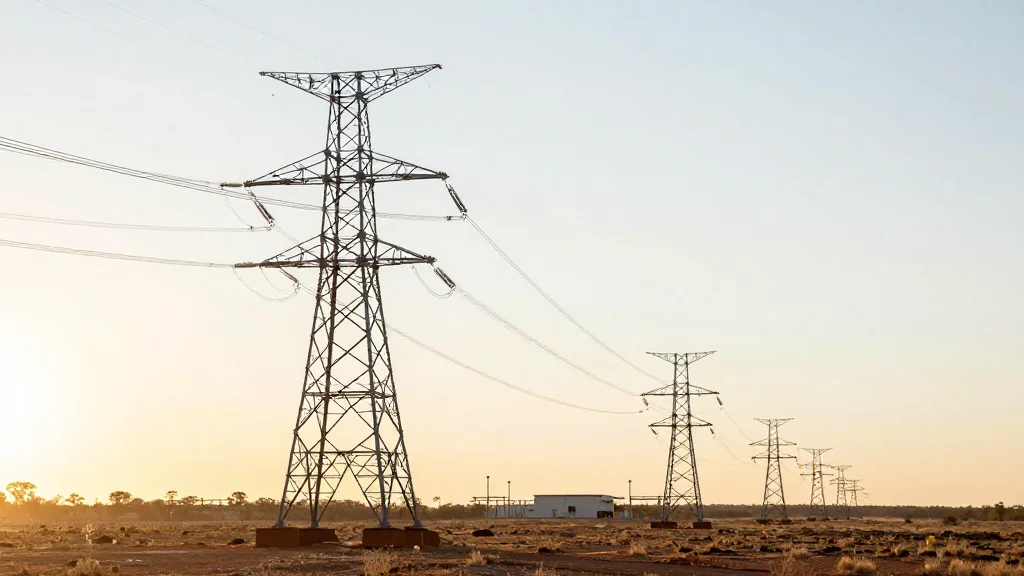
“Not Easy:” Australia’s Biggest Transmission Project Energised After Delays and Cost Overruns
Why It Matters
The interconnector strengthens grid resilience, unlocks cheaper renewable energy and is pivotal for Australia’s 2030 net‑zero goals, while highlighting the financial pressures of large‑scale infrastructure upgrades.
Key Takeaways
- •Project EnergyConnect cost rose from AU$2.1B to AU$3.8B (~US$2.5B)
- •800 MW capacity links South Australia and NSW, boosting grid reliability
- •Delays blamed on supply‑chain shocks, labour shortages, inflation, flooding
- •Net benefit estimated at AU$964M, offsetting higher consumer bills
- •Data‑centre demand in NSW/ACT could rise eight‑fold by 2035
Pulse Analysis
The completion of Project EnergyConnect marks a watershed moment for Australia’s power network, but the path to energisation has been anything but smooth. Initial estimates of AU$2.1 billion ballooned to AU$3.8 billion as the project grappled with pandemic‑era supply‑chain disruptions, a tight labour market, record inflation and even unexpected flooding. These factors forced Transgrid to reassess its financial model, highlighting the vulnerability of large infrastructure programmes to external shocks and underscoring the need for more robust risk‑allocation mechanisms.
Beyond the balance‑sheet impact, the 800‑megawatt interconnector is set to reshape the energy landscape of the southern states. By easing transmission constraints, it enables a larger share of wind and solar output to flow from the resource‑rich southwest of NSW into South Australia, where the government aims for 100 percent renewable electricity by 2030. The added capacity also supports the phase‑out of coal‑fired generators in New South Wales, promising lower wholesale prices that could offset the modest increase in household bills. Transgrid’s CEO Brett Redman has called for tariff reform to ensure that consumers without rooftop solar or batteries share the benefits equitably.
Looking ahead, the line’s strategic importance will grow as demand patterns evolve. Transgrid forecasts data‑centre electricity use in NSW and the ACT could surge from 3 TWh to 27 TWh within a decade, a load comparable to two Eraring‑size coal plants. Such high‑intensity users will likely fund dedicated infrastructure, reducing the cost burden on ordinary households. The EnergyConnect project thus serves as both a catalyst for Australia’s clean‑energy transition and a case study in balancing public investment, private cost recovery, and social equity in a rapidly decarbonising economy.
“Not easy:” Australia’s biggest transmission project energised after delays and cost overruns
Comments
Want to join the conversation?
Loading comments...