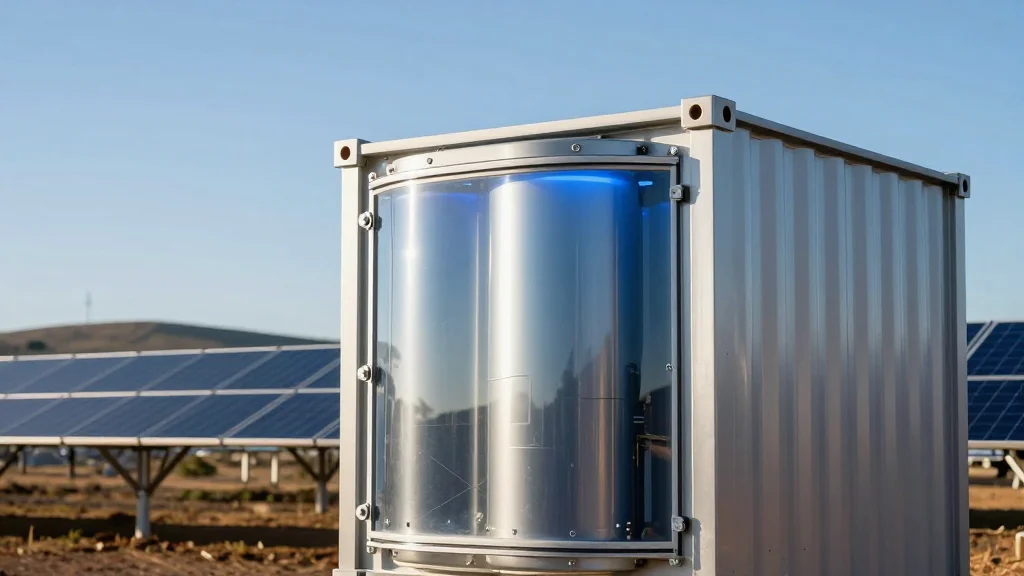
“Not Economically Viable:” Global Funds Giant Drops Plans for Solar Farm, to Build Bigger Battery Instead
Companies Mentioned
Why It Matters
The shift underscores how falling battery costs and oversupplied solar markets are reshaping investment decisions in Australia’s fast‑moving renewable sector, signaling a pivot toward storage‑first strategies.
Key Takeaways
- •Revera cancels 500 MW solar farm, keeps 500 MW battery plan
- •South Australia’s 75% renewable mix makes new solar projects less viable
- •Battery will be built in two 250 MW, 1,000 MWh stages
- •Revera’s Bungama battery operates without adjoining solar, mirroring Robertstown approach
- •Hybrid storage seen as solution to South Australia’s negative‑price periods
Pulse Analysis
Revera Energy’s pivot from a 500 MW solar farm to a stand‑alone 500 MW battery reflects a broader recalibration in Australia’s renewable investment thesis. While the Carlyle‑backed firm initially envisioned a solar‑plus‑storage hybrid at Robertstown, the state’s already saturated solar market—driven by a 75% share of wind and solar generation and record rooftop solar penetration—has depressed wholesale prices, especially during midday peaks. In this environment, new solar projects struggle to achieve the revenue streams needed for financial viability, prompting Revera to double down on storage, where declining battery costs and the ability to capture peak‑price arbitrage offer clearer returns.
South Australia’s electricity grid is a case study in the challenges of high renewable penetration. Frequent negative‑price events force existing solar farms to curtail output, while the state’s ambitious target of 100% net renewables by next year hinges on flexible resources that can store excess generation and dispatch it during evening demand spikes. Battery‑only installations, like the proposed Robertstown facility, can provide that flexibility without the operational complexities of integrating a co‑located solar plant. However, separating the assets forfeits the behind‑the‑meter efficiencies that hybrid projects can deliver, a trade‑off Revera appears willing to accept given current market signals.
The decision has ripple effects for investors and policymakers alike. For capital providers, it highlights the growing attractiveness of pure‑play storage assets, especially as technology costs continue to fall and ancillary service markets expand. Regulators may need to revisit incentive structures that currently favor solar development, ensuring that storage receives comparable support to unlock the full potential of renewable integration. While Revera remains open to revisiting the solar component should valuation parameters improve, its immediate focus on a 2,000 MWh battery positions the company at the forefront of Australia’s transition toward a more resilient, storage‑centric energy future.
“Not economically viable:” Global funds giant drops plans for solar farm, to build bigger battery instead
Comments
Want to join the conversation?
Loading comments...