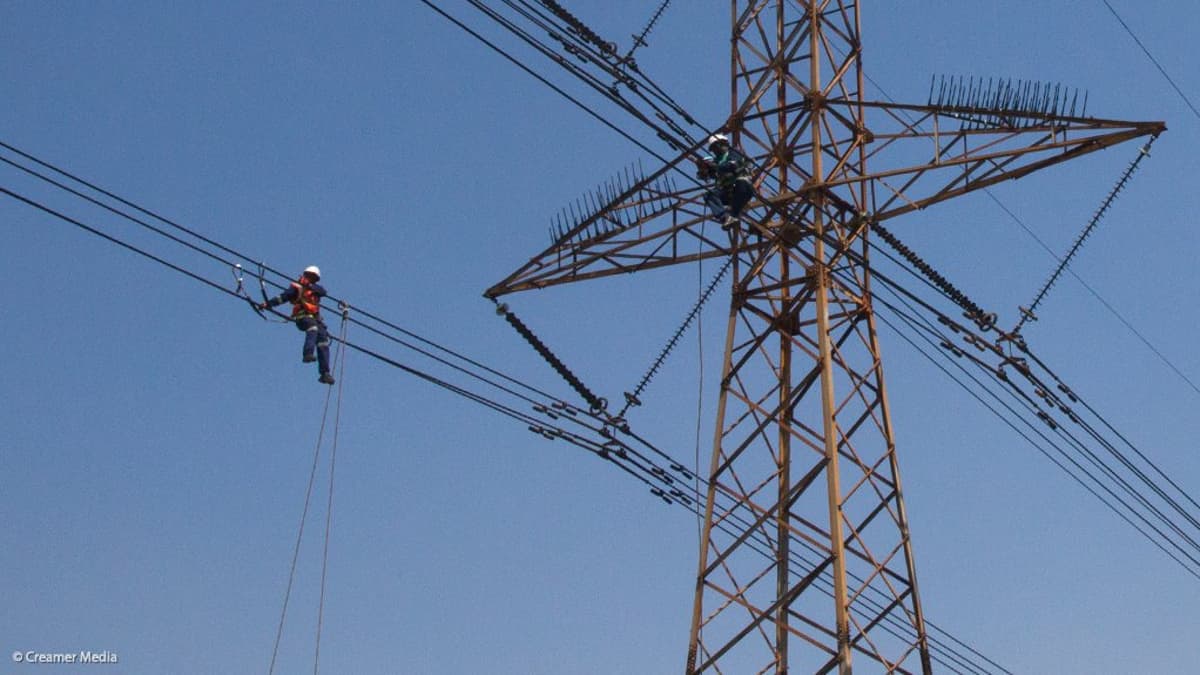
NTCSA, IDC Seek to Catalyse Localisation on Back of Big Grid Roll-Out
Companies Mentioned
Why It Matters
Accelerating local financing bridges the gap between ambitious grid expansion goals and the limited capacity of South African manufacturers, directly supporting the country’s transition to 37 GW of additional renewable generation. The deal also signals a policy shift toward deeper industrialisation, which could reshape the domestic supply chain and attract further private investment.
Key Takeaways
- •NTCSA-IDC MOU unlocks financing for local grid suppliers
- •TDP targets 14,500 km lines, 133 000 MVA transformers by 2034
- •Project cost R440 bn (~$24 bn) to enable 37 GW generation
- •Current build rate 270 km vs 423 km target, highlighting capacity gaps
- •IDC will fund qualifying firms for up to 72 months
Pulse Analysis
South Africa’s power‑sector overhaul hinges on the Transmission Development Plan, a $24 billion initiative that will add roughly 14,500 km of high‑voltage lines and 133,000 MVA of transformer capacity by 2034. The scale of the project is designed to unlock about 37 GW of new renewable generation, easing the bottlenecks that have limited wind and solar projects in the Eastern, Northern and Western Cape. While the government has set aggressive construction targets, progress has lagged—only 270 km of lines were built in FY 2025/26 against a 423 km goal—highlighting the need for a more robust domestic supply chain.
The newly signed memorandum of understanding between NTCSA and the Industrial Development Corporation seeks to address these shortfalls by channeling financing to locally verified suppliers. IDC’s role will be to evaluate and fund working‑capital and capital‑investment needs for firms that can produce critical components such as transformers, insulators, conductors and transmission steel. By creating a joint steering committee and an incubator programme, the partnership aims to fast‑track capacity building, reduce reliance on imported equipment, and ensure that procurement criteria favour South African manufacturers.
If successful, the initiative could reshape the country’s industrial landscape. A stronger local supplier base would not only accelerate grid construction but also generate jobs, stimulate downstream manufacturing, and improve the investment climate for both domestic and foreign players. Moreover, a reliable transmission network is essential for integrating the additional 37 GW of renewable capacity, helping South Africa meet its climate commitments while reducing electricity shortages. The next 72 months will be critical as funding decisions roll out and capacity gaps—particularly in steel‑fabrication and large‑transformer production—are addressed.
NTCSA, IDC seek to catalyse localisation on back of big grid roll-out
Comments
Want to join the conversation?
Loading comments...