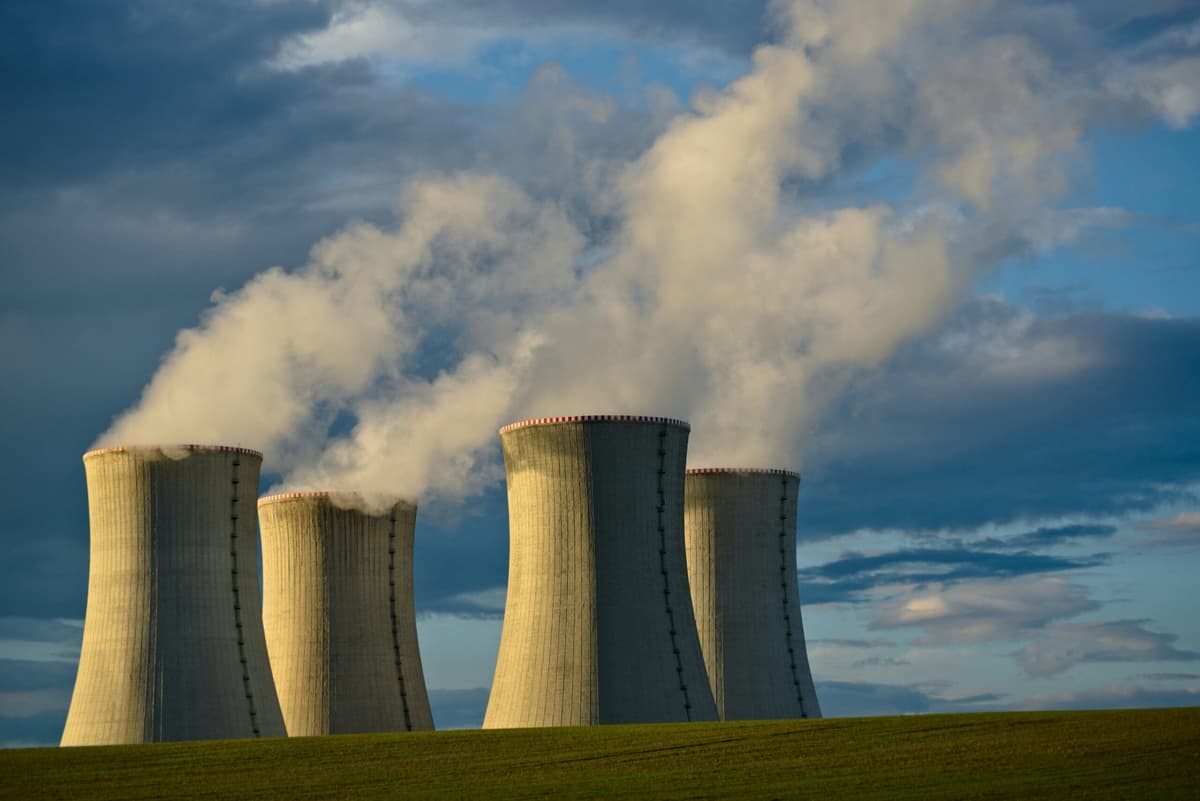
Nuclear Power Is Becoming Part of the AI Infrastructure Supply Chain
Companies Mentioned

Why It Matters
Reliable, large‑scale power is becoming a core variable in data‑center and manufacturing site selection, reshaping utility investment and supply‑chain strategies across the AI ecosystem.
Key Takeaways
- •AI data centers now need ~1 GW of firm power by 2028
- •DOE's Reactor Pilot Program targets three reactors reaching criticality by July 2026
- •TerraPower secured NRC construction permit for Natrium reactor, still needs operating license
- •Nuclear-grade valves, pumps, HALEU fuel and heavy components limit rapid reactor scaling
- •Utilities like AEP raise capital plans to fund data‑center power upgrades
Pulse Analysis
The surge in generative‑AI workloads has transformed electricity from a background utility concern into a decisive factor for data‑center siting. Traditional planning focused on land, fiber and server capacity, assuming renewable power purchase agreements or grid interconnection would suffice. However, hyperscale AI campuses, exemplified by Meta’s $10 billion El Paso investment targeting a gigawatt of continuous power, demand dense, uninterrupted electricity that renewables alone struggle to guarantee. This shift forces developers to consider firm‑capacity sources that can match the 24/7 operational cadence of AI training clusters.
Nuclear power, particularly advanced small modular reactors (SMRs) and micro‑reactors, offers the high‑capacity, low‑emission profile that AI infrastructure increasingly requires. The Department of Energy’s Reactor Pilot Program seeks to bring at least three advanced reactors to criticality by July 2026, while the Nuclear Regulatory Commission’s Part 53 rulemaking creates a more technology‑agnostic licensing pathway. TerraPower’s Natrium project in Wyoming, now armed with an NRC construction permit, illustrates how these policy levers are moving nuclear from concept to construction, even as the industry grapples with HALEU fuel supply constraints and the need for specialized nuclear‑grade components.
For supply‑chain leaders, the implication is clear: power availability will rank alongside transportation and labor in site‑selection models. Utilities such as American Electric Power are already expanding capital budgets—$78 billion over five years—to accommodate data‑center load growth, underscoring the strategic weight of electricity in future infrastructure planning. Companies must now integrate grid reliability, interconnection timelines, and potential on‑site generation, including nuclear, into their network‑design algorithms to mitigate risk and secure competitive advantage in an AI‑driven economy.
Nuclear Power Is Becoming Part of the AI Infrastructure Supply Chain
Comments
Want to join the conversation?
Loading comments...