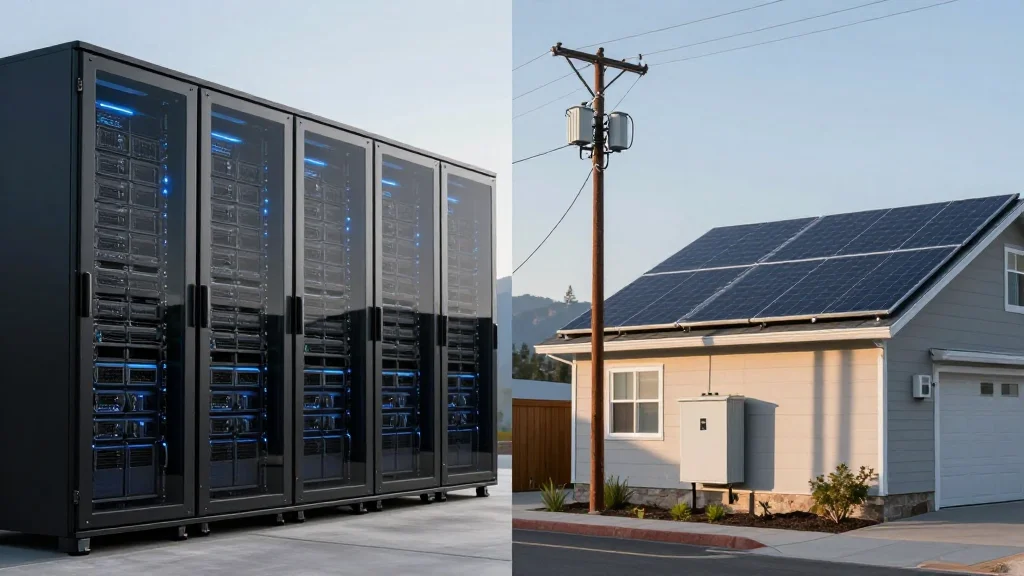
NV Energy Cuts Residential Power, Redirects 75% to Data Centers, Sparking Solar‑Battery Surge

Companies Mentioned
Why It Matters
The NV Energy decision illustrates how AI‑driven data centers are reshaping electricity markets, forcing utilities to prioritize high‑value industrial loads over residential customers. This reallocation raises systemic questions about grid equity, reliability, and the role of distributed energy resources in maintaining power access for households. If homeowners successfully replace grid supply with solar and batteries, the case could accelerate a broader shift toward decentralized grids across the United States. Policymakers may need to rethink rate structures, incentive programs, and grid‑investment priorities to balance the competing demands of AI compute and everyday electricity consumption.
Key Takeaways
- •NV Energy will divert 75% of Lake Tahoe’s power to data centers by May 2027, affecting 49,000 residents
- •Data centers accounted for 22% of Nevada’s electricity in 2024, projected to rise to 35% by 2030
- •Twelve new data‑center projects could add 5,900 MW of demand in northern Nevada by 2033
- •National residential electricity rates hit 17.45 cents/kWh in Jan 2026, a 9.5% YoY increase
- •Third‑party solar ownership models expected to grow 25% in 2026, reaching 69% of residential installs
Pulse Analysis
The Nevada power shift is a microcosm of a larger market realignment where AI compute becomes a first‑class load on the grid. Historically, utilities have protected residential customers because of political pressure and reliability mandates. However, the revenue potential of data centers—high, predictable demand and willingness to pay premium rates—creates a financial incentive for utilities to re‑prioritize capacity. NV Energy’s filing signals that the traditional residential‑first paradigm may be eroding, especially in regions with abundant renewable resources that can be tapped by large‑scale data‑center developers.
From a strategic perspective, the surge in solar‑plus‑storage adoption could mitigate the utility’s revenue loss while delivering grid services such as demand response and frequency regulation. Home‑based batteries can act as distributed storage, smoothing peak loads that data centers create. If policy frameworks evolve to reward such services, utilities might partner with residential aggregators rather than view them as competitors. This collaborative model could become a template for other states where data‑center footprints are expanding rapidly.
Looking ahead, the key variables will be the speed of residential solar deployment, the evolution of net‑metering and time‑of‑use tariffs, and the willingness of regulators to protect low‑income customers from rate spikes. Should Nevada successfully integrate a high share of distributed generation, it could demonstrate a viable pathway for balancing AI‑driven industrial growth with equitable residential service—a balance that will be critical as the nation’s electricity demand continues to tilt toward compute‑intensive workloads.
NV Energy Cuts Residential Power, Redirects 75% to Data Centers, Sparking Solar‑Battery Surge
Comments
Want to join the conversation?
Loading comments...