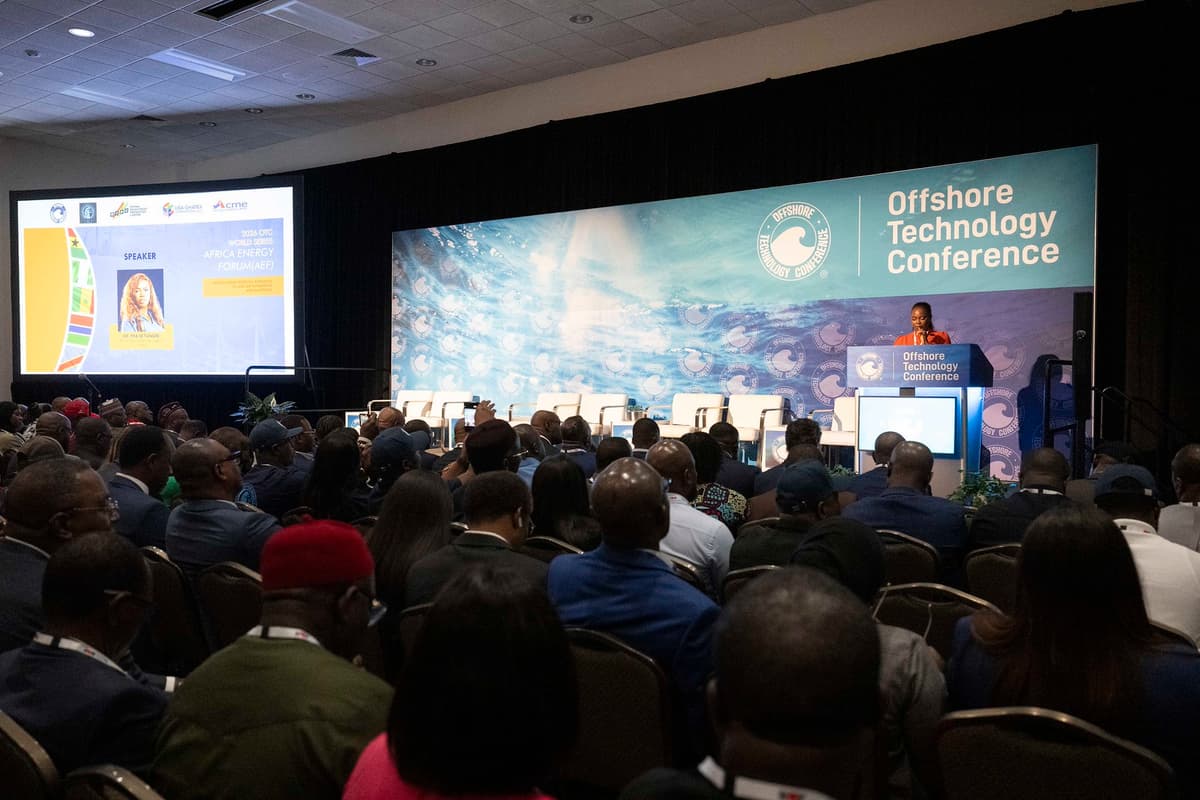
Offshore Growth and Geopolitics Dominate OTC 2026 Discussions
Why It Matters
The event signals renewed capital flow into offshore oil and gas, positioning offshore production as a hedge against geopolitical supply shocks while supporting the broader energy transition.
Key Takeaways
- •25,000 participants from 100+ countries attended OTC 2026.
- •Gulf of Mexico, Guyana, and deepwater regions highlighted for growth.
- •Geopolitical tension drives renewed focus on offshore energy security.
- •Exhibit hall hosted nearly 1,000 firms offering digital and transition tech.
- •AI, robotics, and subsea tie‑backs featured as emerging offshore tools.
Pulse Analysis
The Offshore Technology Conference remains the premier gathering for the offshore oil and gas sector, and OTC 2026 underscored that status despite a modest dip in attendance. With roughly 25,000 delegates converging in Houston, the conference reflected a market still grappling with volatility from the Middle East conflict. Energy executives used the platform to reaffirm offshore production as a cornerstone of global supply security, emphasizing that resilient offshore output can offset geopolitical disruptions and stabilize prices for downstream markets.
Growth prospects were a focal point, especially in the Gulf of Mexico, Guyana and other deep‑water basins. Investors are increasingly drawn to these regions due to proven reserves, favorable fiscal regimes and the ability to scale LNG export capacity. Guyana’s high‑profile keynote highlighted its rapid ascent as a major offshore player, while Gulf projects are being re‑energized by new financing structures that balance risk with the promise of long‑term cash flow. The convergence of capital, favorable commodity outlooks and strategic location is prompting a wave of 20,000‑foot development plans that could add billions of barrels of oil equivalent to global supply over the next decade.
Technology and digitalization took center stage, with AI‑driven analytics, autonomous robotics and subsea tie‑back solutions featured across the exhibit hall. Nearly 1,000 firms demonstrated how data integration, predictive maintenance and remote operation can cut costs and improve safety in harsh offshore environments. These innovations dovetail with the industry’s broader energy‑transition agenda, as operators seek to lower carbon intensity while maintaining output. By marrying advanced digital tools with traditional offshore engineering, the sector is positioning itself to meet both investor expectations for profitability and societal demands for cleaner energy production.
Offshore growth and geopolitics dominate OTC 2026 discussions
Comments
Want to join the conversation?
Loading comments...