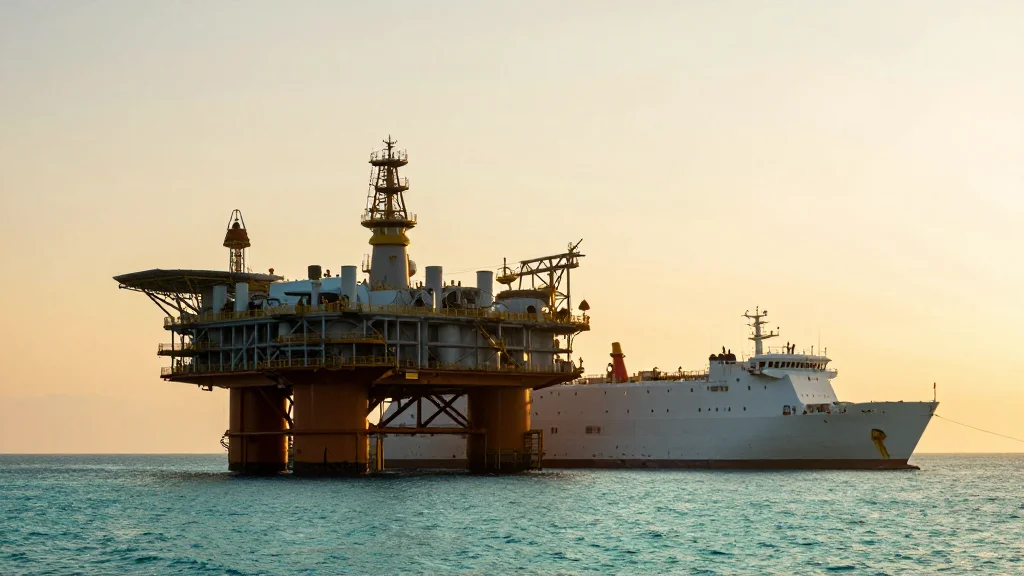
Offshore Venezuela Gas Project Advances as Eni, Repsol Secure Export Pathway
Why It Matters
Reviving the Perla field adds a new source of LNG to a market strained by supply cuts, while signaling renewed foreign investment in Venezuela’s energy sector under relaxed sanctions.
Key Takeaways
- •Eni, Repsol to double Perla field output, targeting 1.2 bcf/d
- •Export plan hinges on floating LNG terminal, faster than onshore builds
- •Deal extends field lease to 2051, securing long‑term presence
- •Compensation promised for billions of dollars worth of previously pumped gas
- •Global LNG market tightens after Iran war cuts 20% supply
Pulse Analysis
The Perla offshore field, discovered in 2009, holds roughly 17 trillion cubic feet of natural gas—one of Latin America’s largest finds. By committing to double current output from 585 million to 645 million cubic feet per day for domestic use, Eni and Repsol set the stage for a full‑scale LNG export operation by 2031. Their plan to install two new platforms by 2028 and reach 1.2 billion cubic feet per day aligns with a broader trend of leveraging floating LNG (FLNG) technology to bypass costly onshore infrastructure, a niche where Eni already has proven expertise.
The timing is critical. The Iran‑Ukraine war has shaved roughly 20% off global LNG availability, tightening prices and prompting buyers to seek alternative sources. At the same time, the United States has begun easing sanctions on Venezuela, allowing foreign firms to invest in the country’s crumbling energy assets. The Eni‑Repsol agreement therefore not only expands supply but also signals a geopolitical shift, as Western companies re‑enter a market long dominated by state‑run PDVSA. The promised compensation for billions of dollars of previously pumped gas removes a lingering financial dispute, smoothing the path for future collaborations.
Looking ahead, the extended lease through 2051 gives the partners a long‑term foothold in the Caribbean basin, a region poised for increased energy demand as economies recover post‑pandemic. Successful FLNG deployment could serve as a template for other remote gas fields in South America and Africa, where onshore pipelines are impractical. Investors will watch closely for the June development plan submission, which will detail financing structures and risk mitigation strategies, crucial for scaling a project that blends high‑tech engineering with a volatile political environment.
Offshore Venezuela gas project advances as Eni, Repsol secure export pathway
Comments
Want to join the conversation?
Loading comments...