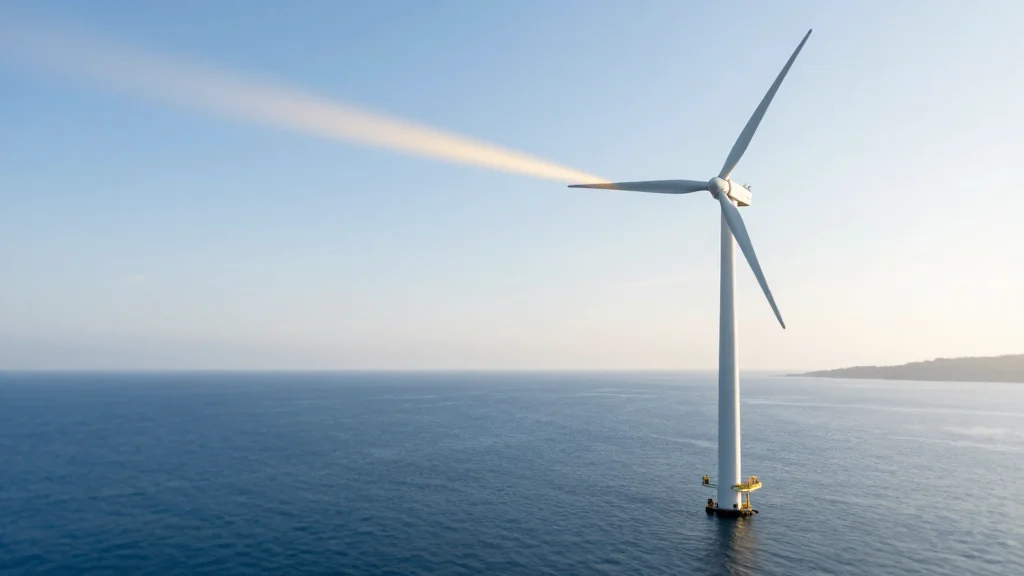
Offshore Wind Firm that Took Trump Payout Hits a Milestone in Europe
Why It Matters
The French startup’s power start validates floating wind as a viable solution for deep‑water sites, accelerating Europe’s renewable‑energy goals. Meanwhile, the U.S. lease refunds expose policy risk for offshore wind developers and shift capital toward fossil fuels, underscoring the geopolitical divide in clean‑energy investment.
Key Takeaways
- •Ocean Winds' 30 MW French floating farm began feeding power to grid.
- •Project marks progress for floating offshore wind in deep‑water sites.
- •U.S. leases abandoned; Trump admin will refund ~ $900 M to developers.
- •Refund tied to investments in LNG and other fossil‑fuel projects.
- •Ocean Winds continues global floating wind pipeline, targeting 250 MW in Mediterranean.
Pulse Analysis
Floating offshore wind is emerging as the most practical way to harvest energy in waters too deep for traditional fixed‑bottom turbines. Europe has led the charge, with France’s new 30‑MW project demonstrating that floating foundations can reliably feed power into national grids. The technology’s ability to tap high‑velocity winds farther offshore promises higher capacity factors, and its success in France bolsters the case for similar deployments across the Mediterranean, the United Kingdom and South Korea.
In the United States, the political environment has become a decisive factor for offshore wind development. The Trump administration’s decision to reimburse Ocean Winds and its partners nearly $900 million for relinquishing two leases underscores the volatility that developers face when federal policy shifts abruptly. By tying the funds to LNG and other fossil‑fuel projects, the administration effectively redirects capital away from clean energy, raising concerns among lawmakers and regulators about the legality and long‑term impact on the nation’s decarbonization targets.
Ocean Winds’ strategy reflects a pragmatic response to these divergent regulatory landscapes. While pulling back from contentious U.S. projects, the company is expanding its floating wind portfolio in regions with clearer policy support, including a 250‑MW Mediterranean farm and additional gigawatt‑scale projects in the U.K. and South Korea. This pivot illustrates how global developers are reallocating resources toward markets that reward renewable innovation, positioning floating wind as a cornerstone of the next wave of offshore energy expansion.
Offshore wind firm that took Trump payout hits a milestone in Europe
Comments
Want to join the conversation?
Loading comments...