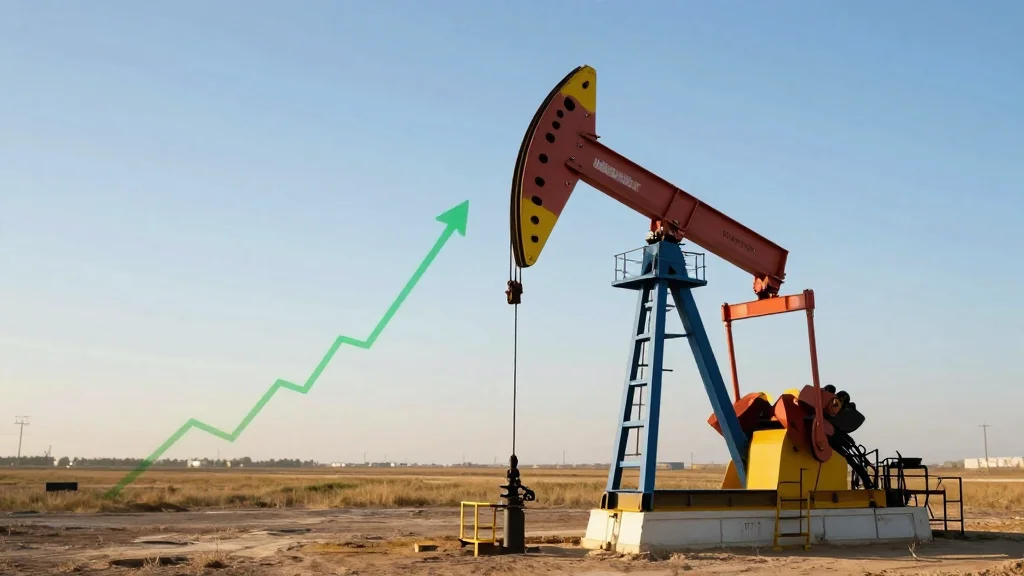
OIH: When The Oil Market Breaks, This Fund Should Thrive
Companies Mentioned

Why It Matters
Accelerating oil‑field capex translates into higher revenue for service firms, offering investors a leveraged exposure to the drilling boom without direct commodity risk. OIH’s modest volatility and discount to infrastructure spend make it a strategic play as supply disruptions persist.
Key Takeaways
- •OIH holds 25 oil‑service stocks, top ten make up ~70% assets.
- •Global oil inventories fell 250 million barrels in two months.
- •Oil‑field services lag price moves by 12‑24 months, creating upside.
- •Canadian oil capex projected at $14 billion in 2026, up from $13.3 billion.
- •Fund’s beta 0.79 and expense ratio 0.35% give lower volatility.
Pulse Analysis
The VanEck Oil Services ETF (OIH) offers a focused gateway to the upstream service sector, a niche that often escapes broader energy ETFs. By replicating the MVIS® US Listed Oil Services 25 Index, OIH concentrates on firms that build and maintain the equipment needed to extract crude, from drilling rigs to well‑completion tools. Its 25‑stock composition, with roughly 70% of assets in the top ten holdings, balances concentration with diversification, delivering liquidity—about 450,000 shares traded daily—and a low 0.35% expense ratio that appeals to cost‑conscious investors.
A record‑fast drawdown of 250 million barrels from global oil stockpiles, highlighted in the IEA’s May 2026 report, has reignited concerns over supply security, especially with the Strait of Hormuz under strain. This inventory squeeze is prompting oil producers to accelerate drilling and completions, a move that typically lags price spikes by a year or more. Consequently, service providers stand to capture a wave of new contracts, a dynamic reflected in Canada’s projected $14 billion capex for 2026 and emerging frontier projects such as Jamaica’s anticipated offshore wells.
From a risk perspective, OIH’s equity beta of 0.79 signals lower volatility than the broader market, while its Sharpe ratio of 0.63 reflects the sector’s sensitivity to oil price swings. Concentration risk remains, given ten names account for the majority of assets, and long‑term decarbonization could temper future spending. Nonetheless, the current structural setup—tight inventories, geopolitical bottlenecks, and a nascent capex cycle—makes OIH a compelling vehicle for investors seeking upside from the drilling boom without direct exposure to volatile crude prices.
OIH: When The Oil Market Breaks, This Fund Should Thrive
Comments
Want to join the conversation?
Loading comments...