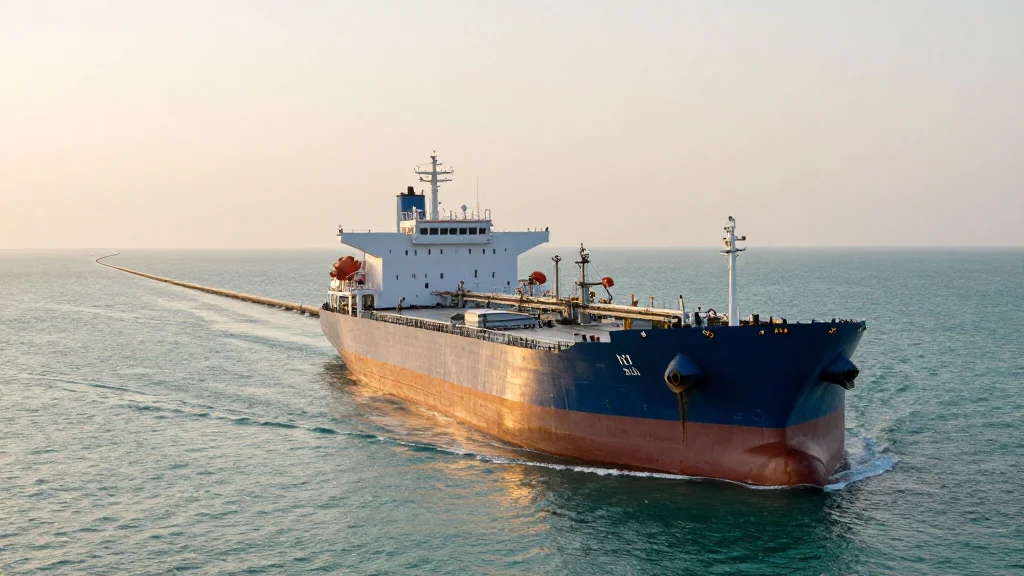
Oil Exporters Scramble for Routes Beyond Hormuz — but There Are No Easy Options
Why It Matters
The bottleneck threatens worldwide oil supply, driving price spikes and exposing the $110 trillion economy to geopolitical risk. Diversifying export pathways is now a strategic imperative for energy security.
Key Takeaways
- •Hormuz closure cut 20 million bpd, prompting urgent rerouting
- •East‑West and ADCOP pipelines total ~5 mb/d, far below pre‑war volumes
- •Iraq plans to restart 600‑mile pipeline to Turkey, 250 kb/d initial
- •Iran’s Jask terminal 1 mb/d remains non‑operational, limiting alternatives
Pulse Analysis
The abrupt closure of the Strait of Hormuz, a conduit for about 20 % of global oil, has jolted markets and underscored the fragility of single‑point export routes. With oil prices surging toward $120 a barrel, the crisis has accelerated conversations that have long lingered in policy circles about the need for diversified, resilient supply chains. Analysts point to the chokepoint’s strategic leverage, noting that a narrow 50‑kilometer stretch can now hold hostage a $110 trillion global economy, prompting governments and firms to reassess risk models that previously treated Hormuz as a low‑probability threat.
Existing alternatives—Saudi Arabia’s East‑West pipeline and the UAE’s Habshan‑Fujairah (ADCOP) line—collectively move only 3.5‑5.5 million barrels per day, a fraction of the pre‑war flow. Their limited capacity, coupled with recent Iranian attacks that knocked roughly 700,000 barrels per day off the East‑West line, illustrates the vulnerability of even the backup infrastructure. Iraq’s 600‑mile pipeline to Turkey, slated to restart at 250,000 barrels per day, and revived proposals to link Gulf producers with Oman, Jordan, and Egypt, represent incremental steps, but the scale of investment and cross‑border coordination required remains daunting.
Looking ahead, the energy sector faces a strategic crossroads: either commit to a multi‑corridor architecture that spreads export risk across several sea basins, or continue to rely on a fragile single route. Policymakers are urged to facilitate financing, streamline transnational agreements, and bolster security for critical terminals such as Fujairah and Jask. In doing so, they can transform the current crisis into a catalyst for lasting resilience, ensuring that future disruptions—whether accidental or deliberate—do not again hold the world’s energy supply hostage.
Oil exporters scramble for routes beyond Hormuz — but there are no easy options
Comments
Want to join the conversation?
Loading comments...