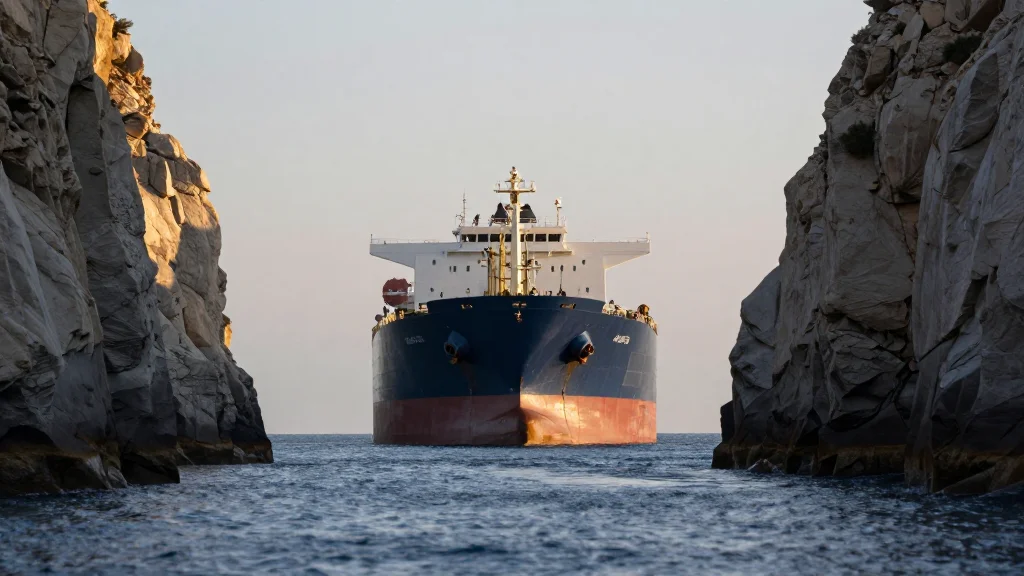
Oil Prices Surge 50% as Hormuz Blockade Persists, OECD Flags 2.1% Global Growth

Companies Mentioned

Why It Matters
The Hormuz blockage links geopolitical risk directly to everyday energy costs, inflating gasoline, jet fuel and fertilizer prices that affect consumers and food production worldwide. A sustained 50% jump in oil prices erodes real wages, fuels inflation, and forces central banks to tighten monetary policy, raising borrowing costs for businesses and governments. For emerging markets that rely heavily on imported energy, the shock could trigger balance‑sheet stress, currency depreciation and social unrest. The OECD’s warning underscores how a single maritime chokepoint can reshape global growth trajectories, highlighting the urgency of diplomatic solutions and the need for diversified energy supplies. Long‑term, the crisis revives calls for reduced dependence on Middle‑East oil, accelerating investment in renewables, strategic reserves, and alternative shipping routes. Companies like Chevron are now weighing new capital projects against the risk that a rapid de‑escalation could depress prices before investments pay off, a dilemma that could slow the sector’s transition to lower‑carbon operations.
Key Takeaways
- •Oil prices have risen >50% since the Iran‑Hamas conflict began, with Brent near $115/barrel.
- •Strait of Hormuz traffic is down to <10% of normal levels, cutting about 90% of vessel movements.
- •OECD projects global GDP growth could fall to 2.1% in 2026 if the blockage persists.
- •U.S. gasoline prices are up more than 50% since February; inventories are at historically low levels.
- •Analysts warn that prolonged Hormuz closure could push several Asian economies into recession.
Pulse Analysis
The Hormuz impasse illustrates how geopolitical friction can translate into macro‑economic volatility faster than any supply‑chain shock in recent memory. Oil markets have already priced in a severe supply deficit, but the real danger lies in the feedback loop between higher energy costs and monetary policy. Central banks, already battling post‑pandemic inflation, may be forced to raise rates more aggressively to curb price pressures, which in turn depresses investment and consumer spending, especially in energy‑intensive emerging markets. The OECD’s growth downgrade is therefore not just a statistical footnote; it signals a potential cascade of debt‑service challenges for countries whose fiscal space is already constrained.
From an industry perspective, the paradox highlighted by Chevron’s Mike Wirth—high prices that justify new projects but an uncertain environment that deters capital—could stall the next wave of upstream development. Companies may pivot toward lower‑risk, shorter‑cycle assets, such as marginal fields or mid‑stream expansions, rather than deep‑water projects that require years of certainty. This risk‑aversion could tighten future supply even further, extending the price premium beyond the current conflict.
Strategically, the Hormuz crisis may accelerate the diversification agenda that governments and corporations have been courting for years. Nations are likely to boost strategic petroleum reserves, invest in alternative routes like the Cape of Good Hope, and fast‑track renewable capacity to hedge against similar chokepoints. In the short term, however, the market’s immediate pain points—fuel price spikes, inflation, and slower growth—will dominate policy debates, and the window for a diplomatic de‑escalation is narrowing.
Oil Prices Surge 50% as Hormuz Blockade Persists, OECD Flags 2.1% Global Growth
Comments
Want to join the conversation?
Loading comments...