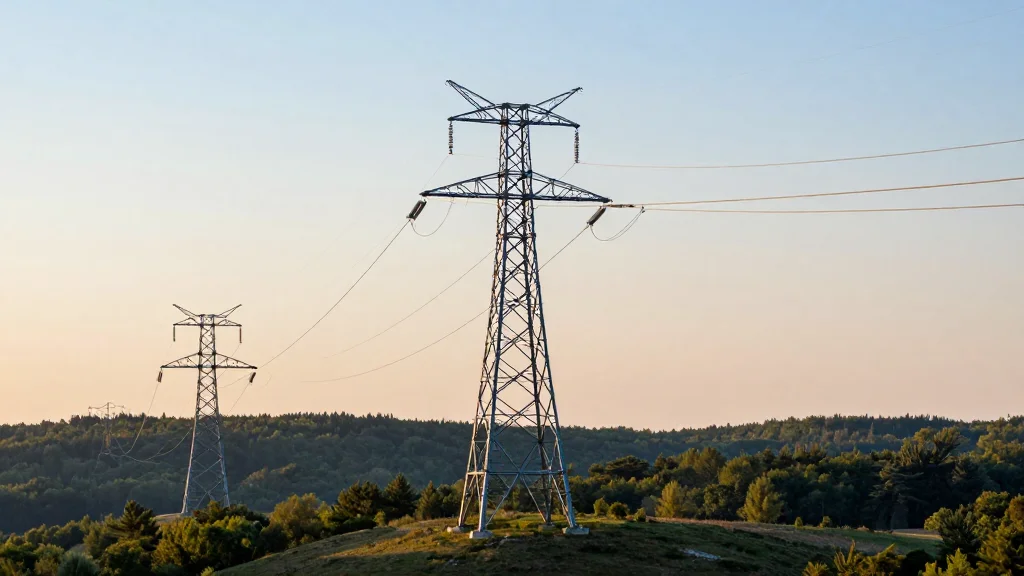
Ontario Unveils $9.8 B Transmission Plan to Ease Toronto Grid Bottleneck

Why It Matters
The transmission upgrade is a linchpin for Ontario’s climate strategy, enabling the province to meet its aggressive electrification goals without compromising reliability. By unlocking additional capacity from the Bruce nuclear complex and adding a high‑efficiency HVDC link, the plan reduces the risk of curtailments that could force utilities to rely on more expensive, carbon‑intensive peaker plants. Moreover, the expanded corridor positions Ontario to become a net exporter of clean power, supporting Canada’s broader ambition to lead in low‑carbon electricity. Beyond environmental benefits, the project carries significant economic weight. The $9.8 billion investment will generate thousands of construction jobs, stimulate demand for engineering services, and create long‑term operational roles in system management. Successful delivery could also set a precedent for other jurisdictions grappling with similar transmission constraints as they transition to renewable‑heavy grids.
Key Takeaways
- •$9.8 billion draft transmission plan unveiled by Ontario's IESO
- •Plan adds two 500‑kV corridors from Bruce nuclear and a new HVDC link
- •Projected electricity demand to rise ~65% by 2050, peak load up to 40 GW
- •Public consultations scheduled through 2026 to address land and environmental concerns
- •Construction targeted for 2027‑2035, aiming to relieve Toronto’s binding transfer limit
Pulse Analysis
Ontario’s transmission proposal arrives at a pivotal moment when the province’s electricity system is straining under the weight of rapid electrification. Historically, Ontario has relied on a patchwork of aging 230‑kV and 345‑kV lines that were never designed for the load profiles of today’s data centers, electric vehicle fleets, and heat‑pump‑driven buildings. By moving directly to 500‑kV corridors and an HVDC link, the IESO is not just adding capacity—it is future‑proofing the grid against the higher voltage, lower loss requirements of a modern, renewable‑heavy system.
The choice of HVDC technology is particularly strategic. Unlike traditional AC lines, HVDC can transmit large blocks of power over long distances with minimal losses and offers superior controllability, which is essential for balancing intermittent wind and solar resources that are expected to proliferate in southern Ontario. This aligns with Canada’s national goal of achieving 90% non‑fossil electricity by 2030, as the HVDC link can act as a conduit for imported renewables from the U.S. or offshore wind projects.
Financially, the $9.8 billion price tag will be absorbed largely through regulated ratepayer contributions, a model that has sparked debate. Critics warn that the cost could be passed on to consumers, especially if the project encounters the typical megaproject pitfalls of schedule slips and budget overruns. Proponents counter that the long‑term savings from avoided curtailments, reduced reliance on expensive peaker plants, and the potential for export revenues will outweigh the upfront expense. The outcome will hinge on the IESO’s ability to manage procurement efficiently, secure timely approvals, and keep the construction timeline on track. If successful, Ontario could set a benchmark for other jurisdictions facing similar transmission constraints, demonstrating that large‑scale, high‑voltage upgrades are both technically feasible and economically justifiable.
In the short term, the most immediate risk is community opposition along the proposed corridors. Early engagement and transparent mitigation strategies will be crucial to maintaining public support. In the longer view, the plan’s success could catalyze a wave of similar high‑voltage projects across North America, accelerating the continent’s transition to a low‑carbon electricity system.
Ontario Unveils $9.8 B Transmission Plan to Ease Toronto Grid Bottleneck
Comments
Want to join the conversation?
Loading comments...