Pakistan Uses Diplomacy to Secure LNG Supply From Hormuz
Companies Mentioned
Why It Matters
Restoring LNG imports stabilizes Pakistan’s power grid and curtails economic losses from blackouts, while demonstrating how diplomatic leverage can unlock trade routes in a volatile region.
Key Takeaways
- •Pakistan secured two Qatari LNG tankers via Strait of Hormuz.
- •Diplomatic ties with Qatar and Iran enabled the passage.
- •Restored LNG eases Pakistan's power outages and rationing.
- •Sets precedent for energy trade amid Middle East conflict.
Pulse Analysis
Pakistan has long depended on Qatar’s term LNG contracts to meet its growing electricity demand, with imports accounting for roughly 30% of the country’s gas supply. The escalation of the Iran‑Qatar conflict in early 2026 forced Qatar to suspend production, triggering rolling blackouts and fuel rationing across Pakistan’s major cities. Analysts estimate the shortfall could have cost the economy up to $2 billion in lost output if alternative fuels were not secured promptly. The shortage also pushed domestic gas prices above $10 per MMBtu, further straining industrial users.
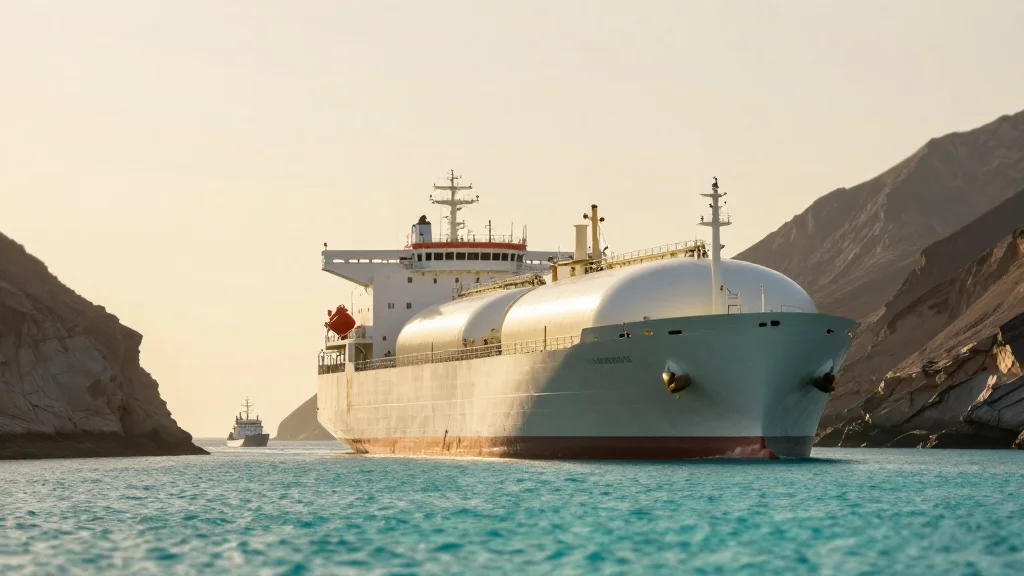
The breakthrough came through a bilateral agreement between Islamabad and Tehran, leveraging Pakistan’s role as a mediator in U.S.–Iran talks. By coordinating with Iranian naval authorities, Pakistan secured safe transit for two Qatari LNG carriers—the Al Kharaitiyat and a sister vessel—through the strategically vital Strait of Hormuz. Maritime intelligence firm Windward noted the move as a “limited but significant restart,” highlighting how diplomatic capital can overcome chokepoint restrictions even amid active hostilities. The pact also includes provisions for joint vessel tracking and emergency response, lowering the risk of accidental confrontations.
Beyond immediate relief, the successful passage signals a potential shift in regional energy logistics. If Pakistan can maintain a steady flow of Qatari LNG, it may reduce its reliance on costlier coal and diesel, improving grid stability and attracting foreign investment in downstream infrastructure. Moreover, the episode could encourage other non‑aligned buyers to seek similar diplomatic channels, prompting a re‑evaluation of shipping routes and insurance premiums in a volatile Middle East market. Energy analysts forecast that sustained LNG imports could shave up to 5% off Pakistan’s carbon emissions by 2030, aligning with its climate commitments.
Pakistan Uses Diplomacy to Secure LNG Supply from Hormuz
Comments
Want to join the conversation?
Loading comments...