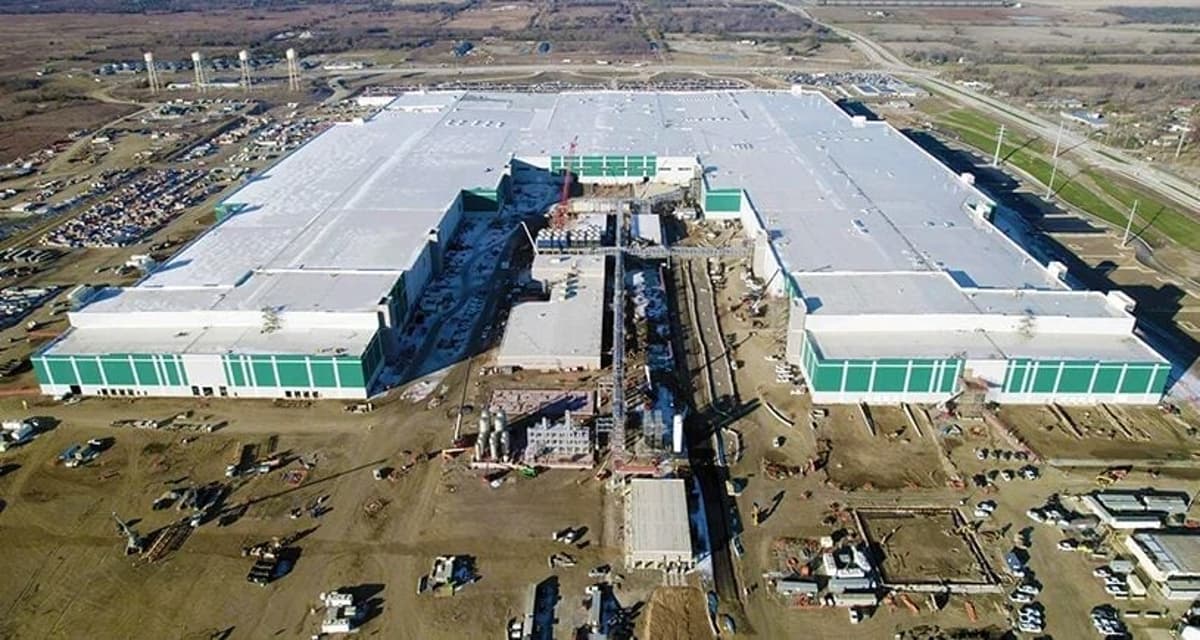
Panasonic to Convert Kansas EV Battery Factory for Data Centre Applications
Companies Mentioned
Why It Matters
The conversion unlocks sunk gigafactory investment for the fast‑growing data‑centre storage market, bolstering Panasonic’s position in AI‑related infrastructure while mitigating excess EV‑battery capacity.
Key Takeaways
- •Panasonic to repurpose Kansas EV battery plant for data‑centre storage
- •Conversion slated for Q3 2029, shifting 32 GWh capacity
- •$2.18 billion allocated to Energy division, part of $3.12 billion AI spend
- •Industry trend: EV battery lines repurposed for BESS amid slower EV demand
- •Competitors like Ultium Cells and LG ES also converting factories to storage
Pulse Analysis
Panasonic’s decision to retool its De Soto, Kansas, gigafactory underscores a strategic pivot from electric‑vehicle (EV) batteries to stationary energy storage for data centres. The plant, originally designed for a 32 GWh annual EV‑cell output, will be reconfigured by Q3 2029 to produce battery modules tailored to the high‑density, reliability‑focused needs of hyperscale cloud operators. This shift is financed by a ¥350 billion (US$2.18 billion) allocation to Panasonic Energy, complementing a broader US$3.12 billion spend on AI infrastructure that aims to secure a foothold in the burgeoning AI‑driven data‑centre ecosystem.
The repurposing trend is gaining momentum across the United States as manufacturers grapple with slower‑than‑expected EV adoption and new regulatory constraints such as the One Big Beautiful Bill Act. Companies like Ultium Cells, LG ES, Samsung SDI and SK On are already converting EV lines to lithium‑iron‑phosphate (LFP) cells for battery‑energy‑storage‑systems (BESS). By redeploying existing production capacity, they avoid the high capital costs of building new facilities while addressing the rising demand for reliable, grid‑scale storage that underpins renewable integration and edge‑computing workloads.
For the data‑centre market, Panasonic’s entry adds a reputable, Japanese‑engineered supplier capable of delivering high‑energy‑density modules at scale. As hyperscalers expand AI workloads, the need for resilient, low‑latency power backup grows, making BESS a critical component of future‑proof infrastructure. Panasonic’s move not only diversifies its revenue streams but also positions the company to capture a slice of the multi‑billion‑dollar data‑centre storage market, intensifying competition among traditional battery makers and specialized storage firms alike.
Panasonic to convert Kansas EV battery factory for data centre applications
Comments
Want to join the conversation?
Loading comments...