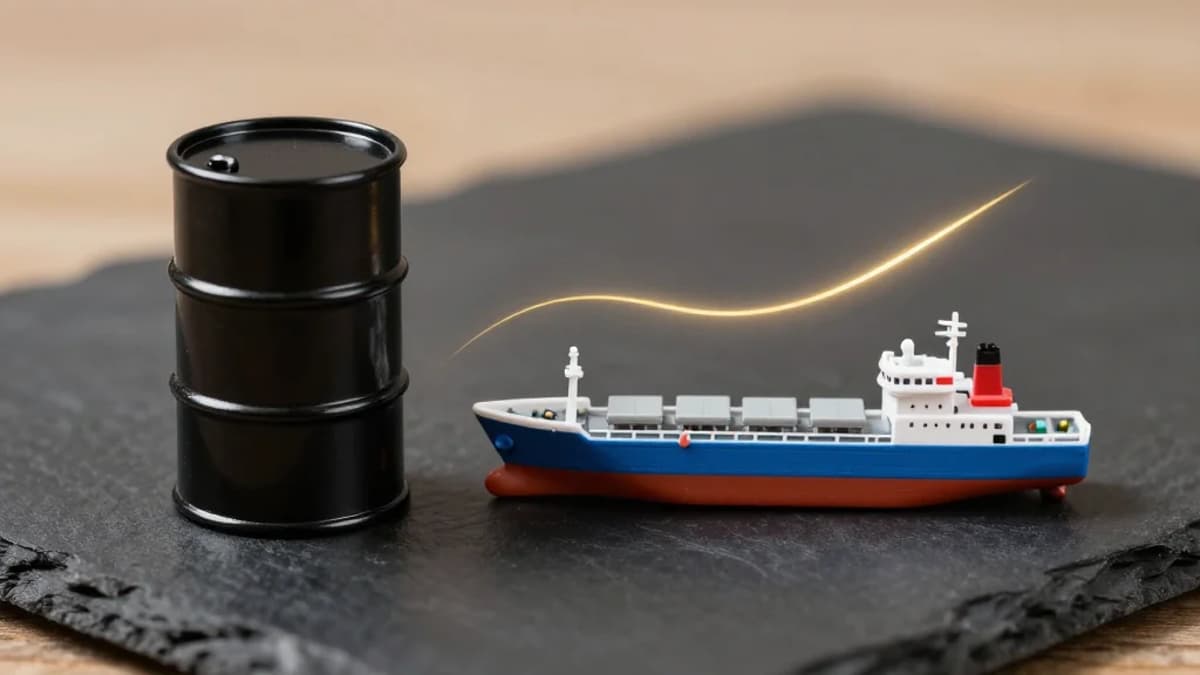
Parameta Solutions, Marex Launch Joint Netback Pricing Offering Combining Oil and Freight Data
•March 11, 2026
0
Why It Matters
Connecting oil prices with freight costs gives market participants a holistic view of trade economics, enhancing pricing accuracy and risk mitigation across energy markets.
Key Takeaways
- •Integrated oil price and freight data enable route-level pricing
- •Real-time analytics reveal arbitrage opportunities across physical and paper markets
- •Combined dataset reduces risk by showing total cost of trade
- •Platform supports future cross‑market pricing products
Pulse Analysis
The energy trading landscape is increasingly data‑centric, with firms seeking granular insights that go beyond headline crude prices. By fusing TP ICAP’s benchmark oil prices with Marex’s freight intelligence, the new netback solution addresses a long‑standing information gap: the cost of moving barrels from field to market. This integration mirrors a broader industry shift toward total‑cost‑of‑ownership models, where traders and refiners evaluate every expense component before committing capital. The combined dataset also aligns with the rise of algorithmic trading platforms that require high‑frequency, clean data streams to execute sophisticated strategies.
Risk managers stand to benefit most from the unified view. Traditional risk frameworks often treat price and logistics as separate variables, leading to blind spots in exposure calculations. With real‑time route economics, firms can instantly assess how freight spikes or bottlenecks affect margin, enabling faster hedging decisions and more precise value‑at‑risk estimates. The ability to spot arbitrage between physical shipments and paper contracts also opens new profit avenues, especially in volatile markets where freight rates can swing dramatically due to geopolitical or weather‑related disruptions.
Looking ahead, the partnership signals a move toward co‑created, derivative‑style products that blend commodity and logistics metrics. Such cross‑market pricing tools could become standard offerings for exchanges and brokers seeking to differentiate their data services. Competitors will likely accelerate similar integrations, intensifying the race for the most comprehensive, low‑latency data pipelines. For investors, the collaboration underscores the monetisation potential of data assets in commodity finance, suggesting that firms that master end‑to‑end trade economics will capture a larger share of the evolving energy‑market value chain.
Parameta Solutions, Marex launch joint netback pricing offering combining oil and freight data
0
Comments
Want to join the conversation?
Loading comments...