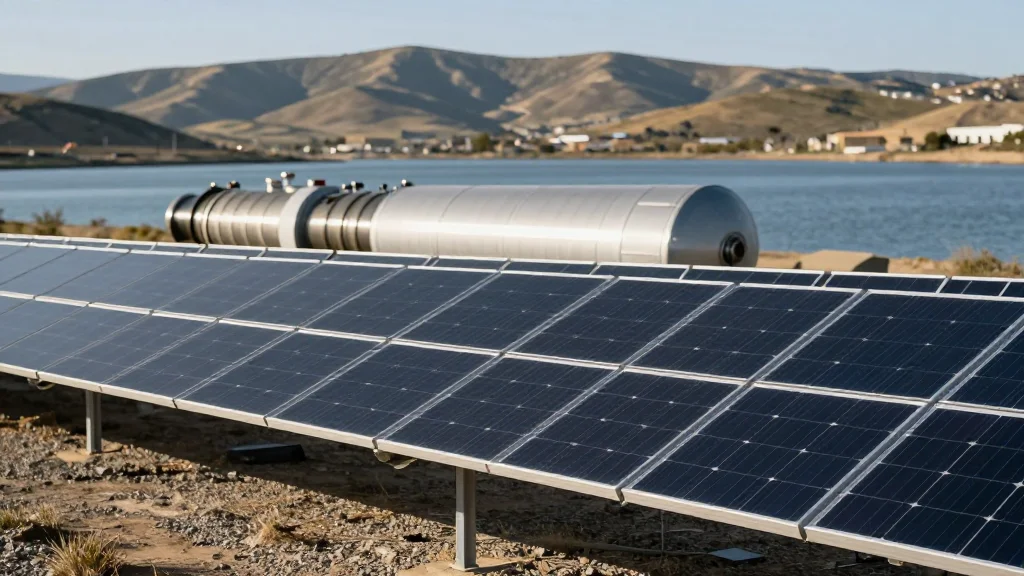
Pastoria Solar Project Enters Service to Support SWP Decarbonisation
Companies Mentioned
Why It Matters
Pastoria gives the State Water Project a reliable, low‑carbon power source, accelerating California’s 2035 zero‑carbon target and safeguarding a critical water‑supply infrastructure. It also demonstrates how public‑private partnerships can deliver large‑scale clean‑energy solutions with economic benefits.
Key Takeaways
- •Pastoria Solar delivers 105 MW, California's largest DWR renewable contract
- •Includes 80 MW/320 MWh battery, operational by mid‑2026
- •Supports SWP's goal of zero carbon by 2035
- •Creates union jobs, bolstering California's clean‑energy workforce
Pulse Analysis
The Pastoria Solar Project marks a strategic shift for California’s water infrastructure, marrying renewable generation with firm capacity. By co‑locating 105 MW of photovoltaic output alongside an 80 MW/320 MWh battery and a 750 MW natural‑gas peaker, Calpine provides the State Water Project with dispatchable power that can meet peak demand and buffer intermittency. This hybrid model aligns with the state’s broader clean‑energy roadmap, which mandates 100% carbon‑free electricity by 2045, and offers a template for other utility‑scale water agencies facing similar reliability challenges.
Beyond emissions reductions, the project delivers tangible economic upside. The 15‑year power purchase agreement with Pacific Gas and Electric secures a stable revenue stream, while the battery’s 2026 commissioning promises ancillary services such as frequency regulation and reserve capacity. These services enhance grid stability across California’s heavily renewable‑laden system, reducing reliance on fossil‑fuel peakers and lowering overall system costs. Moreover, the integration of a natural‑gas combined‑cycle plant ensures that the SWP can maintain uninterrupted water deliveries, a critical public‑service function for 27 million residents and 750,000 acres of farmland.
Labor impact is another key dimension. Union leaders have highlighted the creation of high‑quality construction and operations jobs, reinforcing California’s commitment to a just transition. The project’s success showcases how coordinated public‑private planning can accelerate decarbonisation while preserving essential services and fostering workforce development. As other states grapple with similar water‑energy nexus challenges, Pastoria stands as a replicable model for achieving climate goals without compromising reliability.
Pastoria solar project enters service to support SWP decarbonisation
Comments
Want to join the conversation?
Loading comments...