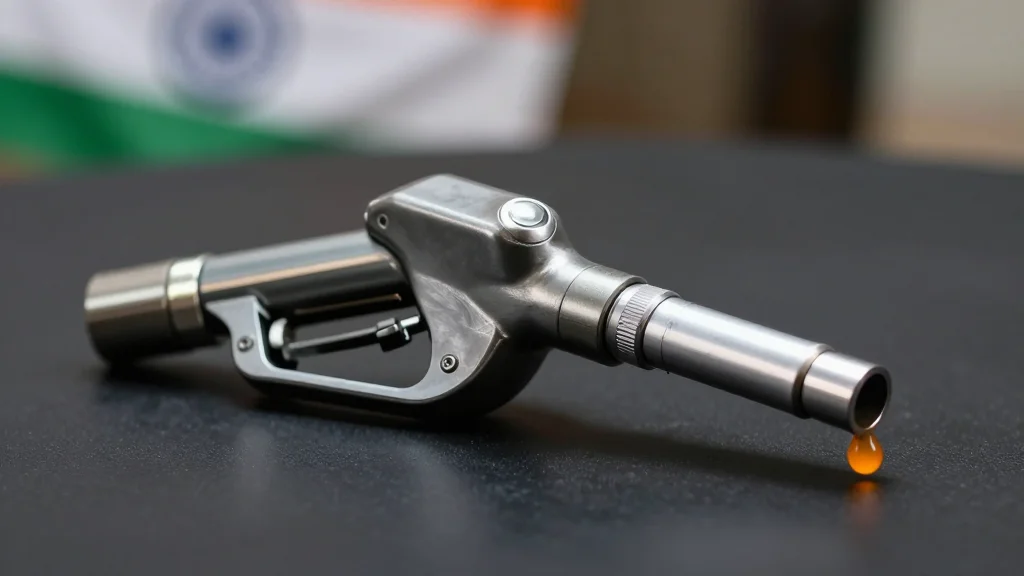
Petrol and Diesel Rates Could Rise in Near Future. Here’s Why
Why It Matters
A price rise would lift fuel costs for millions, feeding into broader inflation and affecting election‑season consumer sentiment.
Key Takeaways
- •Four‑year fuel price freeze strains state‑owned oil firms.
- •Global crude hit $126/barrel, prompting loss of ₹20‑₹100 per litre.
- •Analysts project ₹25‑28 (~$0.30‑$0.34) per litre hike post‑election.
- •Delhi petrol at ₹94.77 (~$1.14), diesel at ₹87.67 (~$1.06) per litre.
- •No immediate price increase announced despite mounting losses.
Pulse Analysis
India’s decision to keep retail fuel prices frozen for nearly four years has become increasingly untenable as global crude oil prices rocketed to a four‑year high of $126 per barrel. The surge, driven by geopolitical tension in the Strait of Hormuz and volatile U.S.–Iran relations, has forced state‑owned refiners to absorb losses estimated at ₹20 ($0.24) per litre on petrol and ₹100 ($1.20) per litre on diesel. While the government publicly denies any immediate hike, the fiscal strain on oil majors is eroding the subsidy buffer that has historically cushioned Indian consumers from market swings.
The timing of a potential price adjustment aligns with the conclusion of West Bengal’s assembly elections, a period when political calculus often influences economic policy. Market analysts have flagged a probable increase of ₹25‑28 ($0.30‑$0.34) per litre once the electoral cycle ends, a move that could restore profitability for oil firms but also risk inflating headline inflation. Current pump prices in Delhi—₹94.77 ($1.14) for petrol and ₹87.67 ($1.06) for diesel—are already above the global average cost of refined fuel, leaving little room for further subsidies without widening fiscal deficits.
For consumers, even a modest hike translates into higher commuting and logistics costs, feeding through to food and goods prices across the economy. Policymakers must balance the immediate fiscal relief of a price freeze against the longer‑term distortions it creates in the energy market. As global oil volatility persists, India may need to consider a more flexible pricing mechanism that shields vulnerable households while allowing market‑driven adjustments to sustain the financial health of state‑owned oil enterprises.
Petrol and diesel rates could rise in near future. Here’s why
Comments
Want to join the conversation?
Loading comments...