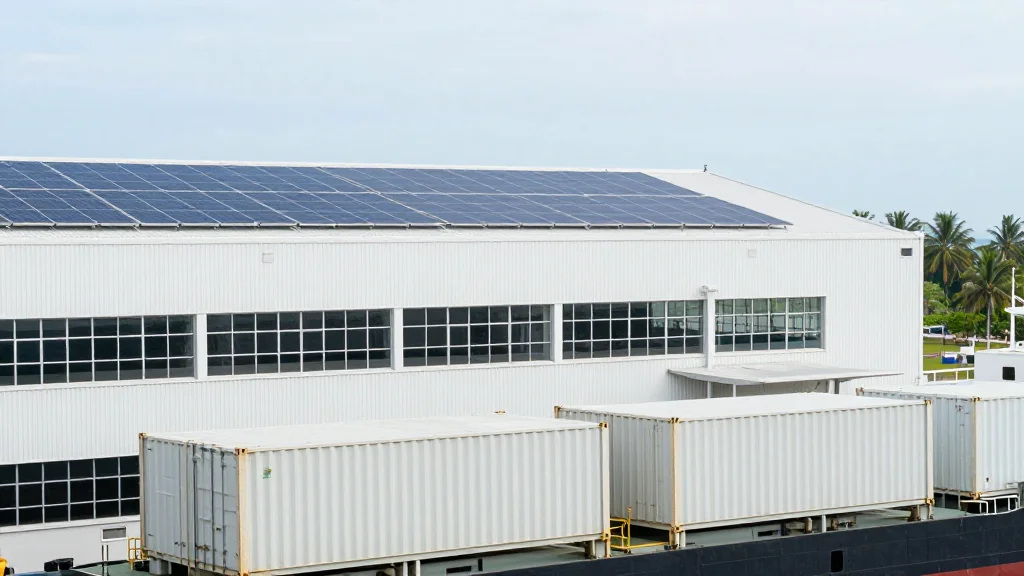
Philippines Registers Solar Module Maker Targeting EU Export Market
Why It Matters
The venture strengthens the Philippines’ position in the global solar supply chain and creates jobs while reducing reliance on imported fossil fuels. By targeting the EU, GREEENC taps a high‑value market, potentially accelerating the country’s renewable‑energy transition.
Key Takeaways
- •GREEENC invests PHP 370 M ($6.16 M) in Batangas solar plant.
- •Company targets EU market, projecting $132 M in export sales.
- •PEZA grants tax incentives and duty‑free imports for export manufacturers.
- •New facility adds to Philippines' emerging solar‑module manufacturing sector.
- •Registration supports President Marcos Jr.’s renewable‑energy diversification agenda.
Pulse Analysis
The Philippines has been courting clean‑technology investors as part of a broader strategy to diversify its energy mix and curb dependence on imported oil and coal. Under President Ferdinand Marcos Jr., the administration has expanded the Philippine Economic Zone Authority’s eco‑zone program, offering tax holidays, accelerated depreciation and duty‑free importation of capital equipment for export‑oriented manufacturers. These incentives are designed to attract firms that can generate high‑value jobs and export earnings, positioning the archipelago as a regional hub for renewable‑energy components. Recent approvals have focused heavily on solar‑module production, reflecting the sector’s rapid global growth.
GREEENC’s entry marks the latest addition to this policy push. With an initial capital outlay of roughly PHP 370 million ($6.16 million), the company will assemble PV modules at Light Industry and Science Park III in Batangas, a location already equipped with reliable logistics and power infrastructure. The firm projects $132 million in export sales, primarily to the European Union, where demand for certified, low‑carbon panels remains robust amid the EU’s Green Deal targets. GREEENC joins Singapore‑based Gstar, which launched a 1 GW factory in Subic Bay, signaling a budding manufacturing cluster.
The registration carries several strategic implications. By feeding European supply chains, the Philippines can capture premium pricing and improve its trade balance, while domestic employment in high‑skill manufacturing rises. Moreover, the presence of multiple exporters may spur technology transfer, driving down production costs and encouraging local R&D in cell efficiency and module design. If the government sustains its incentive framework, the country could evolve from a modest assembler to a competitive player in the global solar market, supporting its long‑term energy security goals.
Philippines registers solar module maker targeting EU export market
Comments
Want to join the conversation?
Loading comments...