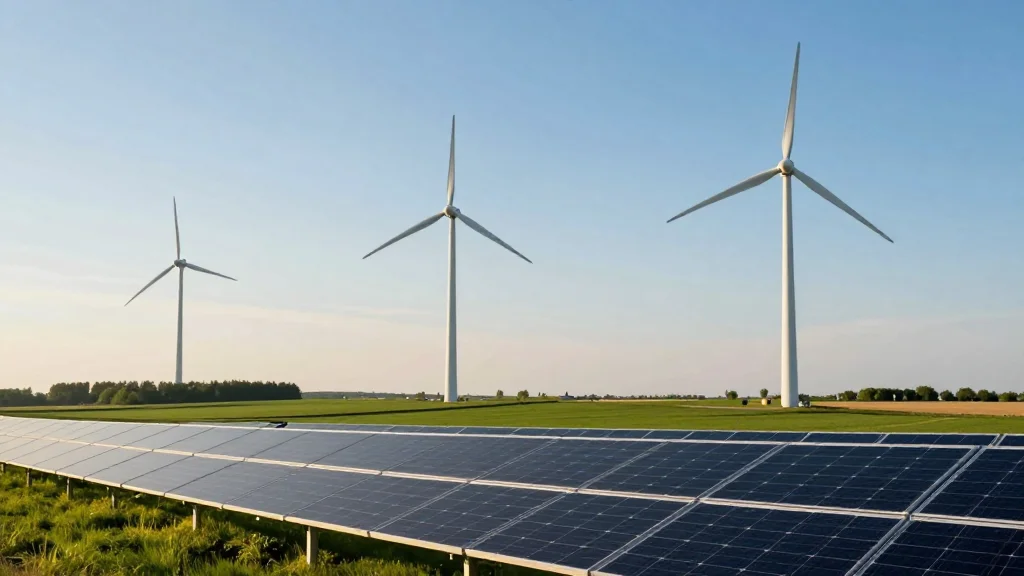
Poland’s New Energy Strategy Envisages Sharp Increase in Renewables
Why It Matters
The roadmap aligns Poland with EU climate targets, strengthens energy security and lowers power costs, boosting industrial competitiveness.
Key Takeaways
- •Renewables to supply 51.6‑53.2% of electricity by 2030.
- •Renewable generation capacity could reach 84‑92 GW by 2040.
- •Total installed capacity projected at 128‑156 GW by 2040.
- •Household energy cost burden could fall 30‑55% by 2040.
- •Electricity generation costs expected to drop 18% by 2040 versus 2025.
Pulse Analysis
Poland has long been the EU’s biggest coal‑dependent power producer, accounting for roughly a third of its electricity mix. After years of legal disputes over its climate commitments, the government finally delivered an updated National Energy and Climate Plan (KPEiK) to the European Commission. The document signals a decisive pivot toward decarbonisation, aligning the country with the EU’s 2030 climate‑fit target and the broader Green Deal agenda. The approval also clears the EU infringement case that had loomed after Poland missed the June 30 2024 filing deadline.
The plan projects renewables supplying just over half of Poland’s electricity by 2030 and up to 69% by 2040, driven by on‑shore and offshore wind, solar PV and renewable gases. Total generation capacity is slated to climb from roughly 77 GW today to as much as 156 GW by 2040, with renewable assets accounting for nearly 60% of that base. In heating and cooling, renewable energy could cover up to 57% of demand by 2040, reducing reliance on fossil fuels. Such a scale‑up will attract billions of euros in foreign investment, spur domestic manufacturing of turbines and panels, and demand extensive grid reinforcement and storage solutions.
Beyond emissions, the strategy tackles energy affordability, aiming to cut the share of households spending more than 10% of income on power by up to 55% and to lower generation costs by 18% by 2040. For industry, cheaper electricity strengthens Poland’s export‑oriented manufacturing sector, especially steel and chemicals, which have historically faced high carbon costs. However, the transition hinges on timely permitting, skilled labor and the rollout of interconnectors with neighboring grids, making policy certainty a critical factor for investors. If successful, the reduced energy burden could lift millions of households above the social minimum, reinforcing political support for the green agenda.
Poland’s new energy strategy envisages sharp increase in renewables
Comments
Want to join the conversation?
Loading comments...