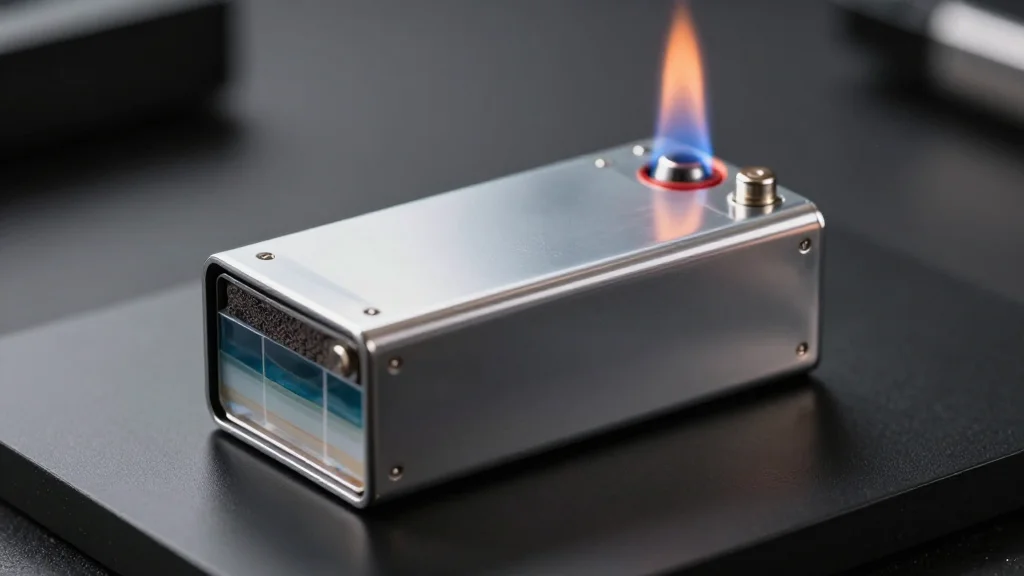
PolyJoule’s 3rd-Gen Conductive Polymer Battery Self-Extinguishes at 3,600 °F and Delivers 10,000+ Cycles
Why It Matters
By removing fire‑risk and eliminating dendrite formation, PolyJoule’s battery could unlock high‑density storage in buildings where lithium‑ion safety concerns have been a barrier, reshaping the residential and commercial energy‑storage market.
Key Takeaways
- •10x energy density over first‑gen polymer battery
- •Self‑extinguishes after propane torch at 3,600 °F
- •No active thermal management required for 10,000+ cycles
- •Targets residential, commercial, industrial storage where fire risk matters
Pulse Analysis
The conductive polymer battery represents a paradigm shift away from metal‑based chemistries that dominate today’s market. Unlike lithium‑ion, lead‑acid or nickel systems that store charge in crystalline lattices, PolyJoule’s organic backbone holds electrons without volatile liquids, dramatically lowering vapor pressure and eliminating the primary triggers of thermal runaway. This fundamental chemistry change not only improves safety but also sidesteps dendrite growth, a long‑standing reliability issue in high‑energy cells.
Performance metrics reinforce the safety narrative. PolyJoule’s third‑generation cell achieves a ten‑fold increase in energy density compared with its first‑generation prototype while sustaining more than 10,000 full cycles—figures that rival or exceed many conventional batteries. The UL 9540A fire test, where a propane torch heated the cell to 3,600 °F, demonstrated instant self‑extinguishment once the flame was removed, confirming the absence of thermal runaway. Because the design requires no active cooling or fire‑suppression hardware, system integrators can reduce balance‑of‑plant costs and simplify installation.
The commercial implications are significant. Fire‑risk has limited the deployment of high‑capacity storage in dense urban apartments, office towers and indoor industrial facilities. PolyJoule’s fire‑proof, high‑cycle battery opens those markets, potentially prompting revisions to building codes that currently favor low‑energy solutions for safety reasons. As the company begins accepting installer applications later this year, early adopters in the solar and backup‑generator sectors could gain a competitive edge, while the broader energy‑storage ecosystem may see a shift toward safer, higher‑density polymer batteries.
PolyJoule’s 3rd-gen conductive polymer battery self-extinguishes at 3,600 °F and delivers 10,000+ cycles
Comments
Want to join the conversation?
Loading comments...