Why It Matters
By turning existing breakwater structures into power generators, the project demonstrates a low‑cost pathway for Mediterranean ports to cut carbon emissions and diversify energy sources, supporting EU climate targets and enhancing port resilience.
Key Takeaways
- •€169k contract (~$195k) awarded to Pavener Servicios Energéticos.
- •21 panels (410 W each) deliver 8.6 kW on Valencia breakwater.
- •Project co‑financed 80% by EU Interreg Euro‑MED Greener MED programme.
- •SunnerBox IT3 mesh mounts PV on breakwater, reducing structural costs.
- •Pilot monitors energy and dynamics, powering sensors with its own output.
Pulse Analysis
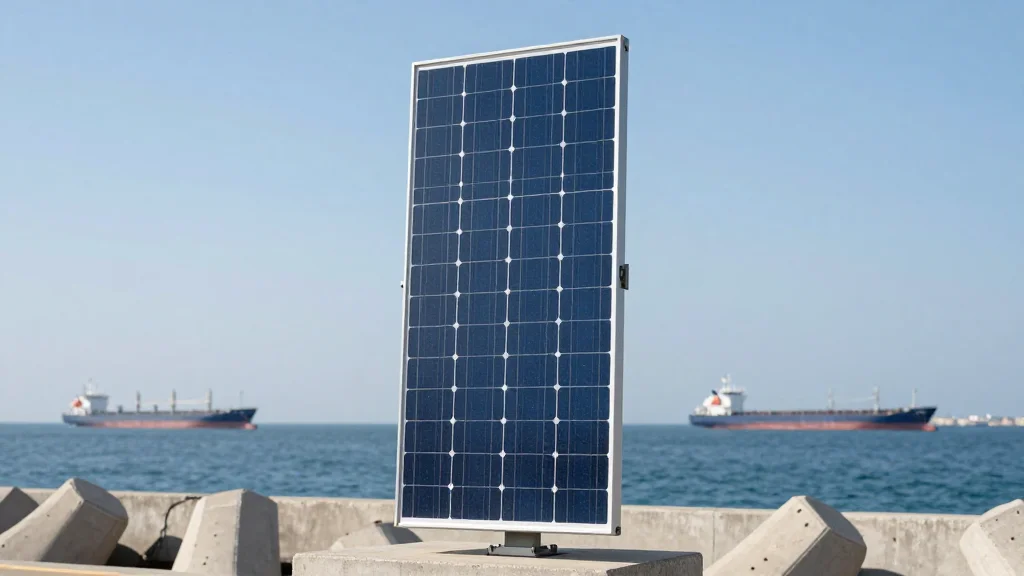
European ports are increasingly looking to renewable energy to meet tightening emissions standards, and vertical photovoltaic (PV) installations are emerging as a space‑efficient solution. Unlike traditional rooftop arrays, vertical panels can be affixed to existing maritime structures such as breakwaters, turning otherwise idle concrete into productive assets. This approach not only maximizes land use in densely built coastal zones but also reduces shading losses and exposure to corrosive sea spray, extending panel lifespans. The Valencia pilot exemplifies how ports can leverage these advantages while maintaining uninterrupted shipping operations.
The Valencia project, funded under the Renewport initiative, showcases a collaborative model that blends public financing, academic research, and private innovation. With 80% of costs covered by the EU’s Interreg Euro‑MED Greener MED programme, the €169,314 contract enables Pavener Servicios Energéticos to install SunnerBox’s IT3 system—a tension‑mounted mesh that simplifies installation and cuts structural expenses. The 21‑module array, delivering 8.6 kW, will feed power to an on‑site sensor network, creating a self‑sustaining testbed. Real‑time data on energy output and structural dynamics will be collected by the Polytechnic University of Valencia, providing a robust dataset for scaling assessments.
If successful, the pilot could catalyze a wave of similar deployments across the Mediterranean, where ports collectively account for a significant share of regional emissions. Demonstrating economic viability and technical reliability will encourage other authorities to adopt vertical PV, accelerating the EU’s goal of a climate‑neutral transport sector by 2050. Moreover, the model offers a blueprint for integrating renewable generation into legacy infrastructure worldwide, reinforcing the strategic importance of ports as both logistics hubs and clean‑energy pioneers.
Port of Valencia deploying PV on breakwaters
Comments
Want to join the conversation?
Loading comments...