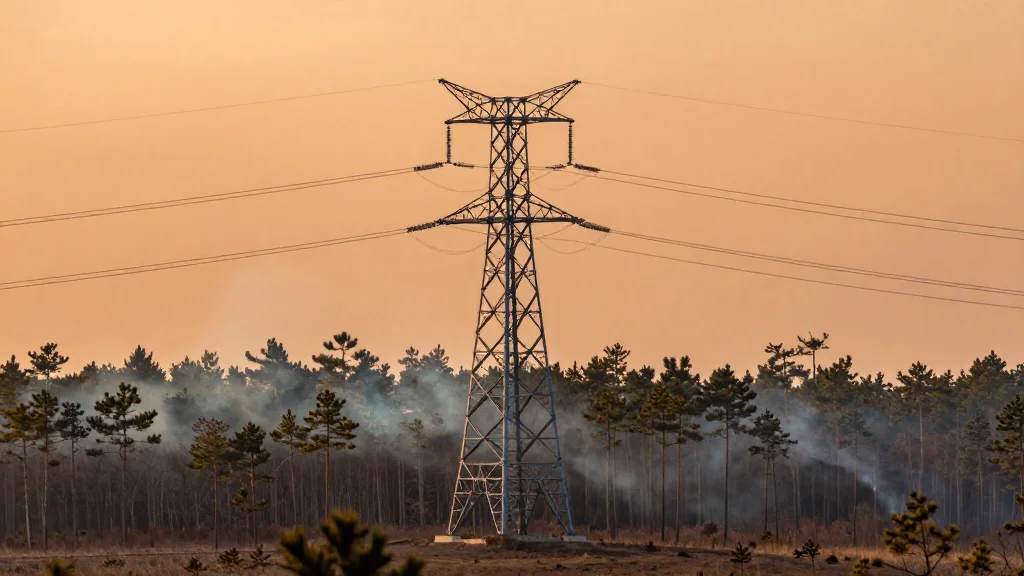
Potential Public Safety Power Shutoff for Hughenden and Surrounding Area
Why It Matters
A PSPS protects lives and property by eliminating a potential ignition source, but it also disrupts electricity access for hundreds of residents, highlighting the trade‑off utilities face between safety and reliability during climate‑driven wildfire events.
Key Takeaways
- •AltaLink may shut off two lines affecting ~300 customers
- •PSPS is a last‑resort measure to prevent wildfire ignition
- •Monitoring includes wind, temperature, fuel, and fire‑behaviour analysis
- •Residents urged to prepare 72‑hour emergency kits and backup power
- •Updates will be posted on AltaLink’s social media and website
Pulse Analysis
Alberta’s wildfire season has intensified, prompting utilities like AltaLink to adopt proactive risk‑mitigation tools. A Public Safety Power Shutoff (PSPS) temporarily de‑energises transmission assets when fire‑weather indices—such as high winds, low humidity, and abundant dry fuel—reach critical thresholds. By pre‑emptively cutting power, AltaLink aims to remove a common ignition source, reducing the probability that its infrastructure sparks a new blaze. This approach mirrors strategies employed by California and other fire‑prone regions, where utilities balance grid reliability against community safety.
For the roughly 300 customers in Hughenden, a PSPS translates into an immediate loss of electricity, potentially affecting homes, businesses, and essential medical equipment. AltaLink’s communication plan—leveraging Facebook, X, and its website—seeks to mitigate uncertainty by delivering real‑time alerts and restoration timelines. The utility also urges residents to assemble 72‑hour emergency kits, secure backup power solutions, and verify contact details with their electricity retailers. Such preparedness measures are increasingly standard as regulators and insurers scrutinise utility response plans during extreme weather events.
The broader implication for the energy sector is a push toward grid hardening and advanced monitoring. Investments in weather‑responsive sensors, automated line de‑energisation, and vegetation management can reduce the frequency of manual PSPS events. Policymakers may also consider incentivising underground transmission or adopting more resilient infrastructure designs. As climate change amplifies wildfire risk, utilities that integrate predictive analytics and transparent stakeholder communication will be better positioned to protect both the public and their operational continuity.
Potential Public Safety Power Shutoff for Hughenden and Surrounding Area
Comments
Want to join the conversation?
Loading comments...