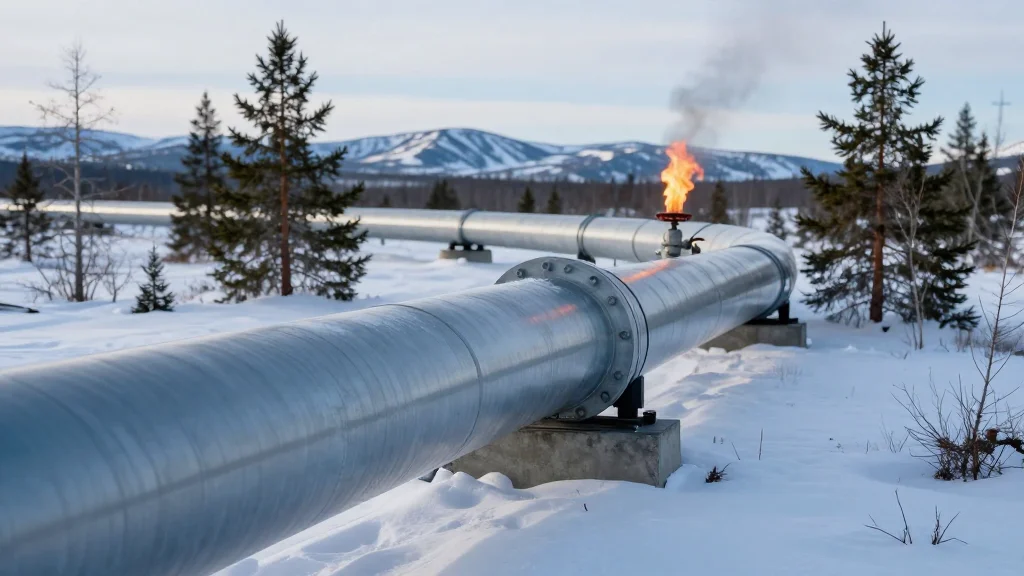
Power of Siberia‑2 Pipeline Moves Forward, Cementing Russia‑China Gas Partnership

Why It Matters
The Power of Siberia‑2 pipeline represents a strategic pivot for both Russia and China. For Moscow, it offers a critical export corridor that can sustain Gazprom’s revenue stream after European demand evaporated, helping to stabilize the Russian economy. For Beijing, the pipeline reduces exposure to LNG price swings and strengthens energy security for its industrial base. The shift also signals a broader reorientation of global gas flows, potentially weakening the EU’s leverage over Russian energy and reshaping the competitive dynamics of the LNG market. Beyond economics, the project deepens geopolitical ties between the two nations, reinforcing a partnership that could influence broader diplomatic alignments in Eurasia. As Western sanctions continue to limit Russia’s traditional markets, the pipeline may become a cornerstone of a new east‑west energy axis, with implications for global energy governance and climate policy trajectories.
Key Takeaways
- •Power of Siberia‑2 will span over 2,600 km from Yamal to Beijing.
- •Project cost is estimated at more than $11.5 billion.
- •Pipeline expected to supply roughly one‑eighth of China's gas needs.
- •CNPC forecasts a 5 % annual rise in Chinese gas demand through 2030.
- •Estimated operational lifespan of about 30 years.
Pulse Analysis
The acceleration of Power of Siberia‑2 underscores a decisive shift in Russia’s export strategy. Historically, Gazprom relied on a dense network of pipelines feeding Europe; the EU ban forced a rapid search for alternative markets. By locking in a long‑term contract with China, Moscow not only diversifies its customer base but also secures a revenue stream insulated from Western sanctions. This mirrors the earlier Nord Stream model, yet the new price formula could give Beijing unprecedented leverage, potentially driving gas prices below current LNG levels.
For China, the pipeline aligns with its broader energy transition goals. While natural gas remains a fossil fuel, it is viewed as a bridge to a lower‑carbon future, especially for heavy industry and power generation. Securing a stable, low‑cost supply reduces the need for spot LNG purchases, which have been subject to price spikes amid geopolitical tensions. The 5 % demand growth projection suggests that the pipeline will play a central role in meeting industrial expansion while allowing China to manage its carbon intensity targets.
Regionally, the project may recalibrate power balances. A reliable Russian gas flow to China could diminish the EU’s bargaining chip over Moscow, while also prompting European nations to accelerate alternative supply routes or renewable investments. Moreover, the involvement of Mongolia as a transit corridor introduces new economic opportunities and geopolitical considerations for the landlocked state. In the longer term, the pipeline’s success could inspire similar east‑west energy corridors, reshaping the architecture of global energy trade.
Power of Siberia‑2 pipeline moves forward, cementing Russia‑China gas partnership
Comments
Want to join the conversation?
Loading comments...