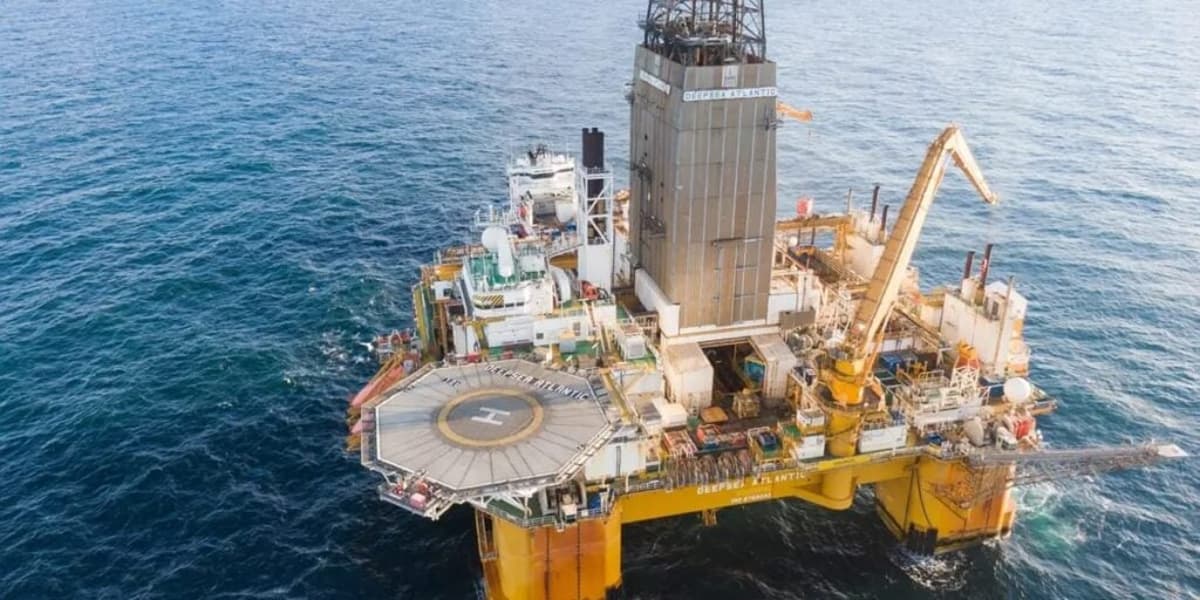
Probe Underway as Rig Ops Come to a Standstill After Blowout Preventer Drop
Why It Matters
The BOP failure highlights deep‑water safety risks that can delay production and attract regulatory scrutiny, affecting both Odfjell’s revenue and Equinor’s output on the NCS.
Key Takeaways
- •BOP fell to seabed at ~1,100 m, stopping Deepsea Atlantic operations.
- •No injuries reported; rig remains secured pending BOP recovery.
- •Incident triggers investigation into equipment‑handling procedures on 17‑year‑old rig.
- •Deepsea Atlantic serves Equinor on Norwegian Continental Shelf, impacting NCS output.
- •Odfjell secured additional rig contracts through 2029, mitigating short‑term loss.
Pulse Analysis
On April 18, Odfjell Drilling’s 17‑year‑old Deepsea Atlantic semi‑submersible suffered a critical equipment‑handling failure when its blowout preventer (BOP) detached and settled on the seafloor at roughly 1,100 metres depth. The vessel, a sixth‑generation GVA 7500 design with dual derricks and dynamic positioning, was operating for Equinor on the Norwegian Continental Shelf when the incident occurred. While the rig remained structurally secure and no crew members were harmed, the loss of the BOP forced an immediate suspension of drilling activities while recovery and repair plans are formulated.
The event underscores the heightened safety challenges inherent in deep‑water drilling, where equipment reliability is paramount and any failure can halt production for weeks. Regulators on the NCS have already signaled intensified inspections following recent offshore incidents, and Equinor may need to reassess its field‑development schedule to accommodate the downtime. A prolonged outage could shave millions of dollars from projected output, especially as oil prices remain volatile. Consequently, the incident is likely to prompt tighter BOP handling protocols across the sector and reinforce industry calls for advanced monitoring technologies.
Despite the setback, Odfjell Drilling’s broader fleet remains robust, with a pipeline of contracts extending to the first quarter of 2029, including another semi‑submersible slated for the North Sea. This diversified order book cushions short‑term revenue loss from the Deepsea Atlantic downtime and positions the company to capture new offshore opportunities as the market rebounds. Analysts note that the firm’s focus on harsh‑environment platforms could drive higher utilization rates once safety concerns are addressed, reinforcing its competitive edge in the European deep‑water segment.
Probe underway as rig ops come to a standstill after blowout preventer drop
Comments
Want to join the conversation?
Loading comments...